Tube amplifier glowing
1344×768 · AVIF · CC BY 4.0
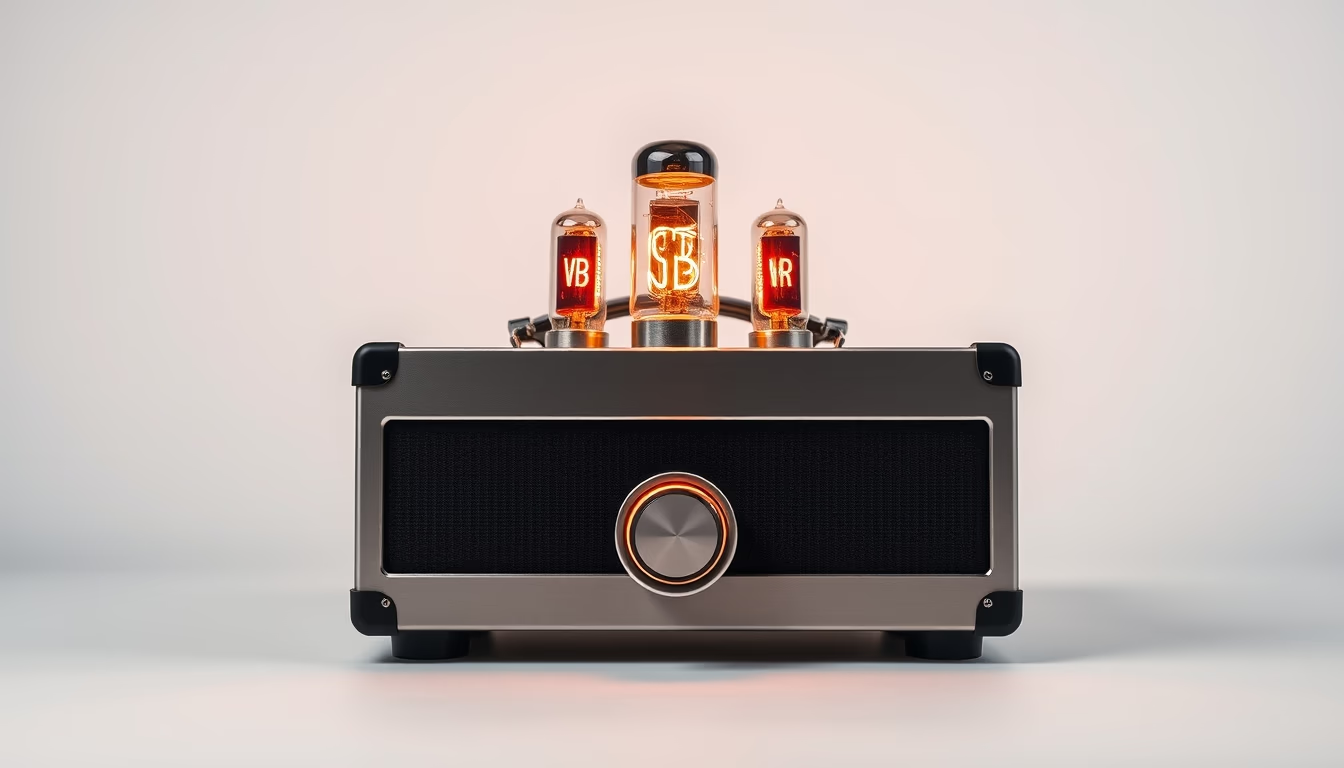
Tube amplifiers are electronic devices that use thermionic valves to amplify audio signals, prized for their characteristic sound and harmonic response.
About this subject
Tube amplifiers, also known as valve amplifiers, are electronic devices that use thermionic valves (vacuum tubes) to amplify audio signals. Unlike modern transistor amplifiers, tube amplifiers rely on components developed in the early 20th century, with the first commercial tubes appearing around 1904. The technology peaked between the 1940s and 1960s, gradually replaced by transistors from the 1970s onward, but it still retains a dedicated following in high-end audio and live music.
Their operating principle involves controlling electron flow in a vacuum inside the tube: a heated cathode emits electrons attracted by an anode, while a control grid modulates this flow for amplification. This process introduces even-order harmonic distortion, often perceived as warm and musical, giving tube amplifiers a signature sound. Moreover, tube amplifiers tend to saturate gradually when overdriven, resulting in a smooth clipping compared to the harsh cutoff of transistors.
Culturally, tube amplifiers are iconic in rock, blues, and jazz. Models like the Fender Twin Reverb, Marshall JTM45, and Vox AC30 defined guitar tones for artists such as Jimi Hendrix, Eric Clapton, and Brian May. In home audio, brands like McIntosh, Audio Research, and Manley continue the tradition with high-cost, high-performance products. While less efficient and more prone to heat and wear, tubes can be replaced, extending the equipment's lifespan.
Interestingly, tube amplifiers consume more power and often require bulky output transformers. However, the glowing heated tubes have become a visual symbol of authenticity and sound quality for audiophiles. Despite transistors' dominance, tubes are still manufactured in Russia, China, and the Czech Republic, sustaining a niche but persistent market.
Frequently Asked Questions
What is the difference between a tube amplifier and a transistor amplifier?
Tube amplifiers use thermionic valves for amplification, producing even-order harmonic distortion often perceived as warm and musical. Transistor amplifiers use semiconductors, are more efficient, lighter, and durable, but may sound colder or harsher when saturated.
Are tube amplifiers better than transistor amplifiers?
Not necessarily better, but different. Musicians and audiophiles prefer tube amps for their warm timbre and dynamic response. However, transistor amps offer higher power, reliability, and cost-effectiveness. The choice depends on use and personal preference.
How long does a vacuum tube in an amplifier last?
Typical lifespan ranges from 1,000 to 10,000 hours, depending on type and usage. Power tubes last less than preamp tubes. Factors like heat, vibration, and overdrive can reduce durability. Replacement is recommended when sound degrades or noise appears.
Direct URL
https://pub-c7d6a6ea828543ac903a74a341ccb2e1.r2.dev/imagens/tube-amplifier-glowing-commercial-product-photography-fresh5.avifHow to credit
Include a visible link back to UtilizAí. Copy one of the snippets below:
<a href="https://xn--utiliza-eza.com/en/midia/imagens/tube-amplifier-glowing-commercial-product-photography-fresh5">Tube amplifier glowing</a> by <a href="https://xn--utiliza-eza.com">UtilizAí</a>, licensed under <a href="https://creativecommons.org/licenses/by/4.0/">CC BY 4.0</a>.
[Tube amplifier glowing](https://xn--utiliza-eza.com/en/midia/imagens/tube-amplifier-glowing-commercial-product-photography-fresh5) by [UtilizAí](https://xn--utiliza-eza.com), CC BY 4.0
License: CC-BY-4.0