Tube amplifier glowing
1344×768 · AVIF · CC BY 4.0
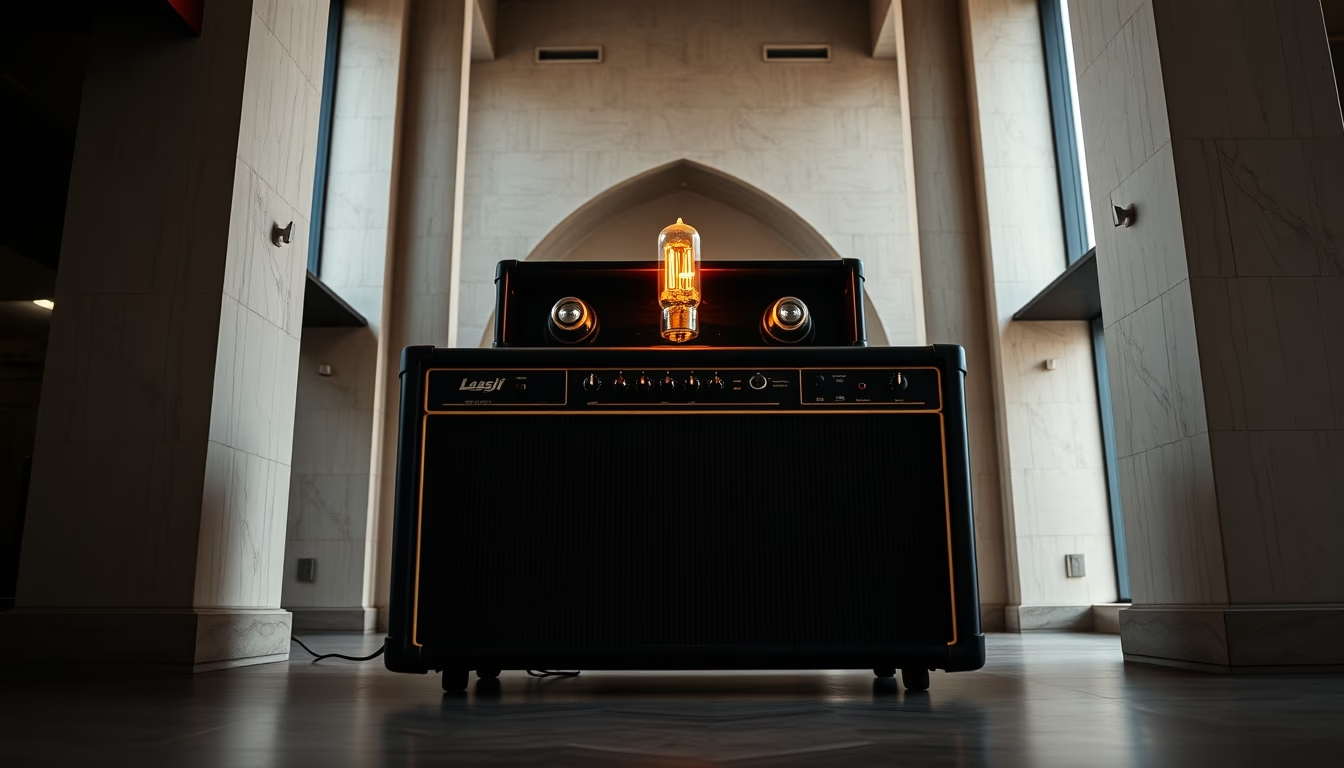
Tube amplifiers are audio devices that use thermionic valves to amplify electrical signals, prized for their warm sound and characteristic harmonic distortion.
About this subject
Tube amplifiers, also known as valve amplifiers, are a technology that dates back to the early 20th century. Unlike transistor amplifiers, which dominated the market from the 1960s onward, tube models use thermionic valves (vacuum tubes) to control electron flow. This process generates a soft harmonic distortion, often described as "warm" or "analog" sound, which many audiophiles and musicians prefer.
During the 1950s and 1960s, tube amplifiers reached their peak in the professional and home audio industry. Brands like McIntosh, Marantz, and Fender produced iconic models that remain references today. With the advent of transistors, which are more compact and efficient, tubes lost ground but never disappeared. Since the 1990s, there has been a resurgence of interest in tube equipment, driven by audiophiles and musicians seeking a specific timbre.
Building a tube amplifier requires high-quality components, such as robust output transformers and imported tubes (e.g., Soviet 6L6 or Chinese EL34). They require more maintenance than transistorized ones, as tubes wear out and need periodic replacement. Nevertheless, many enthusiasts consider the effort worthwhile for the unique sonic experience.
Interestingly, tube amplifiers are not limited to home audio. Rock and blues guitarists use them extensively due to the natural saturation produced when pushed to the limit. Models like the Fender Twin Reverb and Marshall Plexi have become legends. In high-end audio, tube amplifiers continue to be symbols of prestige and quality, with prices that can exceed tens of thousands of dollars.
Frequently Asked Questions
What is the difference between a tube amplifier and a transistor amplifier?
Tube amplifiers use thermionic valves for amplification, producing soft harmonic distortion and warm sound. Transistor amplifiers use semiconductors, being more efficient, compact, and with lower distortion, but many consider their sound less engaging.
Do tubes need to be replaced frequently?
Yes, tubes have a limited lifespan, typically between 1,000 and 5,000 hours of use depending on type and application. Periodic replacement is necessary to maintain performance.
Why do guitarists prefer tube amplifiers?
Guitarists value the natural saturation of tubes when the amplifier is pushed into overdrive. This produces a harmonic-rich, dynamic timbre that responds to touch, difficult to replicate with transistors.
Direct URL
https://pub-c7d6a6ea828543ac903a74a341ccb2e1.r2.dev/imagens/tube-amplifier-glowing-architectural-photography-fresh8.avifHow to credit
Include a visible link back to UtilizAí. Copy one of the snippets below:
<a href="https://xn--utiliza-eza.com/en/midia/imagens/tube-amplifier-glowing-architectural-photography-fresh8">Tube amplifier glowing</a> by <a href="https://xn--utiliza-eza.com">UtilizAí</a>, licensed under <a href="https://creativecommons.org/licenses/by/4.0/">CC BY 4.0</a>.
[Tube amplifier glowing](https://xn--utiliza-eza.com/en/midia/imagens/tube-amplifier-glowing-architectural-photography-fresh8) by [UtilizAí](https://xn--utiliza-eza.com), CC BY 4.0
License: CC-BY-4.0