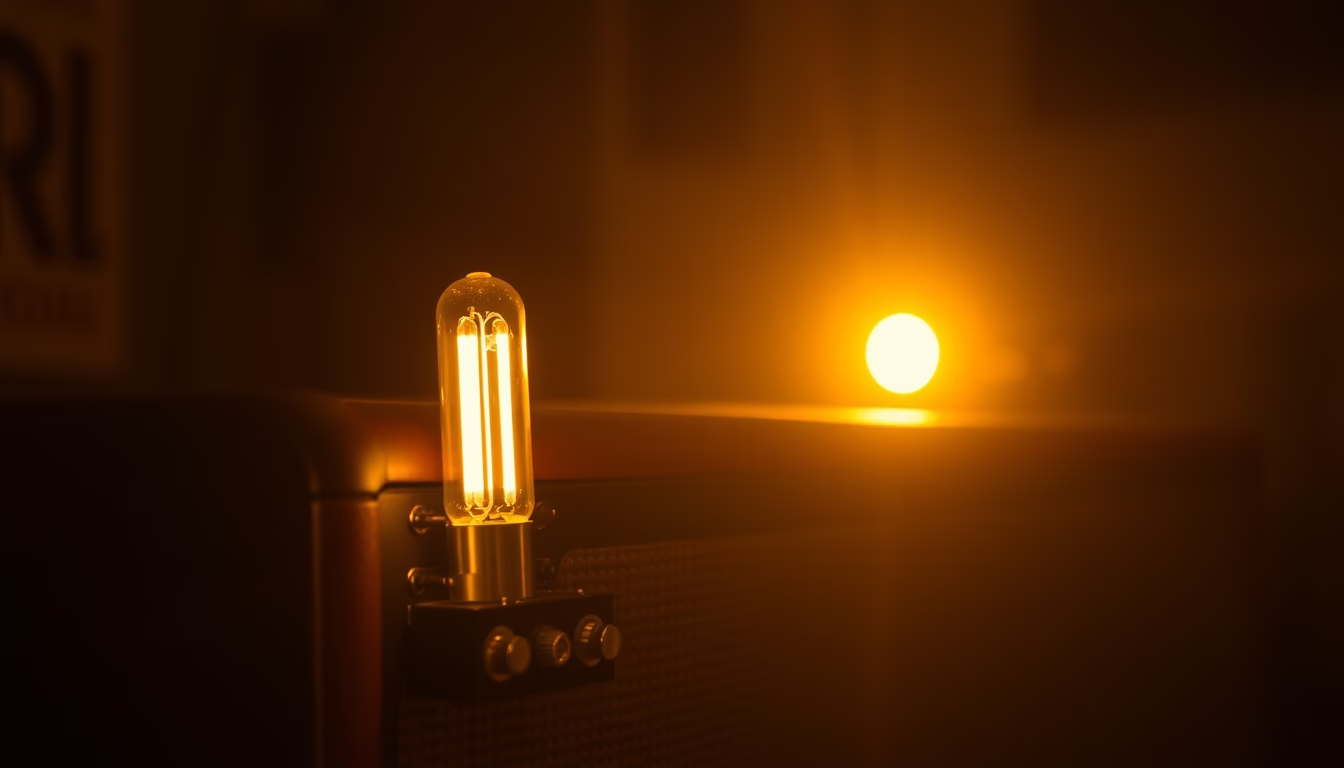
Tube amplifier glowing
1344×768 · AVIF · CC BY 4.0

Tube amplifiers are electronic devices that use vacuum tubes to amplify audio signals, prized for their warm sound and pleasing harmonic distortion.
About this subject
Tube amplifiers, also known as valve amplifiers, represent a technology predating transistors and dominated audio equipment until the 1960s. They work by heating a filament (cathode) that emits electrons, controlled by grids to amplify the signal. Despite being less efficient and more fragile than solid-state amplifiers, many audiophiles argue that tubes produce a more natural and musical sound, especially in electric guitars and high-fidelity systems.
In today's market, brands like McIntosh, Audio Research, and Fender continue manufacturing high-end tube amplifiers, while affordable Chinese models such as the Nobsound MS-10D have made the technology accessible. The distortion generated by tubes is predominantly second harmonic, considered more pleasing to the human ear than the odd-order distortion typical of transistors. This explains why blues and rock musicians prefer tube amps for natural overdrive.
Interestingly, tubes are also used in military and professional audio equipment for their robustness against electromagnetic pulses (EMP). The glowing filaments inside the tubes produce a characteristic orange light, which many enthusiasts consider part of the aesthetic experience. Maintenance involves periodic tube replacement as they degrade with use, and bias adjustment to ensure optimal performance.
Frequently Asked Questions
Why are tube amplifiers so expensive?
The high cost stems from handcrafted manufacturing, quality components (transformers, tubes), and low production volumes. NOS (New Old Stock) tubes can cost hundreds of dollars each.
What is the sound difference between tubes and transistors?
Tubes produce even-order harmonic distortion (mainly 2nd), considered musical, while transistors generate odd-order distortion, which is harsher. This results in a warmer, more compressed sound from tubes.
Do tube amplifiers require special care?
Yes, they need adequate ventilation for heat dissipation, periodic tube replacement (about 2,000 hours), and bias adjustment. They should be powered on/off properly to avoid thermal shock.
Direct URL
https://pub-c7d6a6ea828543ac903a74a341ccb2e1.r2.dev/imagens/tube-amplifier-glowing-aerial-drone-shot-fresh0.avifHow to credit
Include a visible link back to UtilizAí. Copy one of the snippets below:
<a href="https://xn--utiliza-eza.com/en/midia/imagens/tube-amplifier-glowing-aerial-drone-shot-fresh0">Tube amplifier glowing</a> by <a href="https://xn--utiliza-eza.com">UtilizAí</a>, licensed under <a href="https://creativecommons.org/licenses/by/4.0/">CC BY 4.0</a>.
[Tube amplifier glowing](https://xn--utiliza-eza.com/en/midia/imagens/tube-amplifier-glowing-aerial-drone-shot-fresh0) by [UtilizAí](https://xn--utiliza-eza.com), CC BY 4.0
License: CC-BY-4.0