Tuba large brass
1344×768 · AVIF · CC BY 4.0
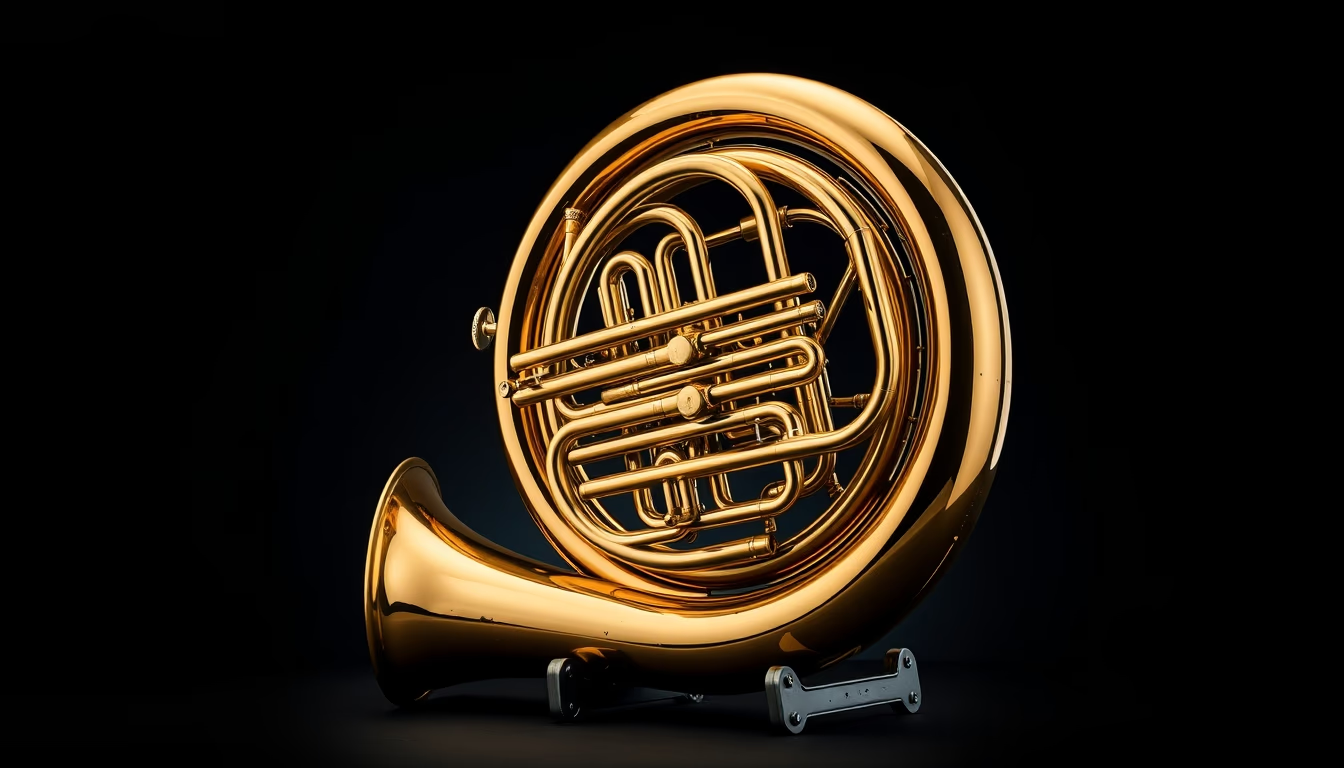
The tuba is the largest and lowest-pitched brass instrument, essential in orchestras and bands.
About this subject
The tuba is a brass wind instrument known for its deep, rich tone. It was invented in 1835 in Germany by Wilhelm Wieprecht and Johann Gottfried Moritz, evolving from earlier instruments like the bombardon and ophicleide. The tuba gradually replaced these in symphony orchestras, becoming the foundation of the brass section.
There are various sizes and tunings of tuba, with common ones in F, E♭, C, and B♭. The B♭ tuba is widely used in marching bands and jazz ensembles, while the C tuba is standard in American symphony orchestras. The instrument features a conical bore that widens into a large bell, and its mouthpiece is cup-shaped, similar to other low brass instruments.
The tuba plays a crucial role in music, providing the bass line and supporting harmony. In orchestras, it often doubles the double basses or bassoons. In jazz, the tuba was extensively used in early 20th-century Dixieland bands before being replaced by the double bass, but it remains prominent in New Orleans brass bands. One of the most iconic tuba players was John Philip Sousa, who popularized the sousaphone, a lightweight variation designed for marching.
Frequently Asked Questions
What is the origin of the tuba?
The tuba was invented in 1835 in Germany by Wilhelm Wieprecht and Johann Gottfried Moritz, as a replacement for the bombardon and ophicleide.
How many types of tuba are there?
There are several types, with the most common being tubas in F, E♭, C, and B♭. Each has specific tuning and usage in different musical contexts.
What is the difference between a tuba and a sousaphone?
The sousaphone is a variation of the tuba designed for marching bands. It has a shape that wraps around the player's body and a forward-facing bell, while the traditional tuba has an upward-facing bell.
Direct URL
https://pub-c7d6a6ea828543ac903a74a341ccb2e1.r2.dev/imagens/tuba-large-brass-studio-still-life-p5.avifHow to credit
Include a visible link back to UtilizAí. Copy one of the snippets below:
<a href="https://xn--utiliza-eza.com/en/midia/imagens/tuba-large-brass-studio-still-life-p5">Tuba large brass</a> by <a href="https://xn--utiliza-eza.com">UtilizAí</a>, licensed under <a href="https://creativecommons.org/licenses/by/4.0/">CC BY 4.0</a>.
[Tuba large brass](https://xn--utiliza-eza.com/en/midia/imagens/tuba-large-brass-studio-still-life-p5) by [UtilizAí](https://xn--utiliza-eza.com), CC BY 4.0
License: CC-BY-4.0