Trumpet golden detail
1344×768 · AVIF · CC BY 4.0

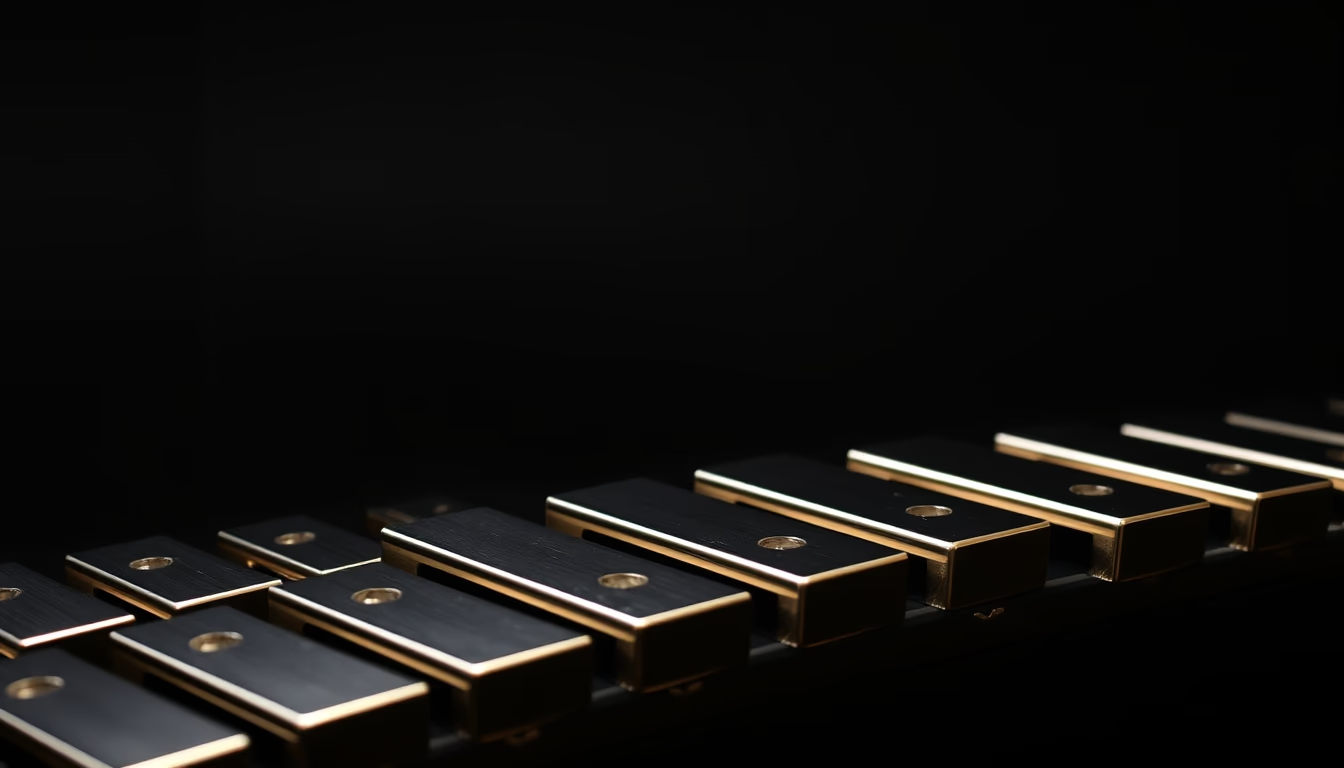
Golden details of a trumpet: from craftsmanship to sound impact, discover what makes this instrument so special.
About this subject
The trumpet is one of the oldest brass instruments, with origins dating back to ancient civilizations such as Egypt and Rome. Traditionally made of brass, the modern trumpet underwent significant refinements in the 19th century with the addition of piston valves, enabling greater melodic agility. Golden details, such as those found on the mouthpiece, valves, or bell, are not merely aesthetic: the application of gold can subtly alter the instrument's resonance, providing a brighter or smoother timbre depending on the thickness of the plating.
High-quality trumpet manufacturing involves processes like metal forming, tube soldering, and hand polishing. Gold plating is a technique that requires precision: the instrument is immersed in an electrolytic solution containing gold, and an electric current deposits a thin layer of the metal onto the surface. Gold-plated trumpets are often used in symphony orchestras and jazz bands, where both aesthetics and sound projection are valued.
In jazz, the trumpet rose to prominence with figures like Louis Armstrong, Miles Davis, and Dizzy Gillespie, who explored everything from vibrant, piercing tones to more melancholic textures. In classical music, composers such as Haydn and Hummel wrote concertos showcasing the instrument's versatility. In Brazilian popular music, the trumpet appears in genres like samba, choro, and frevo, adding brightness and energy to the melodies.
Interesting fact: the choice between a natural brass, silver-plated, or gold-plated trumpet is not merely aesthetic. Experienced musicians claim that gold plating can make the sound fuller, while silver favors a quicker, more cutting response. This subtlety makes each trumpet a unique piece, combining art and science.
Frequently Asked Questions
Why do some trumpets have golden details?
Golden details are applied for aesthetic and functional reasons. Gold plating can enhance the instrument's timbre, making it fuller or brighter, and also protects the metal from oxidation.
What is the difference between a brass trumpet and a gold-plated one?
A natural brass trumpet has a more direct, bright sound. Gold plating adds a layer that can soften high frequencies and enrich midrange tones, resulting in a warmer, more projected timbre.
How is gold plating done on a trumpet?
The process involves cleaning and polishing the instrument, then immersing it in an electrolytic gold solution. An electric current deposits a thin, uniform layer of gold onto the surface, which is then sealed for durability.
Direct URL
https://pub-c7d6a6ea828543ac903a74a341ccb2e1.r2.dev/imagens/trumpet-golden-detail-cinematic-wide-shot-p12.avifHow to credit
Include a visible link back to UtilizAí. Copy one of the snippets below:
<a href="https://xn--utiliza-eza.com/en/midia/imagens/trumpet-golden-detail-cinematic-wide-shot-p12">Trumpet golden detail</a> by <a href="https://xn--utiliza-eza.com">UtilizAí</a>, licensed under <a href="https://creativecommons.org/licenses/by/4.0/">CC BY 4.0</a>.
[Trumpet golden detail](https://xn--utiliza-eza.com/en/midia/imagens/trumpet-golden-detail-cinematic-wide-shot-p12) by [UtilizAí](https://xn--utiliza-eza.com), CC BY 4.0
License: CC-BY-4.0