Truck driver with shipping invoices on a clipboard near a cargo truck
1344×768 · AVIF · CC BY 4.0
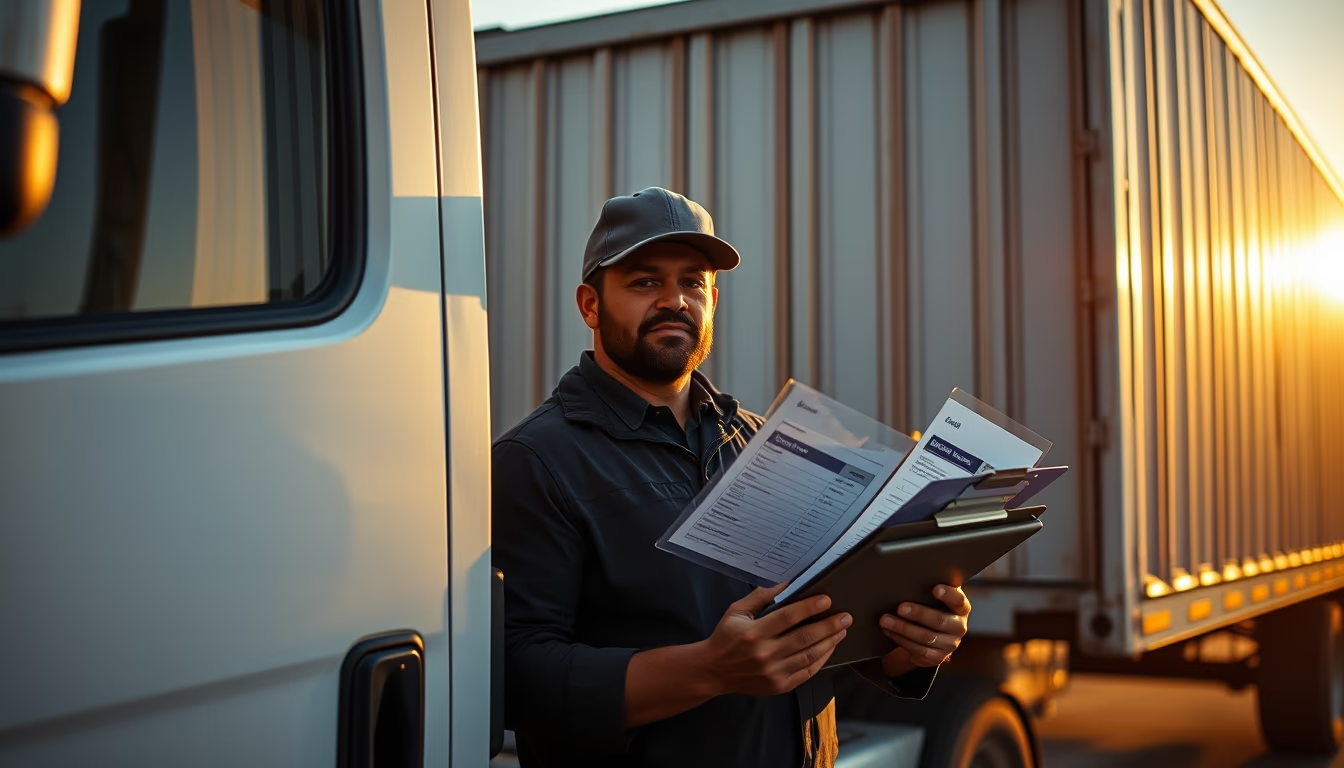
A truck driver holding shipping invoices on a clipboard is a common sight in Brazil's road freight sector, a vital part of the economy.
About this subject
Road freight is the primary mode of cargo transportation in Brazil, accounting for about 60% of all domestic cargo movement. The truck driver, a central figure in this system, frequently handles documents such as invoices and transport receipts, which are essential for legality and tracking. The electronic invoice (NF-e), implemented in 2008, simplified the process, but it is still common to use clipboards to organize printed documents during deliveries.
Brazil has a fleet of approximately 2.2 million trucks, according to ANTT data. Many drivers are self-employed, known as "caminhoneiros," who face long hours on often precarious roads. The profession is regulated by Law 13.103/2015, which establishes rights such as mandatory rest and limits on driving hours. Despite this, the category still struggles for better working conditions and safety.
The shipping invoices on the clipboard represent the bureaucracy that accompanies cargo transportation. Each trip may involve multiple documents: the product invoice, electronic transport receipt (CT-e), electronic manifest of fiscal documents (MDF-e), and delivery receipts. Checking these papers is crucial to avoid fines and tax issues, especially in interstate operations where ICMS rates vary.
Interestingly, the image of the driver with a clipboard harkens back to a tradition that persists even in the digital age. Many experienced truckers prefer paper for reliability, as connection failures on remote highways can render electronic systems unusable. The clipboard, therefore, is a symbol of the resilience and adaptation of the professionals who keep Brazil moving.
Frequently Asked Questions
Why do truck drivers still use clipboards with paper shipping invoices?
Many drivers prefer paper for reliability, as internet connections on remote highways can be unstable, making electronic documents hard to access. Additionally, tradition and familiarity with manual processes remain strong among experienced truckers.
What tax documents must a truck driver carry during cargo transportation?
The main documents are the electronic invoice (NF-e), electronic transport receipt (CT-e), electronic manifest of fiscal documents (MDF-e), and delivery receipts. Missing any can result in fines and cargo seizure.
How important is road freight for the Brazilian economy?
Road freight accounts for about 60% of all domestic cargo movement in Brazil, being essential for agricultural output, industrial production, and distribution of goods nationwide.
Direct URL
https://pub-c7d6a6ea828543ac903a74a341ccb2e1.r2.dev/imagens/truck-driver-with-shipping-invoices-on-a-clipboard-near-a-cargo-truck-wide-late-afternoon-6.avifHow to credit
Include a visible link back to UtilizAí. Copy one of the snippets below:
<a href="https://xn--utiliza-eza.com/en/midia/imagens/truck-driver-with-shipping-invoices-on-a-clipboard-near-a-cargo-truck-wide-late-afternoon-6">Truck driver with shipping invoices on a clipboard near a cargo truck</a> by <a href="https://xn--utiliza-eza.com">UtilizAí</a>, licensed under <a href="https://creativecommons.org/licenses/by/4.0/">CC BY 4.0</a>.
[Truck driver with shipping invoices on a clipboard near a cargo truck](https://xn--utiliza-eza.com/en/midia/imagens/truck-driver-with-shipping-invoices-on-a-clipboard-near-a-cargo-truck-wide-late-afternoon-6) by [UtilizAí](https://xn--utiliza-eza.com), CC BY 4.0
License: CC-BY-4.0
Tags
Related images
 Brazilian e-commerce founder with packages and laptop showing tax software
 Brazilian e-commerce founder with packages and laptop showing tax software
 Brazilian e-commerce founder with packages and laptop showing tax software
 Brazilian e-commerce founder with packages and laptop showing tax software
 Brazilian e-commerce founder with packages and laptop showing tax software
 Brazilian e-commerce founder with packages and laptop showing tax software