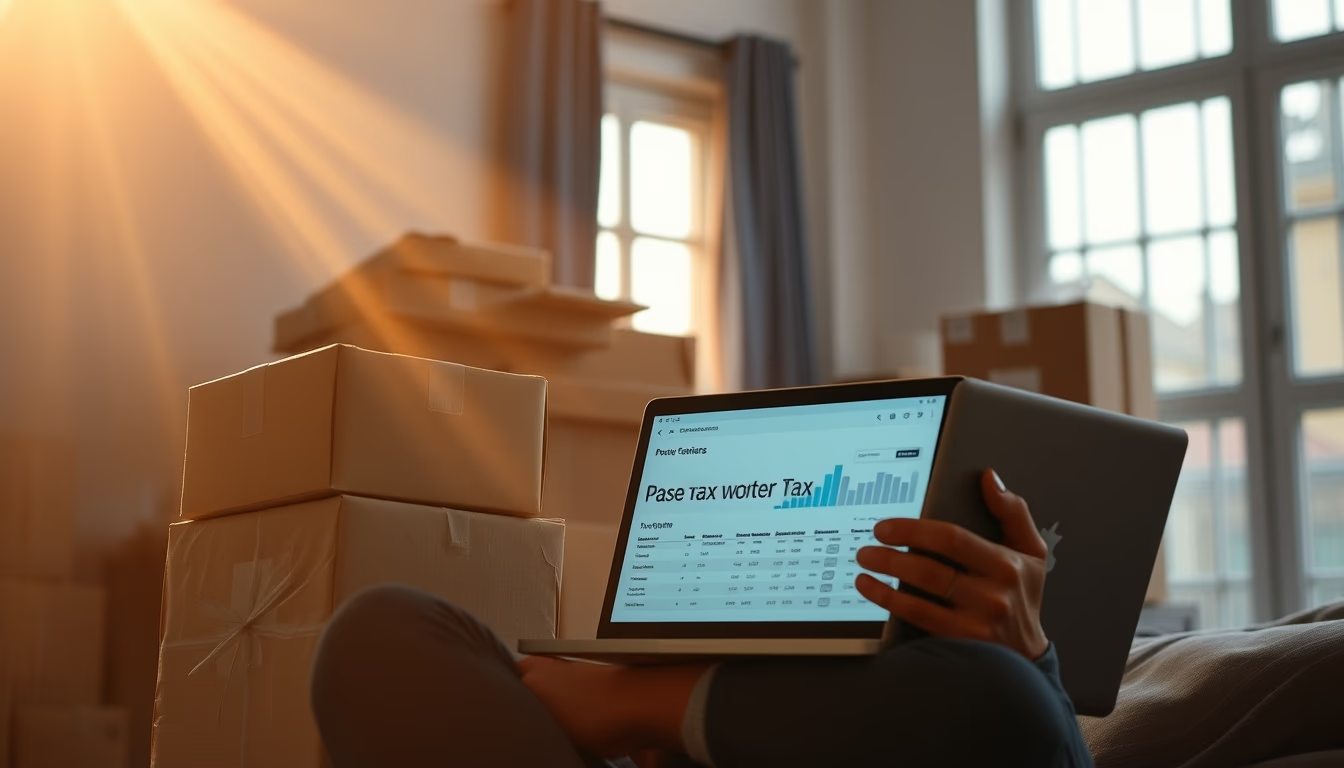
Brazilian e-commerce founder with packages and laptop showing tax software
1344×768 · AVIF · CC BY 4.0

Brazilian e-commerce founder uses tax management software to streamline tax obligations and reduce costs.
About this subject
Brazilian e-commerce entrepreneurs face one of the most complex tax systems in the world, with over 90 different taxes at federal, state, and municipal levels. To manage this complexity, many use tax management software that automates calculations, issues electronic invoices, and generates reports for filings like SPED and Simples Nacional. These systems are essential to avoid penalties and take advantage of tax benefits, such as reducing the tax burden on online sales, which can reach up to 30% of revenue.
Brazil has over 1.5 million online stores, according to ABComm, and most opt for the Simples Nacional regime, which consolidates taxes into a single monthly payment. However, larger companies may adopt Lucro Presumido or Lucro Real, which require more detailed controls. Software like Bling, Tiny, and Conta Azul help integrate sales, inventory, and finance operations, ensuring compliance with tax authorities.
The image shows an e-commerce founder in a nighttime setting, with product packages and a laptop displaying tax software. This scene is common in home offices of small business owners, who must balance logistics, sales, and tax bureaucracy. Choosing the right software can reduce time spent on ancillary obligations by up to 70%, allowing the entrepreneur to focus on business growth.
Fun fact: since the implementation of the Public Digital Bookkeeping System (SPED) in 2007, the Brazilian Federal Revenue cross-checks electronic invoice data in real time, increasing scrutiny on e-commerce. Thus, using tax software has become a necessity rather than an option to avoid problems with the tax authorities.
Frequently Asked Questions
What are the main tax regimes for e-commerce in Brazil?
The main regimes are Simples Nacional, Lucro Presumido, and Lucro Real. Simples Nacional is most common for small businesses, consolidating taxes into a single monthly payment. Lucro Presumido is for companies with annual revenue up to R$ 78 million, while Lucro Real is mandatory for certain activities or revenue above R$ 78 million.
How can tax software help an e-commerce business?
It automates tax calculations, issues electronic invoices, generates reports for filings like SPED and DAS, and integrates sales, inventory, and finance. This reduces errors, saves time, and ensures tax compliance, avoiding fines.
What is SPED and why is it important for e-commerce?
SPED (Public Digital Bookkeeping System) is a Brazilian Federal Revenue system that unifies the submission of tax and accounting information in digital format. It allows real-time data cross-checking, increasing scrutiny. For e-commerce, it is mandatory and requires compatible tax software.
Direct URL
https://pub-c7d6a6ea828543ac903a74a341ccb2e1.r2.dev/imagens/brazilian-e-commerce-founder-with-packages-and-laptop-showing-tax-software-closeup-twilight-4.avifHow to credit
Include a visible link back to UtilizAí. Copy one of the snippets below:
<a href="https://xn--utiliza-eza.com/en/midia/imagens/brazilian-e-commerce-founder-with-packages-and-laptop-showing-tax-software-closeup-twilight-4">Brazilian e-commerce founder with packages and laptop showing tax software</a> by <a href="https://xn--utiliza-eza.com">UtilizAí</a>, licensed under <a href="https://creativecommons.org/licenses/by/4.0/">CC BY 4.0</a>.
[Brazilian e-commerce founder with packages and laptop showing tax software](https://xn--utiliza-eza.com/en/midia/imagens/brazilian-e-commerce-founder-with-packages-and-laptop-showing-tax-software-closeup-twilight-4) by [UtilizAí](https://xn--utiliza-eza.com), CC BY 4.0
License: CC-BY-4.0
Tags
Related images
 Brazilian e-commerce founder with packages and laptop showing tax software
 Brazilian e-commerce founder with packages and laptop showing tax software
 Brazilian e-commerce founder with packages and laptop showing tax software
 Brazilian e-commerce founder with packages and laptop showing tax software
 Brazilian e-commerce founder with packages and laptop showing tax software
 Truck driver with shipping invoices on a clipboard near a cargo truck