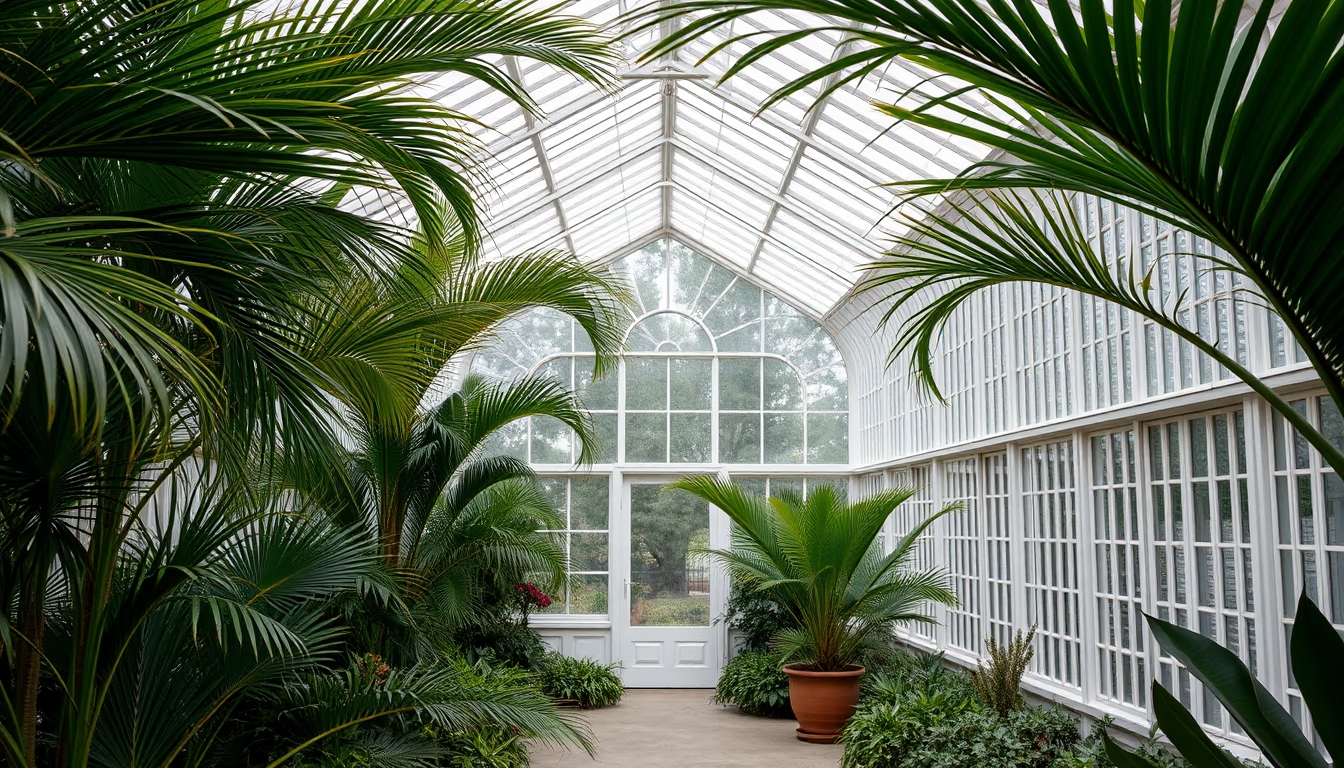
Tropical greenhouse misty
1344×768 · AVIF · CC BY 4.0
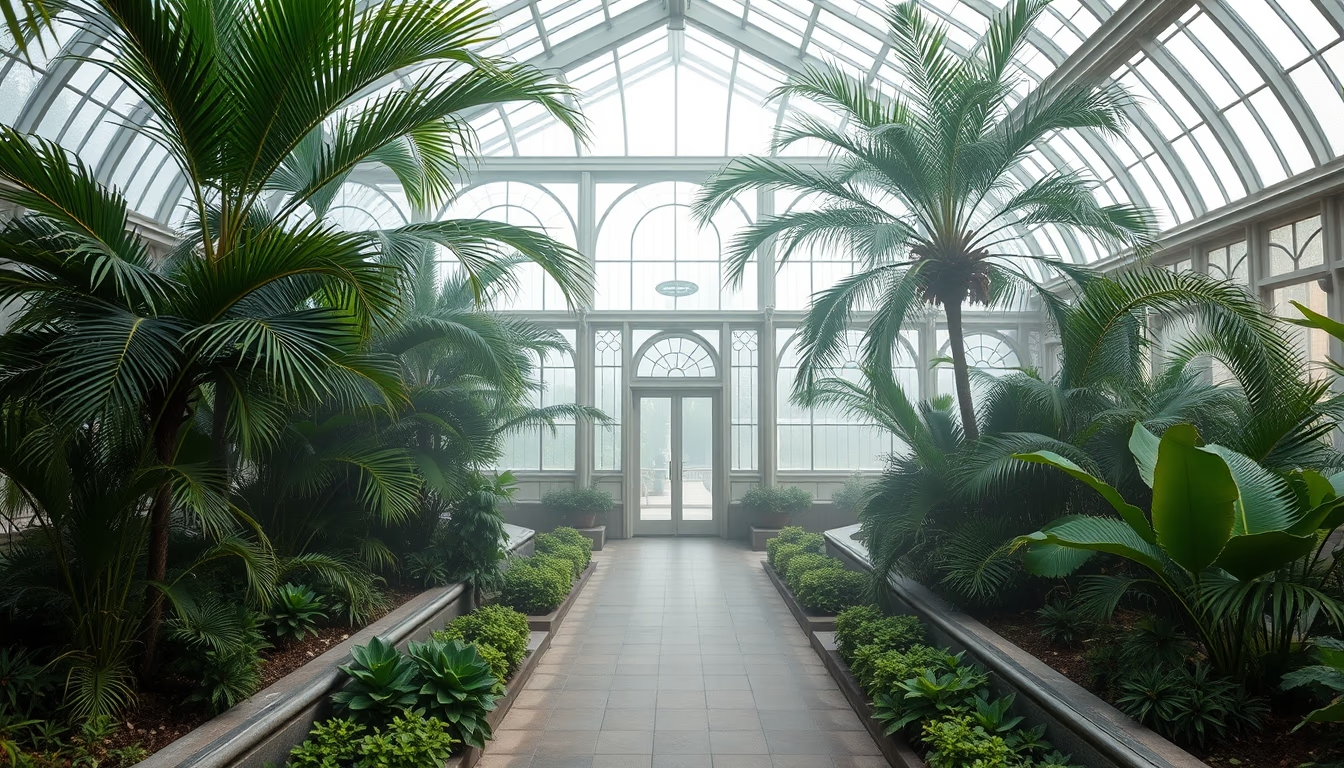
Tropical greenhouses with mist create humid environments ideal for exotic plants, recreating equatorial climates anywhere in the world.
About this subject
Tropical greenhouses are structures designed to simulate the conditions of equatorial rainforests, with high humidity and constant temperatures. The use of misting systems is essential to maintain relative humidity above 80%, required by plants such as orchids, bromeliads, and ferns. These greenhouses typically combine partial shading, controlled ventilation, and permeable flooring to prevent waterlogging.
Artificial mist not only increases humidity but also lowers ambient temperature by up to 5°C through evaporation, protecting plants from heat stress. Many botanical gardens, such as the Rio de Janeiro Botanical Garden and the Royal Botanic Gardens at Kew, have dedicated tropical greenhouse sections that attract visitors interested in biodiversity. The architecture of these greenhouses often uses curved glass and metal frames to maximize diffuse light entry.
Interestingly, mist also aids in propagation through cuttings, as it keeps leaves hydrated without oversaturating the soil. In commercial greenhouses, mist is controlled by humidity sensors and timers, ensuring periodic cycles. Some species, like Victoria amazonica (giant water lily), require such high humidity levels that they thrive only in these controlled environments.
Maintaining a tropical greenhouse involves challenges such as controlling fungi and algae, which prosper in humidity. To mitigate this, many systems include air circulation and antimicrobial materials. Despite energy costs, these greenhouses are vital for conserving endangered species and for scientific research on climate adaptation.
Frequently Asked Questions
Why is mist necessary in tropical greenhouses?
Mist increases air humidity to near 90%, essential for tropical plants that evolved in rainforests. It also lowers temperature and aids in propagation of cuttings.
Which plants benefit most from misted environments?
Epiphytic orchids, bromeliads, ferns, mosses, and carnivorous plants like Drosera rely on high humidity provided by mist to absorb water and nutrients.
How does mist affect greenhouse architecture?
Mist requires corrosion-resistant materials like aluminum and stainless steel, plus efficient drainage. The structure must allow controlled ventilation to prevent excessive condensation on glass walls.
Direct URL
https://pub-c7d6a6ea828543ac903a74a341ccb2e1.r2.dev/imagens/tropical-greenhouse-misty-architectural-photography-fresh6.avifHow to credit
Include a visible link back to UtilizAí. Copy one of the snippets below:
<a href="https://xn--utiliza-eza.com/en/midia/imagens/tropical-greenhouse-misty-architectural-photography-fresh6">Tropical greenhouse misty</a> by <a href="https://xn--utiliza-eza.com">UtilizAí</a>, licensed under <a href="https://creativecommons.org/licenses/by/4.0/">CC BY 4.0</a>.
[Tropical greenhouse misty](https://xn--utiliza-eza.com/en/midia/imagens/tropical-greenhouse-misty-architectural-photography-fresh6) by [UtilizAí](https://xn--utiliza-eza.com), CC BY 4.0
License: CC-BY-4.0