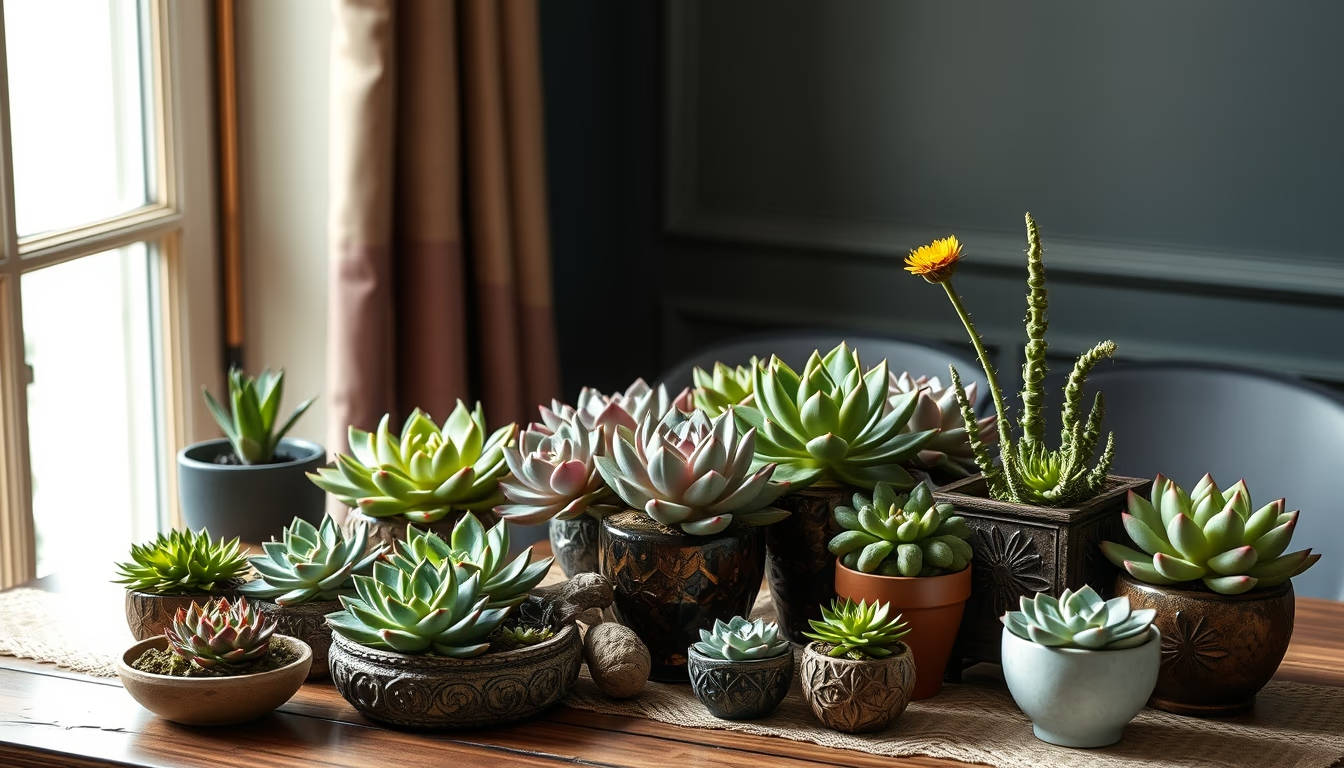
Tropical greenhouse misty
1344×768 · AVIF · CC BY 4.0
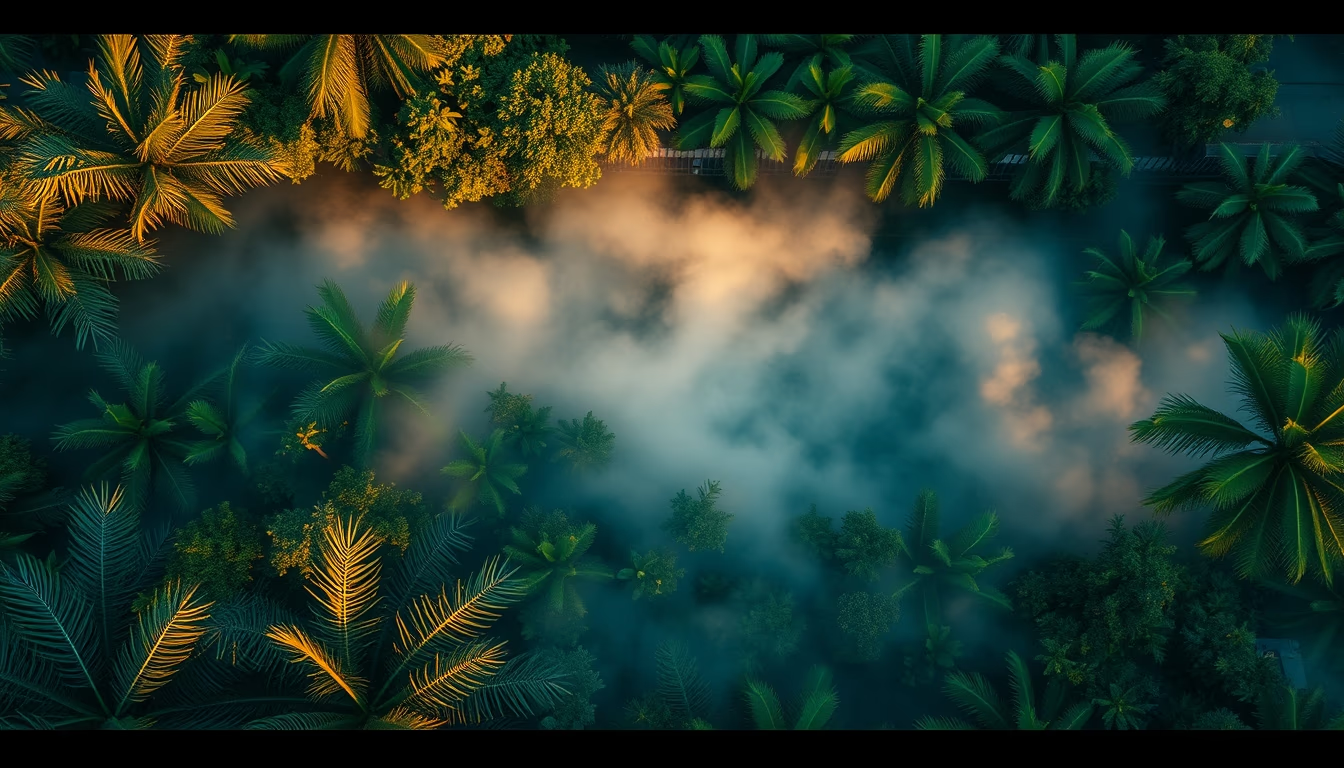
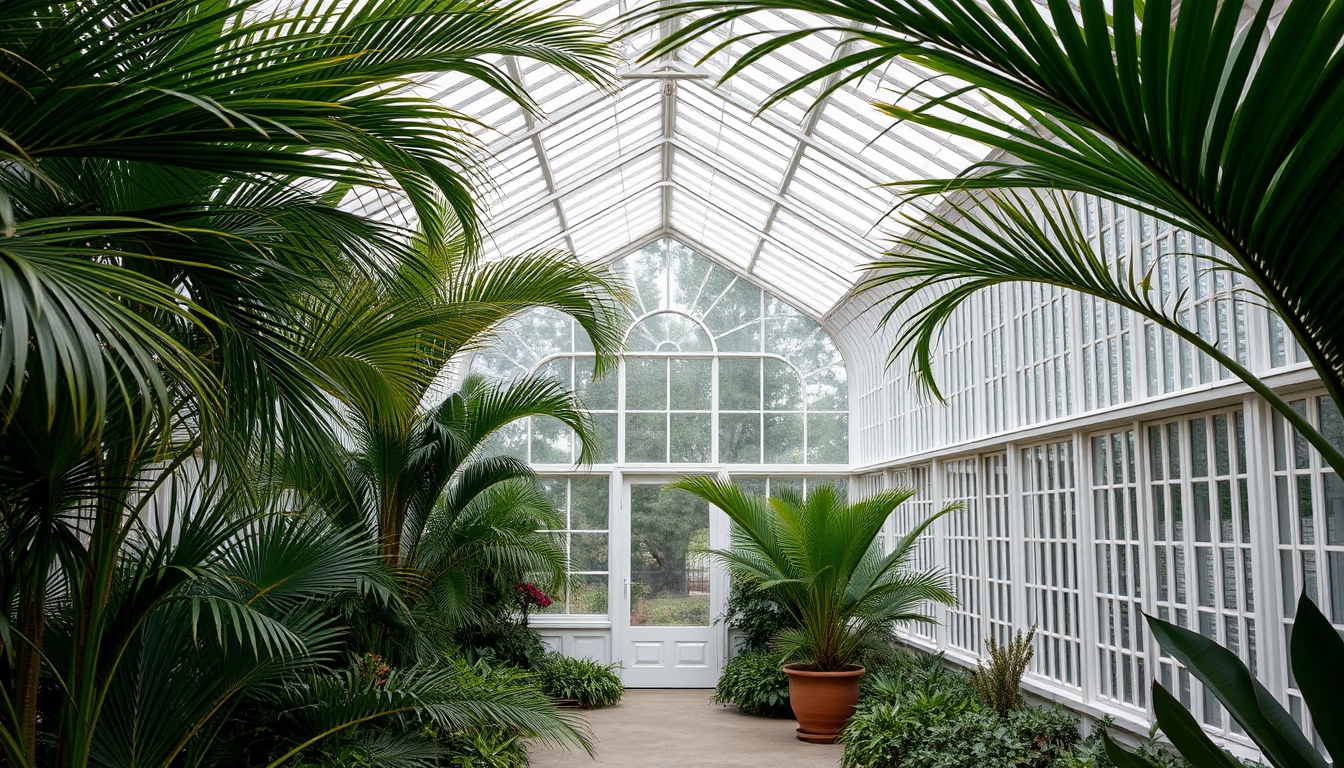
Tropical greenhouses create controlled environments for exotic species, with misting systems maintaining high humidity even in temperate climates.
About this subject
Tropical greenhouses are specialized structures that recreate rainforest conditions for plants requiring constant heat and humidity. Unlike conventional greenhouses, they use misting systems that spray fine water droplets into the air, raising relative humidity above 80%. Temperature is maintained between 20°C and 30°C, often with automated heating or cooling.
These greenhouses are vital for commercial horticulture of ornamental plants like orchids, bromeliads, and ferns, as well as tropical fruits such as papaya and passionfruit in non-tropical regions. In countries like the Netherlands and Japan, tropical greenhouses enable off-season production, reducing import dependency. Humidity and temperature sensors optimize water and energy use, making the system more sustainable.
An aerial view of a tropical greenhouse complex reveals the geometric layout of modules, often covered with glass or light-diffusing polycarbonate. The mist generated by nebulizers is visible from above, forming a white layer that shields plants from excess solar radiation. This technique also lowers internal temperature by up to 5°C compared to non-misted greenhouses.
Globally, these structures are essential for germplasm banks and conservation of endangered species. Botanical gardens like Kew Gardens (UK) and the New York Botanical Garden maintain historic tropical greenhouses that educate the public about biodiversity. Misting technology, originally developed for hydroponic cultivation, is now standard in high-tech greenhouses.
Frequently Asked Questions
Why is misting important in tropical greenhouses?
Misting maintains humidity above 80%, crucial for tropical plants that absorb water through leaves. It also lowers internal temperature and prevents water stress.
What plants are grown in tropical greenhouses?
Orchids, bromeliads, ferns, fruits like papaya and passionfruit, as well as rare species for conservation. Many are native to South American and Southeast Asian rainforests.
Do tropical greenhouses consume a lot of energy?
Yes, especially for heating in cold climates. But modern systems with sensors and renewable energy reduce consumption. Misting uses more water than electricity.
Direct URL
https://pub-c7d6a6ea828543ac903a74a341ccb2e1.r2.dev/imagens/tropical-greenhouse-misty-aerial-drone-shot-fresh18.avifHow to credit
Include a visible link back to UtilizAí. Copy one of the snippets below:
<a href="https://xn--utiliza-eza.com/en/midia/imagens/tropical-greenhouse-misty-aerial-drone-shot-fresh18">Tropical greenhouse misty</a> by <a href="https://xn--utiliza-eza.com">UtilizAí</a>, licensed under <a href="https://creativecommons.org/licenses/by/4.0/">CC BY 4.0</a>.
[Tropical greenhouse misty](https://xn--utiliza-eza.com/en/midia/imagens/tropical-greenhouse-misty-aerial-drone-shot-fresh18) by [UtilizAí](https://xn--utiliza-eza.com), CC BY 4.0
License: CC-BY-4.0