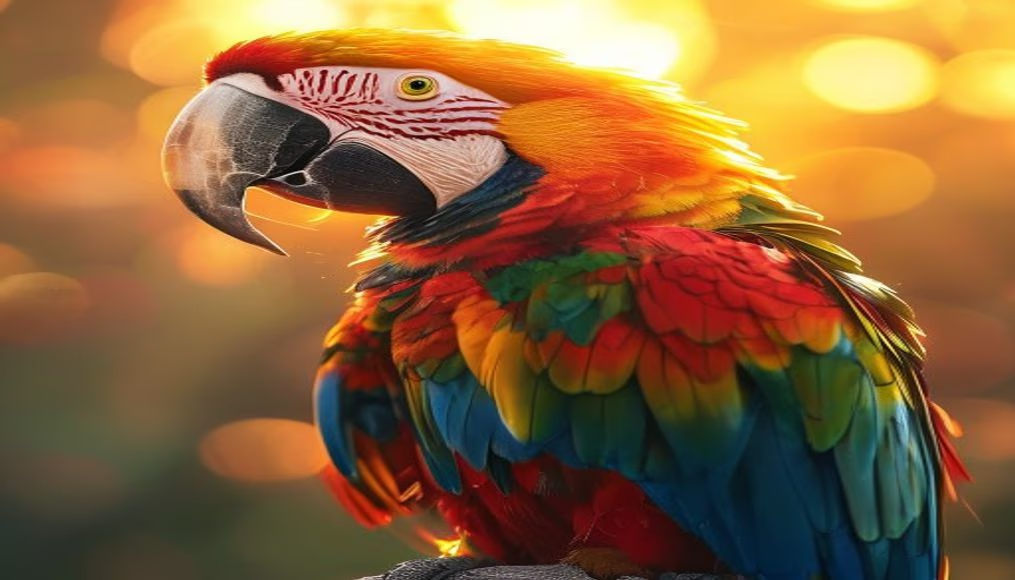
Tropical bird vivid colors
1344×768 · AVIF · CC BY 4.0
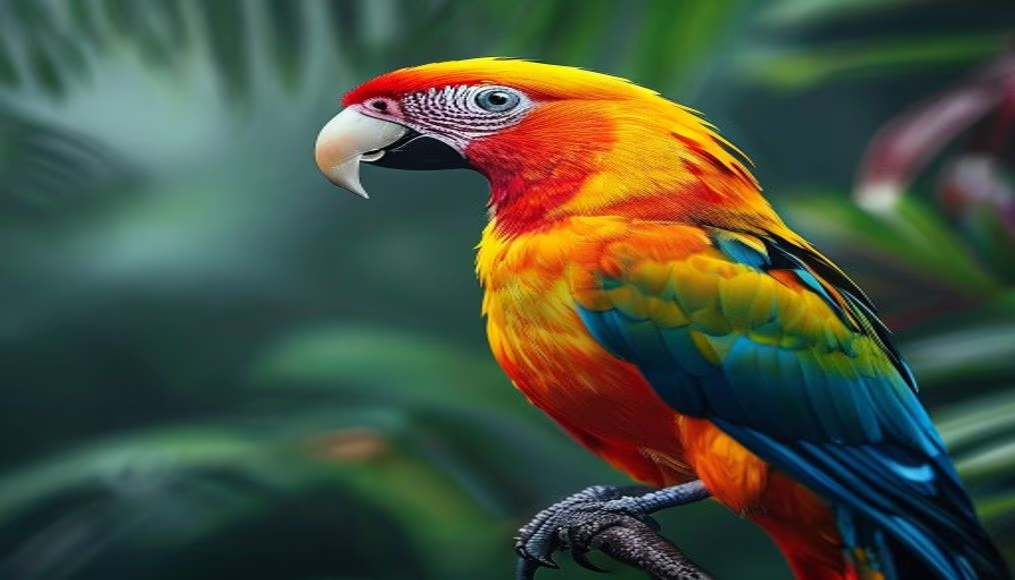
Tropical birds display vivid colors that fascinate scientists and observers, resulting from evolutionary adaptations for communication and survival.
About this subject
Tropical birds are renowned for their exuberant plumage, ranging from the deep green of the blue-fronted amazon (Amazona aestiva) to the electric blue of the hyacinth macaw (Anodorhynchus hyacinthinus). These colors are not merely aesthetic: they play crucial roles in sexual selection, species identification, and even camouflage in dense forests. In Brazil, biomes such as the Amazon and Pantanal harbor emblematic species like the toco toucan (Ramphastos toco), whose orange beak is one of the largest in proportion to body size, and the dusky-legged guan (Penelope obscura), with its bronze-green feathers.
The production of these colors involves complex mechanisms. Feathers may contain pigments such as melanins (for dark tones) and carotenoids (for reds, oranges, and yellows), which birds obtain from their diet of fruits and seeds. Blue and green colors, in turn, result from microstructures in the feathers that refract light, a phenomenon called structural color. Studies indicate that parrots, for example, possess a unique pigment known as psittacofulvin, responsible for intense yellow and red hues.
Beyond beauty, colors hold ecological importance. Males often display brighter plumages to attract females, as seen in the peacock (Pavo cristatus) and the Andean cock-of-the-rock (Rupicola rupicola). However, habitat loss and illegal wildlife trade threaten these species. The red-spectacled amazon (Amazona pretrei) suffers from deforestation. Organizations like the Hyacinth Macaw Project work on conservation, monitoring nests and recovering populations in the Pantanal.
Fun facts: hummingbirds (Trochilidae) can flap their wings up to 80 times per second, and their iridescent colors shift with viewing angle. The trogon (Trogonidae) has a color pattern that helps it blend among leaves. These birds are also important seed dispersers, aiding forest regeneration. Understanding and protecting these animals is essential to maintaining tropical biodiversity.
Frequently Asked Questions
Why do tropical birds have such vibrant colors?
Vibrant colors result from pigments in their diet, such as carotenoids, and feather structures that refract light. They are used to attract mates, identify species, and in some cases, camouflage.
What are the most colorful tropical birds in Brazil?
Examples include the hyacinth macaw (electric blue), toco toucan (orange and black beak), Andean cock-of-the-rock (bright orange), and the green-crowned brilliant hummingbird (iridescent green).
How does habitat loss affect tropical birds?
Deforestation reduces food availability and nesting sites, and fragments populations. Species like the red-spectacled amazon are threatened by forest destruction.
Direct URL
https://pub-c7d6a6ea828543ac903a74a341ccb2e1.r2.dev/imagens/tropical-bird-vivid-colors-commercial-product-photography-v9.avifHow to credit
Include a visible link back to UtilizAí. Copy one of the snippets below:
<a href="https://xn--utiliza-eza.com/en/midia/imagens/tropical-bird-vivid-colors-commercial-product-photography-v9">Tropical bird vivid colors</a> by <a href="https://xn--utiliza-eza.com">UtilizAí</a>, licensed under <a href="https://creativecommons.org/licenses/by/4.0/">CC BY 4.0</a>.
[Tropical bird vivid colors](https://xn--utiliza-eza.com/en/midia/imagens/tropical-bird-vivid-colors-commercial-product-photography-v9) by [UtilizAí](https://xn--utiliza-eza.com), CC BY 4.0
License: CC-BY-4.0