Trombone slide closeup
1344×768 · AVIF · CC BY 4.0
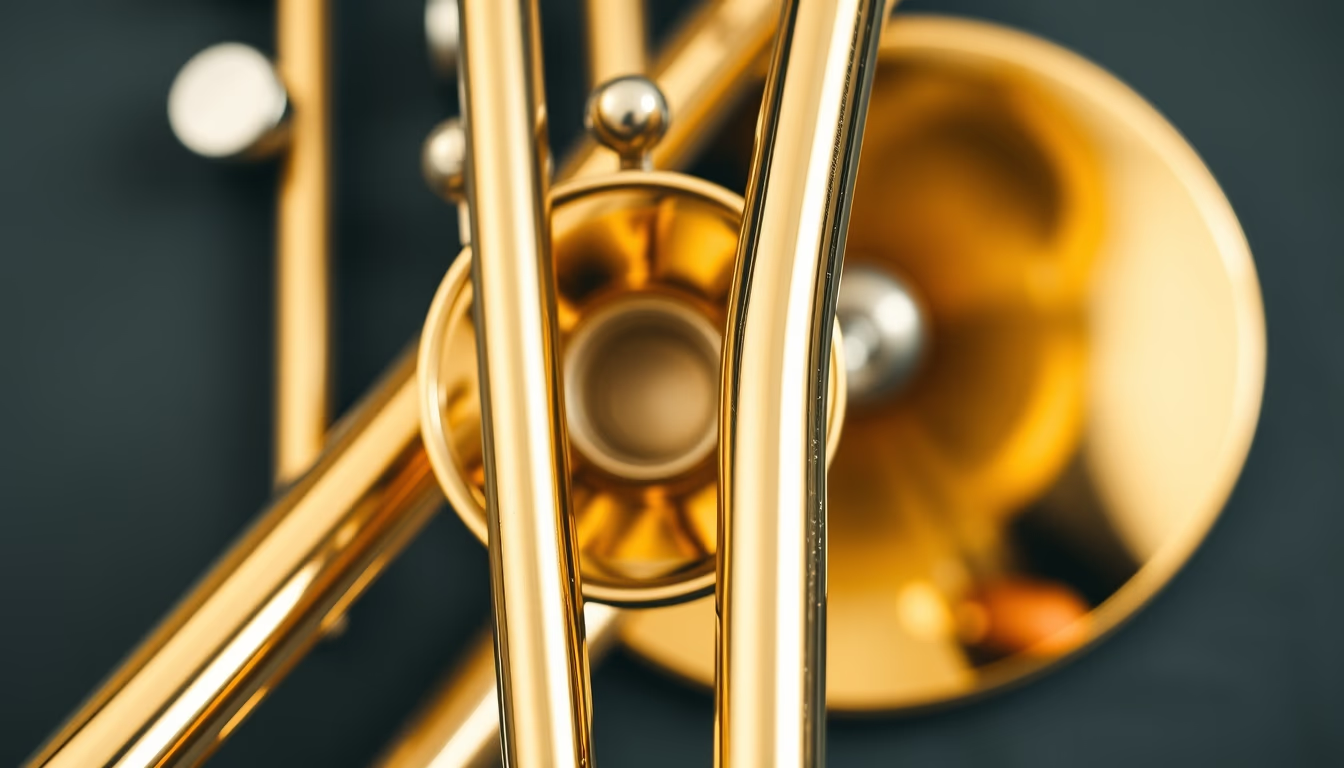
The trombone slide is the sliding mechanism that changes the tube length, altering the pitch of the notes produced by the instrument.
About this subject
The slide is one of the most distinctive features of the trombone, setting it apart from other brass instruments like trumpets and tubas, which use valves. It consists of two parallel sections of metal tubing, usually brass, that slide inside each other. The movement of the slide lengthens or shortens the air path, changing the vibration frequency and thus the musical note. There are seven main slide positions, each corresponding to a harmonic series. The modern trombone with its chromatic slide emerged in the 15th century, but primitive versions date back to the Renaissance. Maintenance of the slide is crucial: it must be regularly lubricated to ensure smooth movements and prevent wear. The slide also requires precise technique from the musician to control intonation, as small adjustments in position can alter the note. In symphonies and jazz bands, the slide is responsible for the characteristic glissandos that give the trombone a unique expressiveness. Interestingly, the trombone slide is one of the oldest mechanisms still in use in musical instruments, maintaining its basic design for centuries.
Frequently Asked Questions
How does the trombone slide work to produce different notes?
The slide moves two telescoping tube sections to change the total length of the instrument. A longer tube produces lower notes, while a shorter tube produces higher notes. Each slide position corresponds to a different harmonic series.
How many positions does a trombone slide have?
Traditionally, a slide trombone has seven positions, numbered from first (shortest, with the slide fully retracted) to seventh (longest, with the slide fully extended).
What is the difference between a slide trombone and a valve trombone?
A slide trombone uses a sliding mechanism to change pitch, while a valve trombone uses rotary valves to redirect air through extra tubing. The slide allows continuous glissandos, whereas valves offer greater agility for fast passages.
Direct URL
https://pub-c7d6a6ea828543ac903a74a341ccb2e1.r2.dev/imagens/trombone-slide-closeup-isometric-flat-lay-p9.avifHow to credit
Include a visible link back to UtilizAí. Copy one of the snippets below:
<a href="https://xn--utiliza-eza.com/en/midia/imagens/trombone-slide-closeup-isometric-flat-lay-p9">Trombone slide closeup</a> by <a href="https://xn--utiliza-eza.com">UtilizAí</a>, licensed under <a href="https://creativecommons.org/licenses/by/4.0/">CC BY 4.0</a>.
[Trombone slide closeup](https://xn--utiliza-eza.com/en/midia/imagens/trombone-slide-closeup-isometric-flat-lay-p9) by [UtilizAí](https://xn--utiliza-eza.com), CC BY 4.0
License: CC-BY-4.0