Tower of pisa lean
1344×768 · AVIF · CC BY 4.0
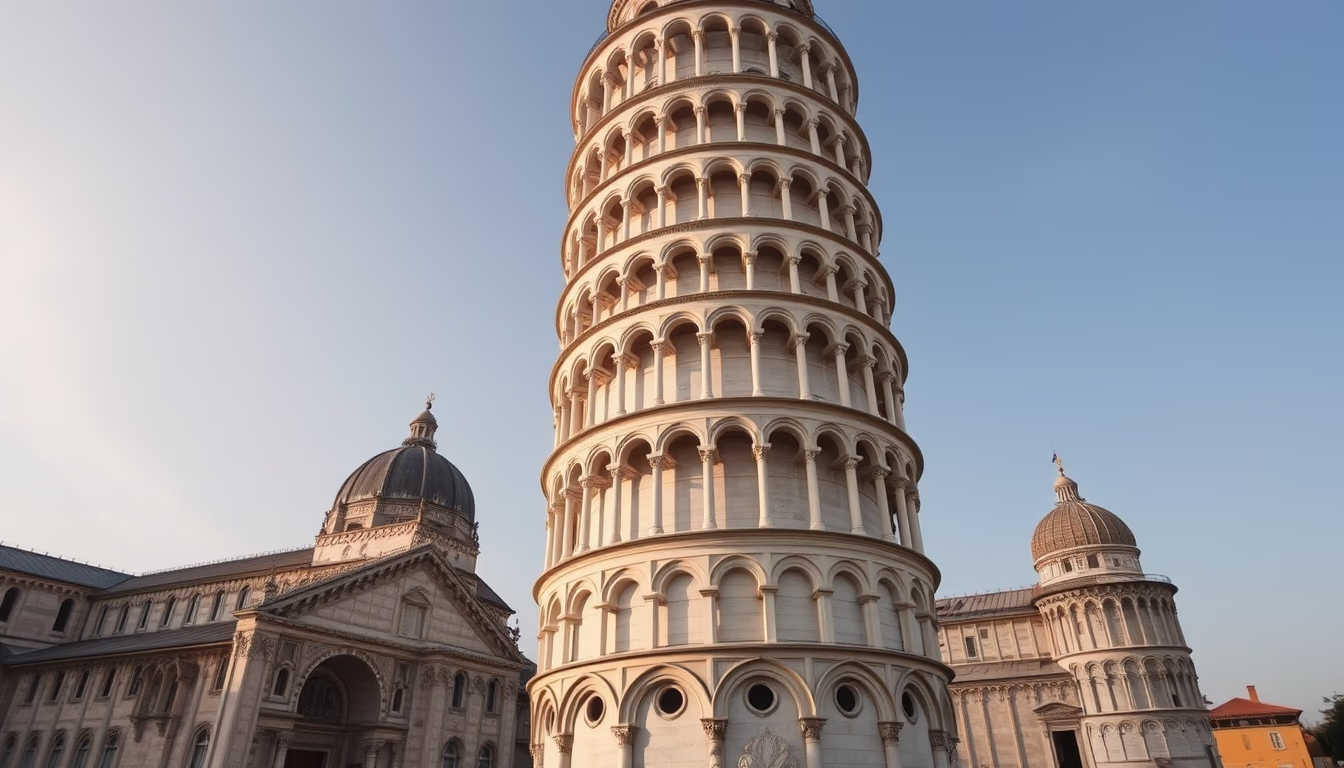
The Leaning Tower of Pisa is world-famous for its accidental tilt, caused by unstable soil, a problem that began during its construction in the 12th century.
About this subject
The Leaning Tower of Pisa, located in the Piazza dei Miracoli in Pisa, Italy, is the bell tower of the local cathedral. Construction began in 1173 and lasted approximately 200 years, with interruptions due to wars and structural issues. The tilt began to manifest during the third phase of construction, when the clay and sand soil under the shallow three-meter foundation started to give way. The tower has eight stories, standing about 56 meters tall on the lower side and 57 meters on the higher side. The maximum tilt angle reached 5.5 degrees, but after stabilization projects carried out between 1990 and 2001, the angle was reduced to about 3.97 degrees, ensuring its safety for at least another 200 years.
The tower is a remarkable example of Romanesque architecture, with its white marble façade and decorated columns. It is part of the Piazza dei Miracoli complex, a UNESCO World Heritage Site, which also includes the cathedral, the baptistery, and the monumental cemetery. The tilt made the tower a cultural icon, inspiring numerous replicas and references in popular culture, such as the game Jenga. The phenomenon attracted scientists and engineers over centuries, including the legendary story of Galileo Galilei, who supposedly used the tower for experiments on falling bodies.
Today, the tower receives millions of visitors annually, who can climb its 294 steps to the top for a view of the city. The tilt is constantly monitored by sensors and drainage systems that control the groundwater level. The total cost of stabilization works was about 40 million dollars, funded through public-private partnerships. Despite the risks, the tower remains a symbol of resilience and a testament to medieval engineering.
Frequently Asked Questions
Why is the Leaning Tower of Pisa tilted?
The tilt is due to unstable soil consisting of clay and sand that could not support the structure’s weight. The problem started during construction in the 12th century and was worsened by the shallow three-meter foundation.
Is the Leaning Tower of Pisa still leaning?
After stabilization works completed in 2001, the lean was reduced and the tower is now stable. Continuous monitoring ensures no dangerous movement, with projections indicating safety for at least 200 years.
How many steps are there in the Leaning Tower of Pisa?
There are 294 steps to the top. The climb is steep and physically demanding but rewards visitors with a panoramic view of Pisa and the surrounding area.
Direct URL
https://pub-c7d6a6ea828543ac903a74a341ccb2e1.r2.dev/imagens/tower-of-pisa-lean-national-geographic-style-p1.avifHow to credit
Include a visible link back to UtilizAí. Copy one of the snippets below:
<a href="https://xn--utiliza-eza.com/en/midia/imagens/tower-of-pisa-lean-national-geographic-style-p1">Tower of pisa lean</a> by <a href="https://xn--utiliza-eza.com">UtilizAí</a>, licensed under <a href="https://creativecommons.org/licenses/by/4.0/">CC BY 4.0</a>.
[Tower of pisa lean](https://xn--utiliza-eza.com/en/midia/imagens/tower-of-pisa-lean-national-geographic-style-p1) by [UtilizAí](https://xn--utiliza-eza.com), CC BY 4.0
License: CC-BY-4.0