Tourbillon watch detail
1344×768 · AVIF · CC BY 4.0
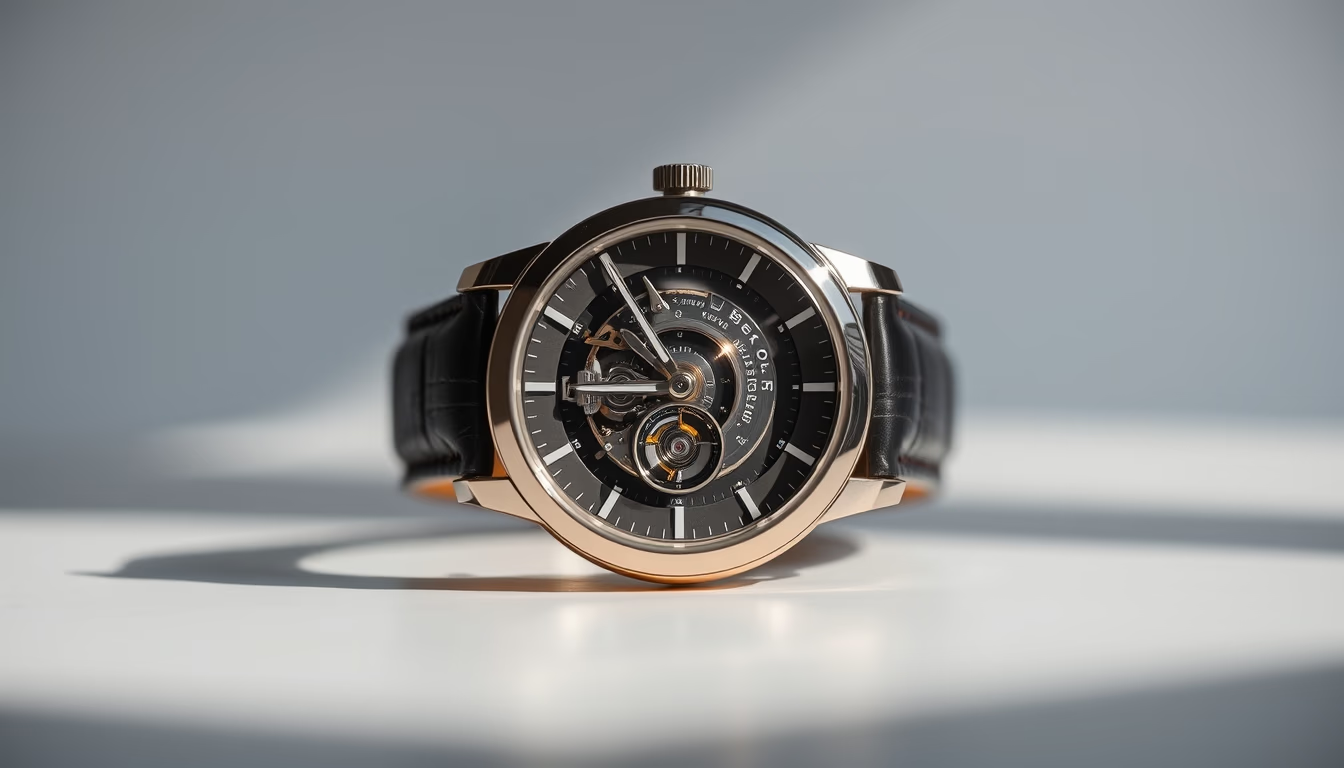
Close-up of a tourbillon mechanism, a horological complication that counteracts gravity's effects on the balance wheel and escapement, invented by Abraham-Louis Breguet in 1801.
About this subject
The tourbillon is one of the most fascinating and iconic complications in high-end watchmaking. It was patented in 1801 by Swiss-French master watchmaker Abraham-Louis Breguet, who aimed to improve the accuracy of pocket watches. At the time, watches were often kept in a vertical position (hung or carried in a pocket), and gravity affected the balance wheel's oscillation rate. The tourbillon solves this by mounting the balance wheel, hairspring, and escapement in a rotating cage that completes one revolution per minute, thereby averaging out positional errors over the cycle.
The mechanism comprises dozens of tiny parts, often hand-finished with polishing, beveling, and Côtes de Genève decorations. The cage rotates on a central pivot, and power from the mainspring is transmitted via a seconds wheel or a bridge. Although originally designed for pocket watches, today the tourbillon is most common in luxury wristwatches, where its aesthetic appeal and technical complexity are highly prized. Brands like Patek Philippe, Audemars Piguet, and Jaeger-LeCoultre produce variations such as flying tourbillons (without an upper bridge) and multi-axis tourbillons.
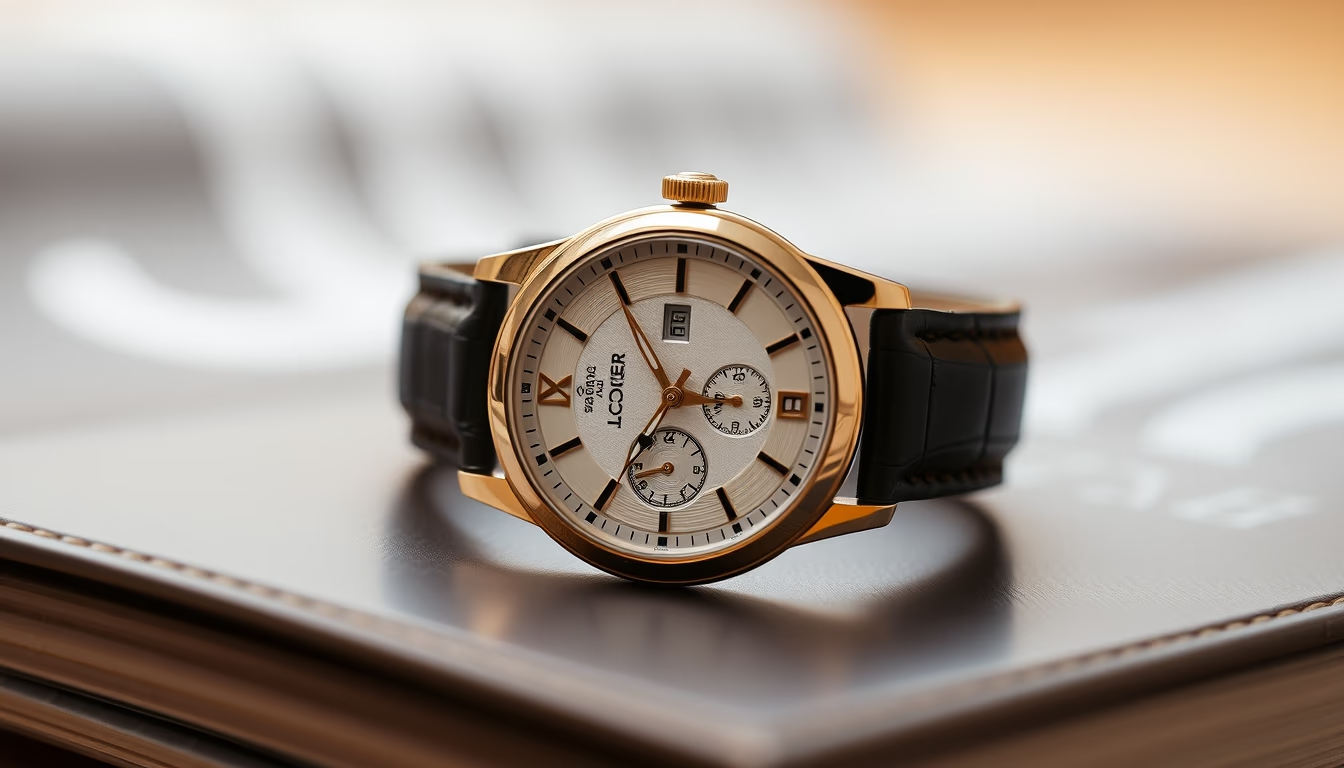
Despite its original precision purpose being surpassed by advances in hairsprings and lubrication, the tourbillon remains a symbol of horological mastery. Each piece requires hundreds of hours of manual labor, and tourbillon watches can cost tens of thousands to millions of dollars. The image shows a magnified detail where the rotating cage, balance spring coils, and anchor escapement are visible, highlighting the meticulous engineering that makes this complication one of the most admired in the watch world.
Frequently Asked Questions
What is the purpose of a tourbillon in a watch?
The tourbillon was designed to improve accuracy in pocket watches by counteracting gravity's effects on different positions. It rotates the balance wheel and escapement in a cage, averaging out positional errors.
Who invented the tourbillon and when?
The tourbillon was invented by watchmaker Abraham-Louis Breguet, who received the patent in 1801. He refined the mechanism over the following years.
Are all tourbillon watches extremely expensive?
Yes, most are high-end luxury due to the complexity of manufacture and hand labor involved. Prices typically start at tens of thousands of dollars and can exceed one million.
Direct URL
https://pub-c7d6a6ea828543ac903a74a341ccb2e1.r2.dev/imagens/tourbillon-watch-detail-minimalist-composition-fresh11.avifHow to credit
Include a visible link back to UtilizAí. Copy one of the snippets below:
<a href="https://xn--utiliza-eza.com/en/midia/imagens/tourbillon-watch-detail-minimalist-composition-fresh11">Tourbillon watch detail</a> by <a href="https://xn--utiliza-eza.com">UtilizAí</a>, licensed under <a href="https://creativecommons.org/licenses/by/4.0/">CC BY 4.0</a>.
[Tourbillon watch detail](https://xn--utiliza-eza.com/en/midia/imagens/tourbillon-watch-detail-minimalist-composition-fresh11) by [UtilizAí](https://xn--utiliza-eza.com), CC BY 4.0
License: CC-BY-4.0