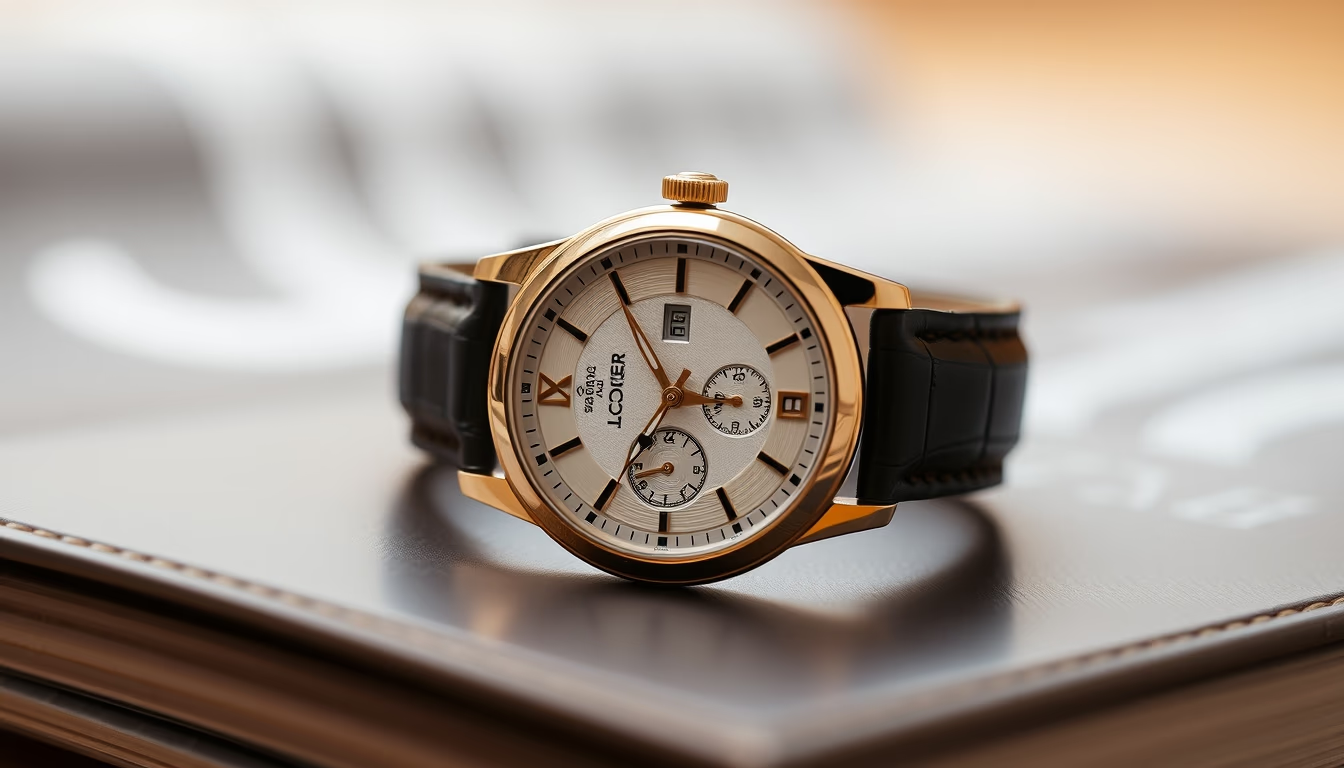
Tourbillon watch detail
1344×768 · AVIF · CC BY 4.0
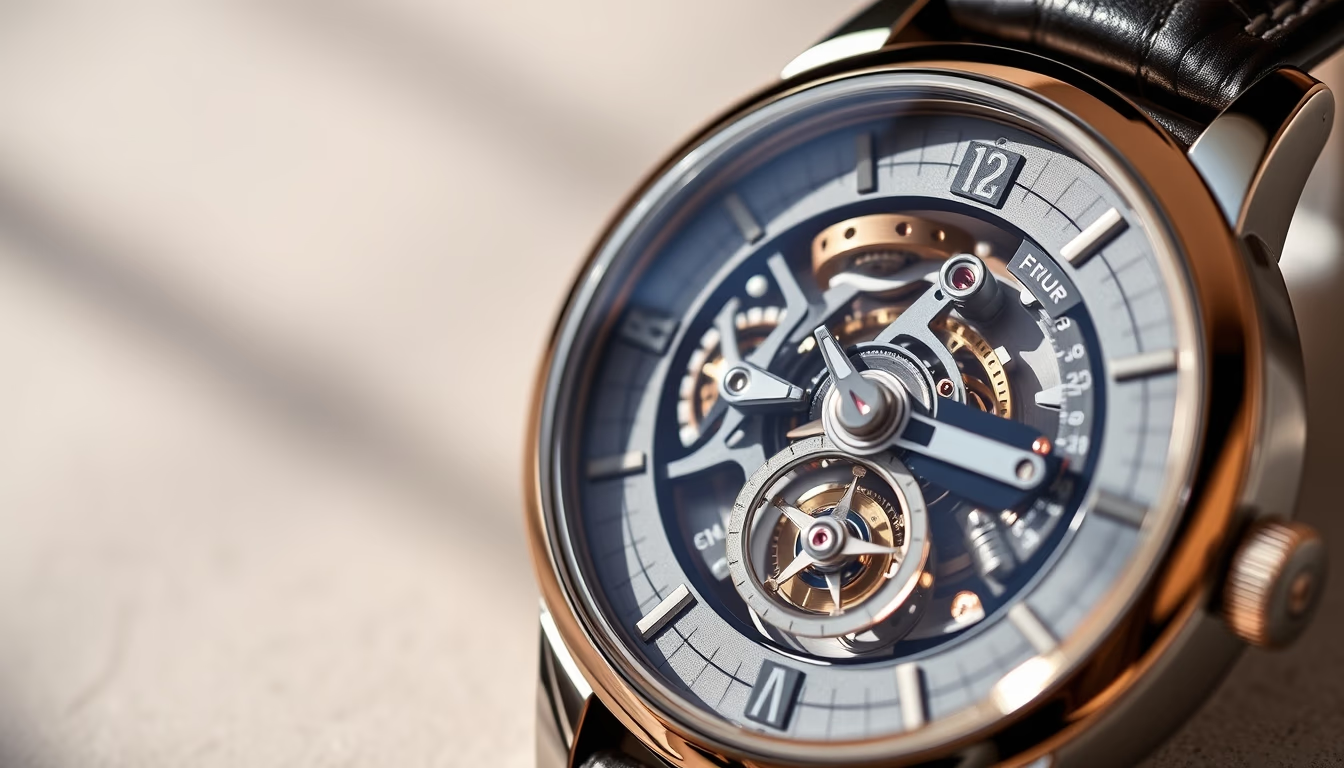
The tourbillon is a horological complication invented by Abraham-Louis Breguet in 1795 to counter gravity errors in pocket watches. Learn its history and mechanics.
About this subject
The tourbillon is one of the most iconic complications in haute horlogerie. Invented by Swiss master watchmaker Abraham-Louis Breguet in 1795 and patented in 1801, its original purpose was to improve the accuracy of pocket watches, which often remained in a vertical position. In that orientation, gravity affected the regulation of the escapement, causing rate variations. The tourbillon consists of a rotating cage that houses the balance wheel, hairspring, and escapement, completing one rotation per minute. This continuous motion averages out positional errors, effectively cancelling them.
Today, the tourbillon is more a symbol of technical and artisanal mastery than a functional necessity, as modern wristwatches change positions frequently and employ technologies like silicon hairsprings and advanced lubrication. Each tourbillon requires hundreds of hours of manual work, with tiny components and delicate adjustments. Brands like Patek Philippe, Audemars Piguet, and Breguet produce some of the most refined examples, often with hand-polished bridges and blued screws.
A rare curiosity is the flying tourbillon, created by Alfred Helwig at Glashütte Original in 1920. Unlike the classic version, it is supported only from one side, without the upper bridge, offering a clearer view of the mechanism. Another variation is the multi-axis tourbillon by Robert Greubel, which rotates on two axes to compensate for gravity even more effectively. Due to their complexity and exclusivity, tourbillon watches often surpass 100,000 dollars and are coveted by collectors.
Beyond prestige, the tourbillon demands specialized maintenance: every 3 to 5 years, it should be serviced by a qualified watchmaker to ensure the cage rotates freely and lubrication remains adequate. Without care, friction can wear down components, compromising accuracy and the watch's value.
Frequently Asked Questions
What is a tourbillon?
A tourbillon is a mechanical complication that rotates the escapement and balance wheel in a revolving cage to minimize gravity-induced errors, improving the watch's accuracy.
How does a tourbillon work?
The tourbillon houses the balance, hairspring, and escapement in a cage that completes one rotation per minute. This continuous movement averages positional variations, canceling their effects on the watch's rate.
Why are tourbillon watches so expensive?
They are expensive due to technical complexity, intensive handcrafting (hundreds of hours), and precious materials. Each piece is assembled and adjusted manually, resulting in limited and exclusive production.
Direct URL
https://pub-c7d6a6ea828543ac903a74a341ccb2e1.r2.dev/imagens/tourbillon-watch-detail-magazine-editorial-fresh13.avifHow to credit
Include a visible link back to UtilizAí. Copy one of the snippets below:
<a href="https://xn--utiliza-eza.com/en/midia/imagens/tourbillon-watch-detail-magazine-editorial-fresh13">Tourbillon watch detail</a> by <a href="https://xn--utiliza-eza.com">UtilizAí</a>, licensed under <a href="https://creativecommons.org/licenses/by/4.0/">CC BY 4.0</a>.
[Tourbillon watch detail](https://xn--utiliza-eza.com/en/midia/imagens/tourbillon-watch-detail-magazine-editorial-fresh13) by [UtilizAí](https://xn--utiliza-eza.com), CC BY 4.0
License: CC-BY-4.0