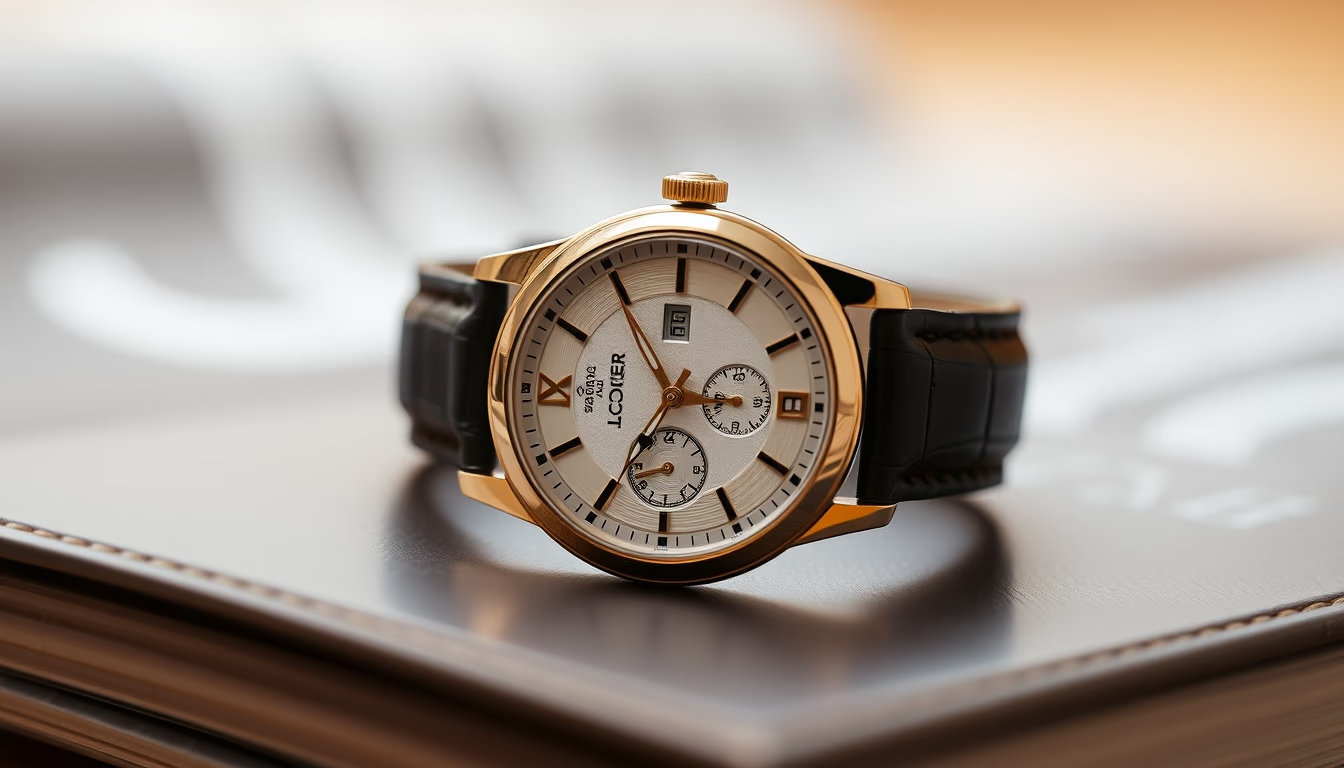
Tourbillon watch detail
1344×768 · AVIF · CC BY 4.0

Explore the intricate details of the tourbillon mechanism, a horological masterpiece that compensates for gravity's effects to achieve exceptional precision.
About this subject
The tourbillon is one of the most fascinating and technically complex mechanisms in high-precision watchmaking. Invented by the French-Swiss watchmaker Abraham-Louis Breguet in 1795 and patented in 1801, its purpose was to neutralize the effects of gravity on the watch's balance, especially when worn in a vertical position (as in a pocket watch). The name "tourbillon" comes from French, meaning "whirlwind," describing the rotating cage that houses the balance wheel, hairspring, and escapement. This entire assembly slowly rotates around its own axis, usually once per minute, compensating for positional variations.
Building a tourbillon requires extreme craftsmanship. Typically composed of over 70 tiny parts, some less than a millimeter in size, the tourbillon cage is incredibly light (often less than 0.5 grams). Watches with tourbillons are considered engineering artworks, requiring hundreds of hours of manual labor. Renowned brands such as Patek Philippe, Audemars Piguet, Jaeger-LeCoultre, and Breguet itself continue to produce tourbillon models in both classic and contemporary designs.
Although originally created for pocket watches, the tourbillon today is more a symbol of watchmaking mastery than a functional necessity, as modern movements are already very accurate. Nevertheless, collectors and enthusiasts appreciate the mechanical beauty and complexity of the mechanism. Photography of tourbillon details, as suggested by the "architectural photography" tag, captures symmetry, angles, and reflections from polished parts, transforming a technical component into visual art.
Frequently Asked Questions
What is a tourbillon in watches?
It is a mechanism that rotates the balance cage to compensate for gravity effects, improving accuracy.
Who invented the tourbillon and when?
It was invented by Abraham-Louis Breguet in 1795 and patented in 1801.
Why is the tourbillon considered so special?
Due to its technical complexity and aesthetic beauty, requiring hundreds of hours of manual work to build.
Direct URL
https://pub-c7d6a6ea828543ac903a74a341ccb2e1.r2.dev/imagens/tourbillon-watch-detail-architectural-photography-fresh17.avifHow to credit
Include a visible link back to UtilizAí. Copy one of the snippets below:
<a href="https://xn--utiliza-eza.com/en/midia/imagens/tourbillon-watch-detail-architectural-photography-fresh17">Tourbillon watch detail</a> by <a href="https://xn--utiliza-eza.com">UtilizAí</a>, licensed under <a href="https://creativecommons.org/licenses/by/4.0/">CC BY 4.0</a>.
[Tourbillon watch detail](https://xn--utiliza-eza.com/en/midia/imagens/tourbillon-watch-detail-architectural-photography-fresh17) by [UtilizAí](https://xn--utiliza-eza.com), CC BY 4.0
License: CC-BY-4.0