Tourbillon watch detail
1344×768 · AVIF · CC BY 4.0

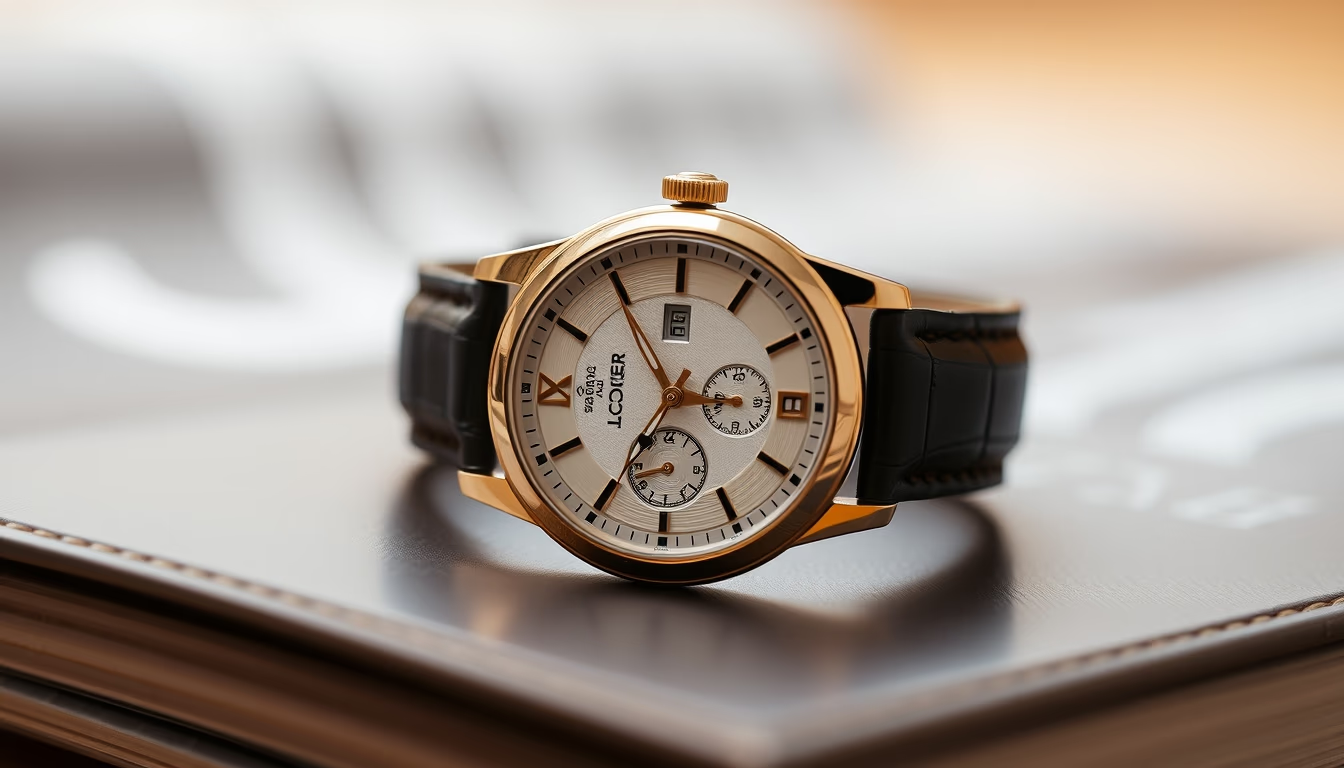
Close-up of a tourbillon mechanism in a wristwatch, one of the most complex horological complications, designed to counteract the effects of gravity.
About this subject
The tourbillon is a high-end horological complication invented by master watchmaker Abraham-Louis Breguet in 1801, patented in 1805. Its original purpose was to improve the accuracy of pocket watches, which were kept vertical and suffered from the effects of gravity on the balance wheel. The mechanism consists of a rotating cage that houses the escapement, balance wheel, and hairspring, compensating for rate errors due to positional changes.
The invention revolutionized watchmaking, but with the advent of modern chronometers and quartz movements, the tourbillon became more a symbol of craftsmanship and prestige than a functional necessity. Tourbillon watches are extremely expensive because their assembly requires exceptional manual skill, with minuscule parts and micrometer tolerances.
Today, brands like Patek Philippe, Audemars Piguet, Jaeger-LeCoultre, and Breguet itself produce tourbillons, often displayed on open dials to showcase the movement. Variations exist, such as the flying tourbillon (without a top bridge) and multi-axis tourbillons. The tourbillon is also a status symbol in the watch world, frequently associated with limited editions and high market values.
Interestingly, the name derives from the French word "tourbillon," meaning whirlwind or vortex, reflecting the rotating motion of the cage. Despite its complexity, the tourbillon is no more accurate than modern high-quality movements, but it remains a masterpiece of mechanical engineering and a testament to human skill.
Frequently Asked Questions
What is a tourbillon in a watch?
It is a mechanism that places the escapement and balance wheel inside a rotating cage, completing one rotation per minute to counteract the effects of gravity on the watch's accuracy.
Who invented the tourbillon?
Abraham-Louis Breguet, a Swiss-French watchmaker, invented the tourbillon in 1801 and patented it in 1805.
Is a tourbillon still accurate today?
Though it functions well, modern quartz or high-precision mechanical movements surpass the tourbillon in accuracy. Today it is valued more as a work of art and a demonstration of watchmaking skill.
Direct URL
https://pub-c7d6a6ea828543ac903a74a341ccb2e1.r2.dev/imagens/tourbillon-watch-detail-aerial-drone-shot-fresh9.avifHow to credit
Include a visible link back to UtilizAí. Copy one of the snippets below:
<a href="https://xn--utiliza-eza.com/en/midia/imagens/tourbillon-watch-detail-aerial-drone-shot-fresh9">Tourbillon watch detail</a> by <a href="https://xn--utiliza-eza.com">UtilizAí</a>, licensed under <a href="https://creativecommons.org/licenses/by/4.0/">CC BY 4.0</a>.
[Tourbillon watch detail](https://xn--utiliza-eza.com/en/midia/imagens/tourbillon-watch-detail-aerial-drone-shot-fresh9) by [UtilizAí](https://xn--utiliza-eza.com), CC BY 4.0
License: CC-BY-4.0