Tokyo neon street at night
1344×768 · AVIF · CC BY 4.0
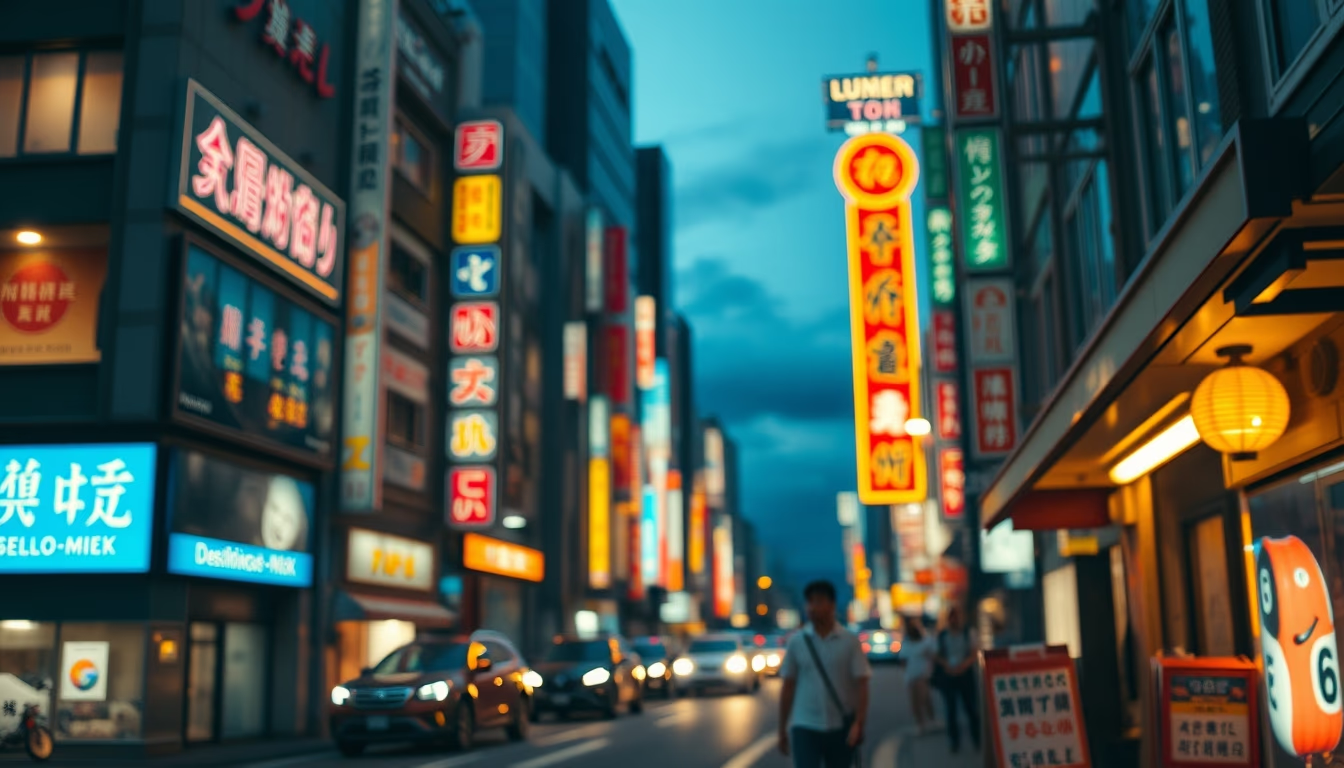
Night scene of a Tokyo street filled with neon signs, heavy traffic, and illuminated high-rise buildings.
About this subject
Tokyo's nighttime landscape is globally renowned for its neon signs that turn streets into visual spectacles. Districts like Shibuya, Shinjuku, and Akihabara are famous for this profusion of lights, combining commercial advertisements, store signs, and LED panels. Shibuya, in particular, houses the world's busiest crossing, where thousands of people cross simultaneously under the glow of neon.
The culture of neon signs in Japan dates back to the post-war period, when economic reconstruction boosted commerce and illuminated advertising. Today, Tokyo has specific regulations for neon use, aiming to balance visual appeal with light pollution and energy consumption. Many signs are turned off after midnight, following local laws.
Beyond the visual aspect, signs serve a practical function: guiding pedestrians and drivers, indicating operating hours, and promoting events. Some historic signs, such as those in the Ginza district, are considered cultural heritage. LED technology has gradually replaced traditional neon gas, but the visual effect remains equally striking.
The street depicted represents the pulsating heart of the metropolis, where modernity and tradition meet. Tokyo has over 13 million inhabitants and is one of Asia's leading financial and cultural centers. Its nightlife attracts tourists from around the world, seeking dining, shopping, and entertainment experiences.
Frequently Asked Questions
Which are the best districts to see neon signs in Tokyo?
The best districts are Shibuya, Shinjuku, and Akihabara. Shibuya is famous for its crossing and giant signs; Shinjuku has the Kabukicho area with abundant lighting; Akihabara is the center for electronics and otaku culture, also full of neon.
Are neon signs in Tokyo lit all night?
No. Many signs are turned off after midnight due to municipal regulations to reduce light pollution and energy consumption. Some establishments may keep interior lights, but large outdoor advertisements usually go dark.
What is the difference between traditional neon signs and LED signs in Tokyo?
Traditional neon signs use glass tubes filled with neon or argon gas, which emit light when electrified. LED signs are more efficient, durable, and allow a wider range of colors and animations. Currently, LED predominates, but the nighttime look remains vibrant.
Direct URL
https://pub-c7d6a6ea828543ac903a74a341ccb2e1.r2.dev/imagens/tokyo-neon-street-at-night-cinematic-wide-shot-v2.avifHow to credit
Include a visible link back to UtilizAí. Copy one of the snippets below:
<a href="https://xn--utiliza-eza.com/en/midia/imagens/tokyo-neon-street-at-night-cinematic-wide-shot-v2">Tokyo neon street at night</a> by <a href="https://xn--utiliza-eza.com">UtilizAí</a>, licensed under <a href="https://creativecommons.org/licenses/by/4.0/">CC BY 4.0</a>.
[Tokyo neon street at night](https://xn--utiliza-eza.com/en/midia/imagens/tokyo-neon-street-at-night-cinematic-wide-shot-v2) by [UtilizAí](https://xn--utiliza-eza.com), CC BY 4.0
License: CC-BY-4.0