Tissue culture biology lab
1344×768 · AVIF · CC BY 4.0
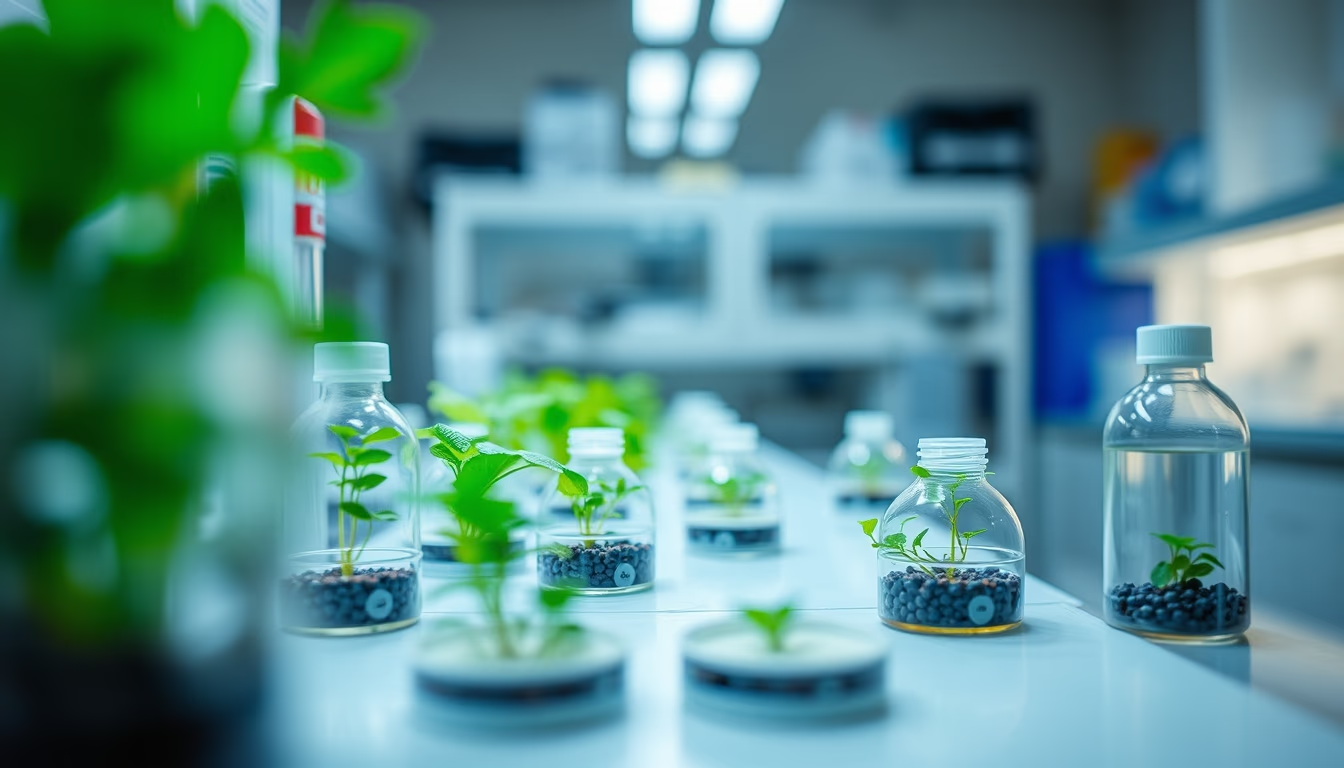
Tissue culture biology lab: sterile environment for cell growth in nutrient medium, essential for biological research and biotechnology.
About this subject
Tissue culture is a technique that allows the growth of cells, tissues, or organs under controlled conditions outside the original organism. Developed in the early 20th century, with contributions from pioneers like Ross Harrison and Alexis Carrel, this methodology revolutionized biology and medicine. The environment of a tissue culture lab is rigorously sterile, using laminar flow hoods, CO2 and temperature-controlled incubators, and specific culture media such as DMEM or RPMI, supplemented with fetal bovine serum and antibiotics.
There are two main branches: animal cell culture and plant tissue culture. In animal culture, cells like fibroblasts or stem cells are maintained in monolayers or suspensions, being essential for drug testing, vaccine production, and cellular physiology studies. Plant culture allows clonal propagation of plants, production of secondary metabolites, and conservation of endangered species, using explants in media with hormones like auxins and cytokinins.
The technique requires extreme care to avoid contamination by bacteria, fungi, or mycoplasmas. Researchers wear sterilized gloves, masks, and lab coats, and all materials are autoclaved. Manipulating cells in culture allows observation of processes like cell division, differentiation, and apoptosis in real time, providing more ethical and controlled models than animal experiments. Moreover, tissue culture is the foundation for fields like tissue engineering and gene therapy.
A key milestone was the development of immortalized cell lines, such as HeLa, derived from a cervical tumor in 1951, which enabled advances in cancer research and virology. Today, tissue culture labs are equipped with inverted microscopes, flow cytometers, and 3D culture systems like spheroids and organoids, which better mimic in vivo tissue architecture.
Frequently Asked Questions
What is tissue culture?
It is a technique that keeps cells, tissues, or organs alive under artificial sterile conditions, allowing their growth and study outside the source organism.
What are the main types of tissue culture?
The main types are animal cell culture (used in medical and pharmaceutical research) and plant tissue culture (applied in agriculture and biotechnology).
Why is sterility so important in a tissue culture lab?
To avoid contamination by microorganisms that can compete with cultured cells, alter results, or ruin the experiment.
Direct URL
https://pub-c7d6a6ea828543ac903a74a341ccb2e1.r2.dev/imagens/tissue-culture-biology-lab-tilt-shift-miniature-p6.avifHow to credit
Include a visible link back to UtilizAí. Copy one of the snippets below:
<a href="https://xn--utiliza-eza.com/en/midia/imagens/tissue-culture-biology-lab-tilt-shift-miniature-p6">Tissue culture biology lab</a> by <a href="https://xn--utiliza-eza.com">UtilizAí</a>, licensed under <a href="https://creativecommons.org/licenses/by/4.0/">CC BY 4.0</a>.
[Tissue culture biology lab](https://xn--utiliza-eza.com/en/midia/imagens/tissue-culture-biology-lab-tilt-shift-miniature-p6) by [UtilizAí](https://xn--utiliza-eza.com), CC BY 4.0
License: CC-BY-4.0