Tissue culture biology lab
1344×768 · AVIF · CC BY 4.0
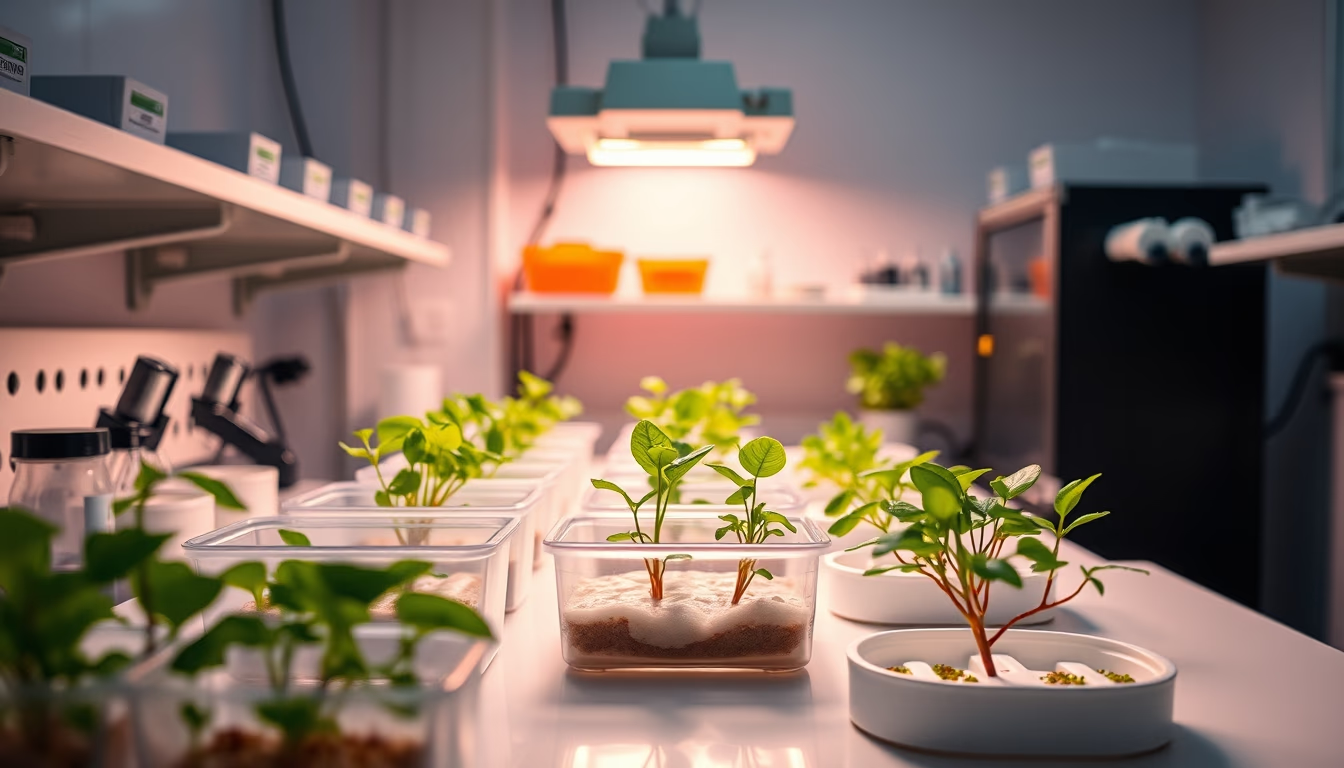
A tissue culture biology lab is a controlled environment for growing cells, tissues, or organs under sterile conditions, essential for biological research and biotechnology.
About this subject
A tissue culture biology lab is designed to maintain rigorous aseptic conditions to prevent microbial contamination. Key activities include growing animal or plant cells in specific nutrient media within incubators with controlled temperature, humidity, and CO2 levels. Common equipment includes laminar flow hoods, autoclaves, inverted microscopes, and centrifuges.
In biomedical research, tissue culture is essential for cell physiology studies, drug development, and toxicity testing. For instance, cell lines like HeLa are widely used globally. In agriculture, plant tissue culture enables disease-free micropropagation, germplasm conservation, and genetic engineering.
Techniques such as explant culture, callogenesis, and somatic embryogenesis allow whole plants to be regenerated from small tissue pieces. In Brazil, tissue culture labs are common in universities and biotech companies, contributing to the production of seedlings for species like orchids, bananas, and eucalyptus. Quality control includes periodic testing for bacterial or fungal contamination and verification of genetic stability of cultured cells.
Frequently Asked Questions
What are the essential pieces of equipment in a tissue culture lab?
Basic equipment includes a laminar flow hood for sterile work, a CO2 incubator, an autoclave for sterilization, an inverted microscope for cell observation, and a centrifuge for cell separation.
What is the importance of tissue culture in agriculture?
Plant tissue culture enables large-scale production of genetically identical, disease-free seedlings, facilitates conservation of endangered species, and supports genetic improvement through techniques like genetic transformation.
How is contamination prevented in cell culture?
Prevention involves using laminar flow hoods, sterilizing media and instruments in an autoclave, wearing sterile gloves and lab coats, and adding antibiotics and antifungals to culture media. Regular mycoplasma testing is also performed.
Direct URL
https://pub-c7d6a6ea828543ac903a74a341ccb2e1.r2.dev/imagens/tissue-culture-biology-lab-studio-still-life-p2.avifHow to credit
Include a visible link back to UtilizAí. Copy one of the snippets below:
<a href="https://xn--utiliza-eza.com/en/midia/imagens/tissue-culture-biology-lab-studio-still-life-p2">Tissue culture biology lab</a> by <a href="https://xn--utiliza-eza.com">UtilizAí</a>, licensed under <a href="https://creativecommons.org/licenses/by/4.0/">CC BY 4.0</a>.
[Tissue culture biology lab](https://xn--utiliza-eza.com/en/midia/imagens/tissue-culture-biology-lab-studio-still-life-p2) by [UtilizAí](https://xn--utiliza-eza.com), CC BY 4.0
License: CC-BY-4.0