Tissue culture biology lab
1344×768 · AVIF · CC BY 4.0
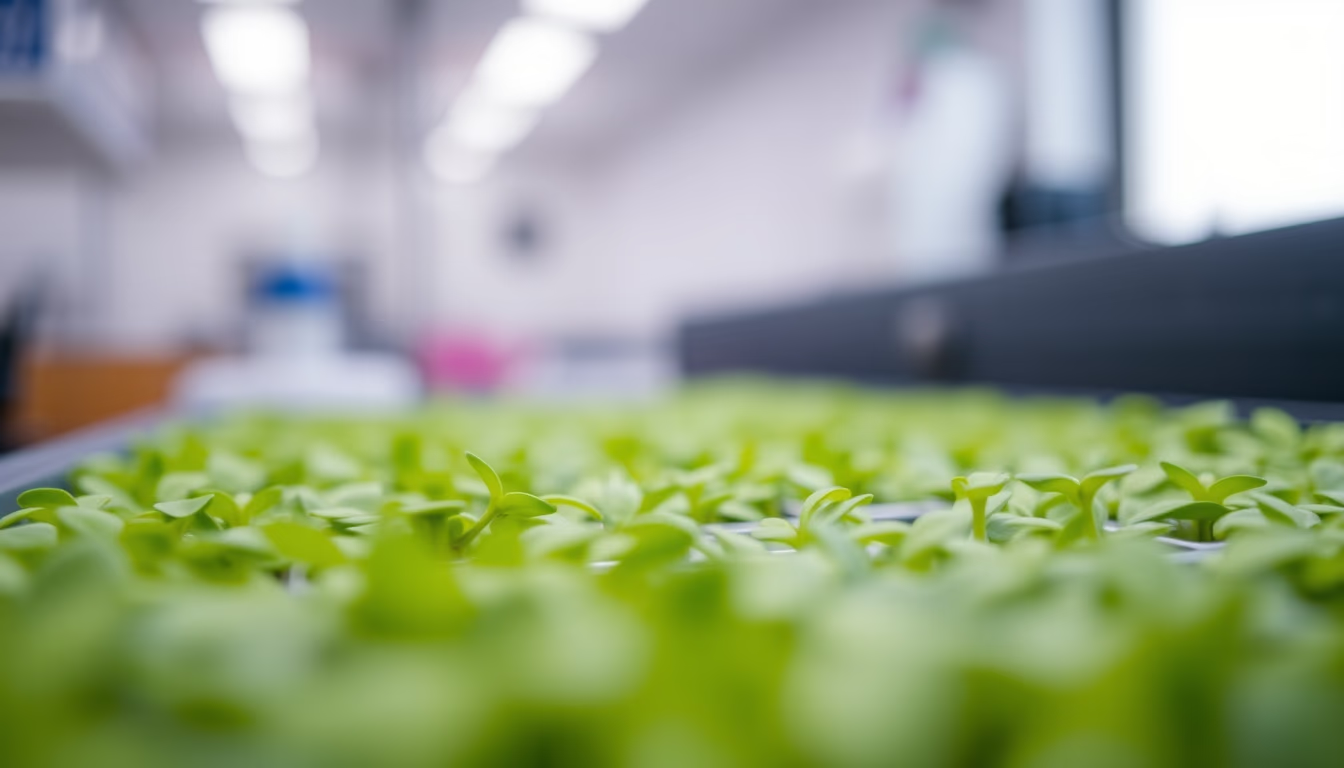
Tissue culture biology lab demonstrates aseptic cultivation of plant cells in nutrient media, crucial for cloning and conservation.
About this subject
Plant tissue culture is a biotechnology technique that enables the growth of cells, tissues, or organs under sterile, controlled conditions. In a typical lab, explants (small plant fragments) are surface-sterilized and placed in containers with solid or liquid culture media enriched with nutrients, vitamins, and growth regulators such as auxins and cytokinins. This method is widely used for micropropagation of endangered species, virus-free plant production, and genetic engineering.
The process requires an aseptic environment to prevent contamination by fungi or bacteria. Therefore, laminar flow hoods, autoclaves, and incubators are common equipment. Light and temperature are regulated to induce shoot or callus formation. A key concept is cell totipotency, the ability of a plant cell to differentiate into any tissue type, allowing whole plants to be regenerated from a single cell.
Historically, the idea was proposed by Gottlieb Haberlandt in 1902 but became practical only after the discovery of auxins and cytokinins. Today, labs like the one depicted use standard media such as MS (Murashige and Skoog). Tissue culture is also vital for producing secondary metabolites (e.g., medicinal compounds) and for ex situ germplasm conservation, safeguarding biodiversity. In Brazil, institutions like Embrapa and universities apply the technique in agriculture, for example, in orchid multiplication and cassava clonal cleaning.
Frequently Asked Questions
What is plant tissue culture?
It is the aseptic cultivation of plant cells, tissues, or organs in nutrient media under controlled conditions, allowing regeneration of whole plants via cell totipotency.
What are the main applications of tissue culture?
Micropropagation, virus-free plant production, conservation of endangered species, genetic engineering, and production of secondary metabolites.
How to avoid contamination in the lab?
By using a laminar flow hood, sterilizing instruments and media in an autoclave, and following strict aseptic protocols, including disinfection of explants.
Direct URL
https://pub-c7d6a6ea828543ac903a74a341ccb2e1.r2.dev/imagens/tissue-culture-biology-lab-macro-closeup-p11.avifHow to credit
Include a visible link back to UtilizAí. Copy one of the snippets below:
<a href="https://xn--utiliza-eza.com/en/midia/imagens/tissue-culture-biology-lab-macro-closeup-p11">Tissue culture biology lab</a> by <a href="https://xn--utiliza-eza.com">UtilizAí</a>, licensed under <a href="https://creativecommons.org/licenses/by/4.0/">CC BY 4.0</a>.
[Tissue culture biology lab](https://xn--utiliza-eza.com/en/midia/imagens/tissue-culture-biology-lab-macro-closeup-p11) by [UtilizAí](https://xn--utiliza-eza.com), CC BY 4.0
License: CC-BY-4.0