Tissue culture biology lab
1344×768 · AVIF · CC BY 4.0
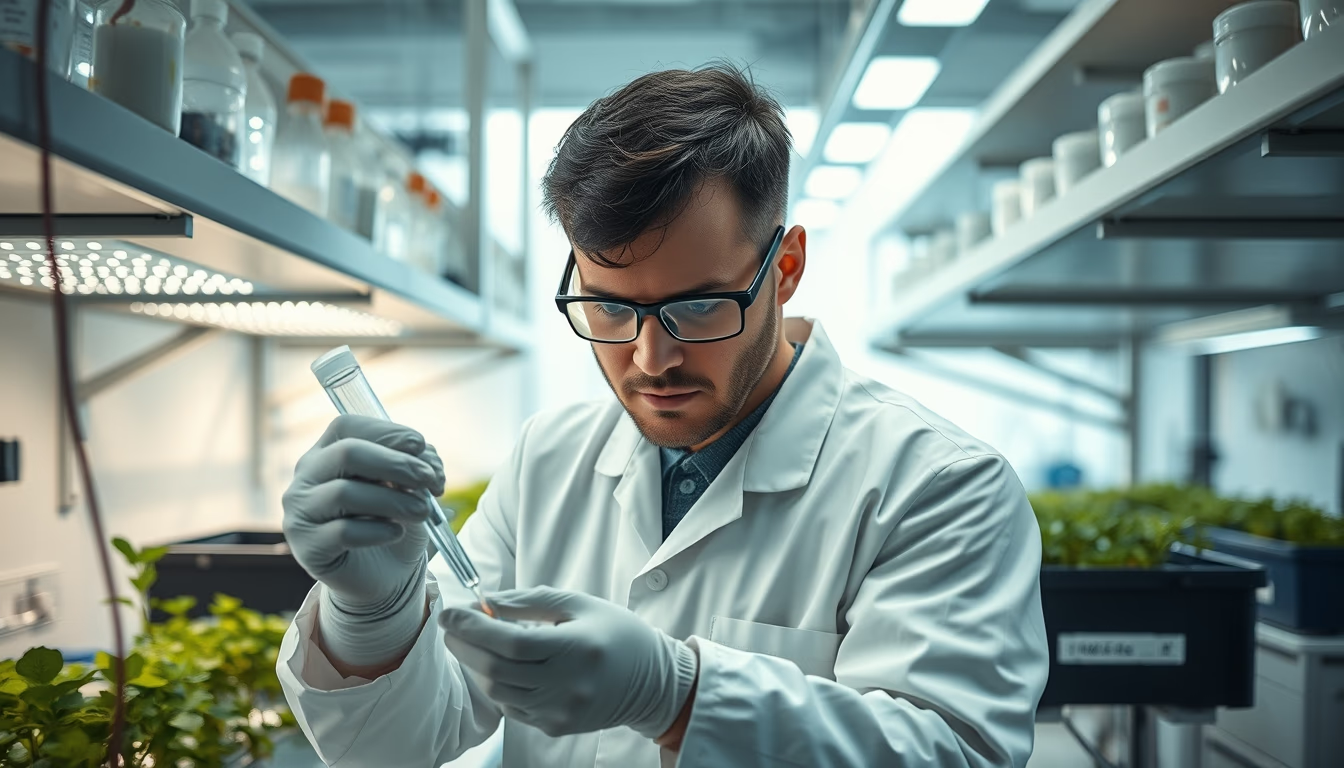
Tissue culture biology lab: essential techniques for cellular studies and in vitro plant propagation.
About this subject
Tissue culture is a laboratory technique that allows the growth of cells, tissues, or organs under controlled and sterile conditions. In a biology lab, this method is widely used for studies of cell development, differentiation, and genetics. The technique involves isolating explants from plants or animals and culturing them on specific nutrient media, often containing plant hormones such as auxins and cytokinins, which regulate growth and morphogenesis.
One of the most common uses of tissue culture is clonal propagation of plants, enabling the production of thousands of genetically identical plantlets from a single parent. This is crucial for preserving endangered species, producing disease-free plants, and accelerating breeding programs. Additionally, tissue culture underpins techniques like genetic transformation and cryopreservation of germplasm.
In the lab, equipment such as laminar flow hoods, autoclaves for sterilization, and incubators with controlled temperature and light are essential. Aseptic technique is critical to avoid contamination by microorganisms. Researchers use microscopes to observe culture development and perform regular subculturing to maintain cell viability.
Tissue culture also finds applications in regenerative medicine, stem cell research, and vaccine production, such as culturing cells for viral replication. The versatility of the technique makes it an indispensable tool in biotechnology and basic research.
Frequently Asked Questions
What are the main uses of tissue culture in biology labs?
Tissue culture is used for clonal propagation of plants, cell development studies, genetic improvement, preservation of endangered species, production of disease-free plants, and research in regenerative medicine such as stem cell cultivation.
What equipment is needed in a tissue culture lab?
Essential equipment includes laminar flow hoods, autoclaves, incubators with temperature and light control, microscopes, and sterile supplies like culture vessels and nutrient media.
How does tissue culture contribute to plant conservation?
It enables rapid multiplication of rare or threatened species in vitro, producing genetically identical plantlets for reintroduction into natural habitats, and also allows cryopreservation of germplasm for seed banks.
Direct URL
https://pub-c7d6a6ea828543ac903a74a341ccb2e1.r2.dev/imagens/tissue-culture-biology-lab-documentary-photography-p7.avifHow to credit
Include a visible link back to UtilizAí. Copy one of the snippets below:
<a href="https://xn--utiliza-eza.com/en/midia/imagens/tissue-culture-biology-lab-documentary-photography-p7">Tissue culture biology lab</a> by <a href="https://xn--utiliza-eza.com">UtilizAí</a>, licensed under <a href="https://creativecommons.org/licenses/by/4.0/">CC BY 4.0</a>.
[Tissue culture biology lab](https://xn--utiliza-eza.com/en/midia/imagens/tissue-culture-biology-lab-documentary-photography-p7) by [UtilizAí](https://xn--utiliza-eza.com), CC BY 4.0
License: CC-BY-4.0