Thinker rodin paris
1344×768 · AVIF · CC BY 4.0

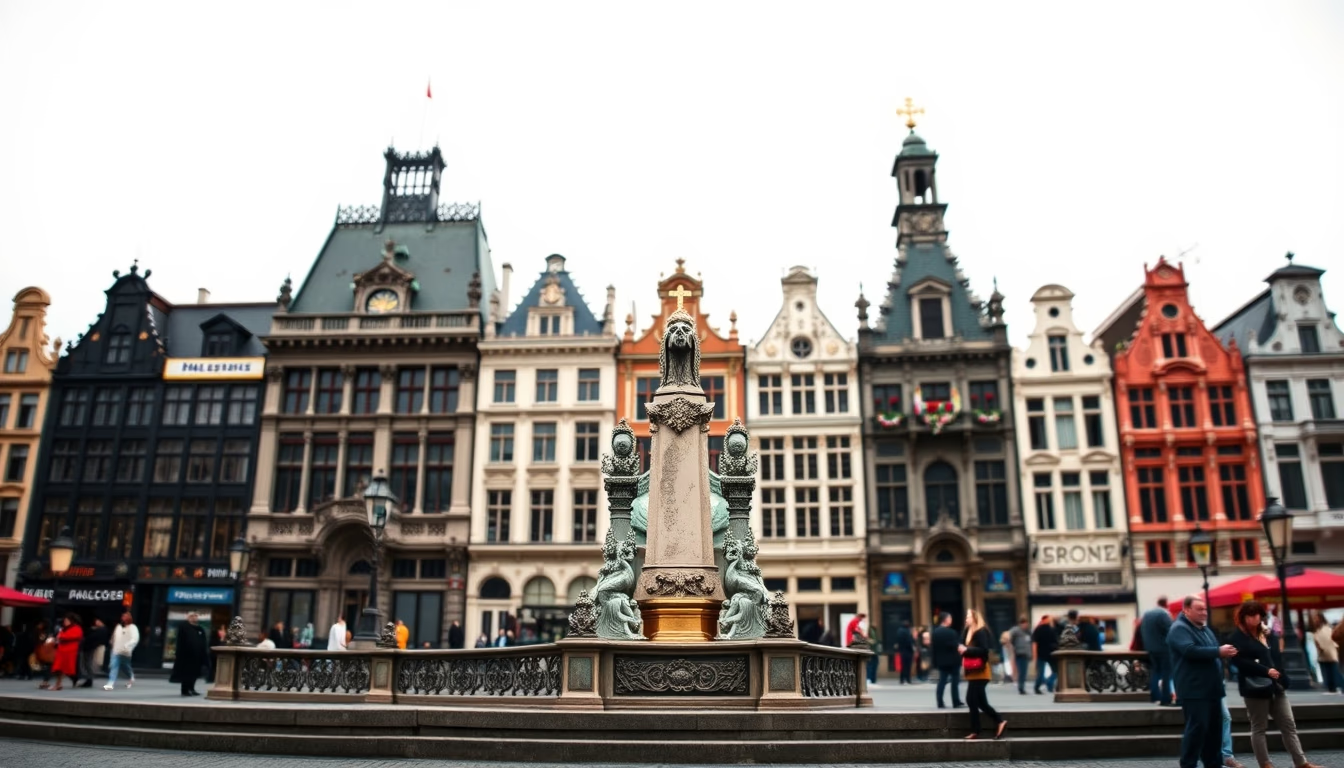
Rodin's The Thinker in Paris is one of the world's most iconic sculptures, symbolizing philosophical introspection and artistic genius of the late 19th century.
About this subject
The Thinker (Le Penseur) is a bronze sculpture by French artist Auguste Rodin, originally conceived as part of a larger work called "The Gates of Hell". Created between 1880 and 1882, the figure depicts a nude man in deep meditation, sitting on a rock with his chin resting on his hand. The work was inspired by the poet Dante Alighieri, initially intended to portray Dante himself before the gates of Hell, but later assumed a more universal character of human reflection.
The sculpture is displayed at the Musée Rodin in Paris, located in the Hôtel Biron, where Rodin lived and worked. The museum houses the largest collection of the artist's works, including multiple versions and castings of The Thinker. The original bronze version, about 186 cm tall, was cast in 1904 and became a symbol of philosophical thought and human capacity for contemplation. There are more than twenty copies worldwide, in cities such as Copenhagen, Buenos Aires, and Melbourne.
Culturally, The Thinker has transcended its artistic context to become a popular icon, often associated with the act of reflecting on complex problems. The pose of the man with his hand on his chin is widely recognized and reproduced in memes and cultural references. Despite appearing static, the sculpture conveys muscular tension and internal energy typical of Rodin, who broke with 19th-century academic conventions by introducing rough textures and realistic expressions.
Interestingly, the figure of the Thinker was originally sculpted in miniature at the top of the Gates of Hell, only 70 cm tall. The success of the piece led Rodin to produce an enlarged, independent version, which became his most famous work. The sculpture also sparked controversy at the time: critics questioned whether a nude man could truly represent philosophical thought, but the work prevailed as a landmark of expressionism and modernity in sculpture.
Frequently Asked Questions
Who created The Thinker and where is the original located?
The Thinker was created by French sculptor Auguste Rodin between 1880 and 1882. The original bronze version is displayed at the Musée Rodin in Paris, located in the artist's former studio.
What is the meaning of the sculpture The Thinker?
The sculpture depicts a nude man in deep contemplation, symbolizing philosophical introspection and the power of human thought. Initially inspired by the poet Dante, it has become a universal icon of reflection.
How many copies of The Thinker exist worldwide?
There are more than twenty authenticated copies of The Thinker in museums and public spaces around the world, including bronze and plaster versions in cities such as Copenhagen, Buenos Aires, and Melbourne.
Direct URL
https://pub-c7d6a6ea828543ac903a74a341ccb2e1.r2.dev/imagens/thinker-rodin-paris-tilt-shift-miniature-fresh9.avifHow to credit
Include a visible link back to UtilizAí. Copy one of the snippets below:
<a href="https://xn--utiliza-eza.com/en/midia/imagens/thinker-rodin-paris-tilt-shift-miniature-fresh9">Thinker rodin paris</a> by <a href="https://xn--utiliza-eza.com">UtilizAí</a>, licensed under <a href="https://creativecommons.org/licenses/by/4.0/">CC BY 4.0</a>.
[Thinker rodin paris](https://xn--utiliza-eza.com/en/midia/imagens/thinker-rodin-paris-tilt-shift-miniature-fresh9) by [UtilizAí](https://xn--utiliza-eza.com), CC BY 4.0
License: CC-BY-4.0