Thinker rodin paris
1344×768 · AVIF · CC BY 4.0
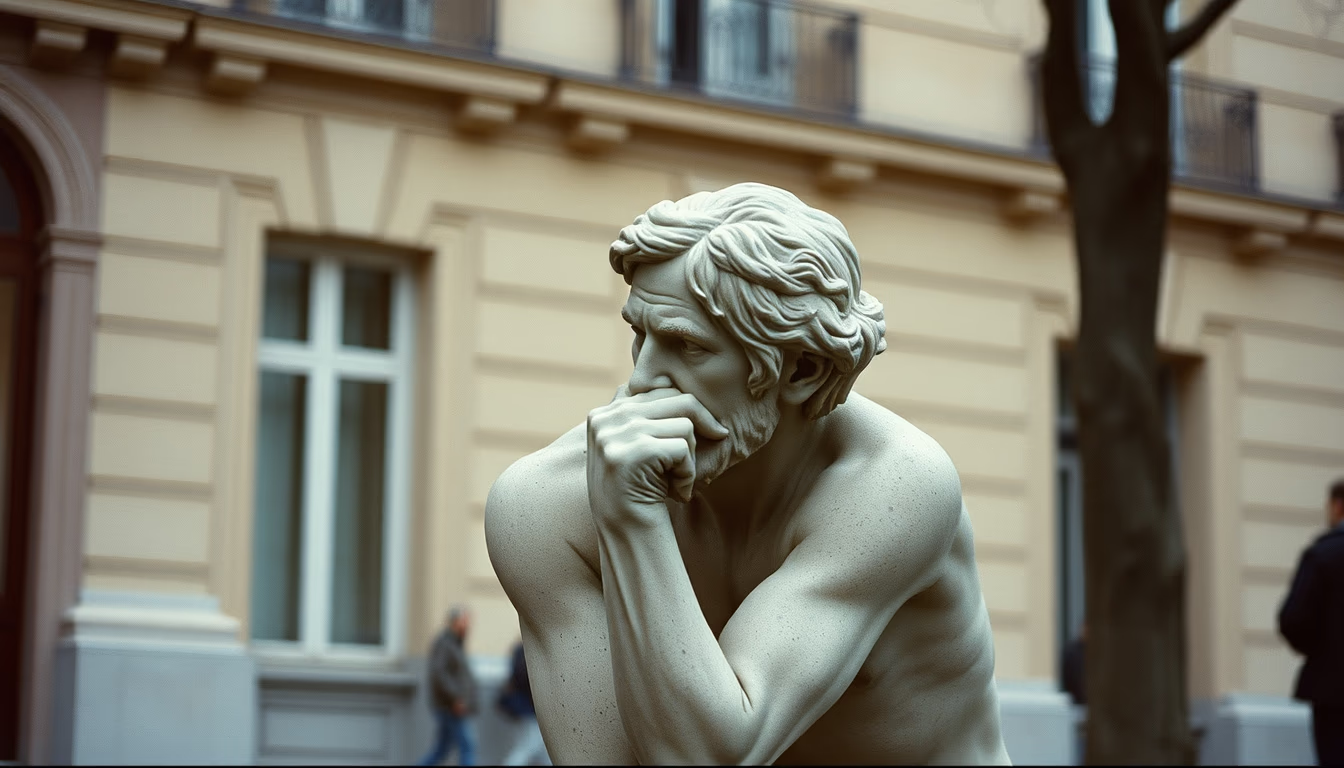
The Thinker, by Auguste Rodin, is one of the world's most iconic sculptures, symbolizing philosophical reflection and human introspection.
About this subject
Originally created in 1880 as part of "The Gates of Hell", Auguste Rodin's The Thinker became an independent and universally recognized sculpture. The male nude figure, seated with chin resting on hand, represents the poet Dante Alighieri, author of "The Divine Comedy". Rodin intended the piece to express Dante's deep meditation on the damned of Hell, but over time the work came to symbolize philosophical thought and human creativity in a generic sense. The original bronze version, about 186 centimeters tall, is housed in the Rodin Museum in Paris, surrounded by a garden that holds other works by the artist. Multiple copies of the sculpture exist worldwide, including a monumental 1.83-meter version in the Tuileries Garden, also in Paris.
Rodin's technique is marked by expressive realism and rough texture, which lends drama to the piece. The Thinker is often associated with the human capacity to reflect on existential and social questions. The tense posture, with contracted muscles, suggests intense mental effort, contrasting with physical immobility. This duality between body and mind is a central theme. Rodin sculpted various versions in different sizes, and posthumous replicas have expanded its global reach. The sculpture has also inspired references in pop culture, such as in films and cartoons, cementing its status as a cultural icon.
Interestingly, The Thinker was not initially well received by critics. When first exhibited in 1904 in London, it sparked controversy due to its perceived grotesque realism. However, it quickly won over the public and became one of the most reproduced sculptures in history. Rodin also created a reduced plaster version, which served as a mold for bronze castings. The original work, on permanent display at the Rodin Museum, attracts millions of visitors annually. Its influence transcends art, often used as a symbol for universities and educational institutions, representing the ideal of critical thinking.
Frequently Asked Questions
What does Rodin's The Thinker symbolize?
The Thinker symbolizes philosophical reflection and human introspection, originally representing the poet Dante before Hell. Today it is seen as an icon of critical thinking and creativity.
Where is the original sculpture of The Thinker located?
The original bronze sculpture is at the Rodin Museum in Paris, France, on permanent display in the museum's garden.
How many copies of The Thinker exist?
There are multiple authorized replicas worldwide, including bronze and plaster versions in museums and public spaces such as the Tuileries Garden. Official copies are estimated at over 20.
Direct URL
https://pub-c7d6a6ea828543ac903a74a341ccb2e1.r2.dev/imagens/thinker-rodin-paris-film-grain-authentic-fresh3.avifHow to credit
Include a visible link back to UtilizAí. Copy one of the snippets below:
<a href="https://xn--utiliza-eza.com/en/midia/imagens/thinker-rodin-paris-film-grain-authentic-fresh3">Thinker rodin paris</a> by <a href="https://xn--utiliza-eza.com">UtilizAí</a>, licensed under <a href="https://creativecommons.org/licenses/by/4.0/">CC BY 4.0</a>.
[Thinker rodin paris](https://xn--utiliza-eza.com/en/midia/imagens/thinker-rodin-paris-film-grain-authentic-fresh3) by [UtilizAí](https://xn--utiliza-eza.com), CC BY 4.0
License: CC-BY-4.0