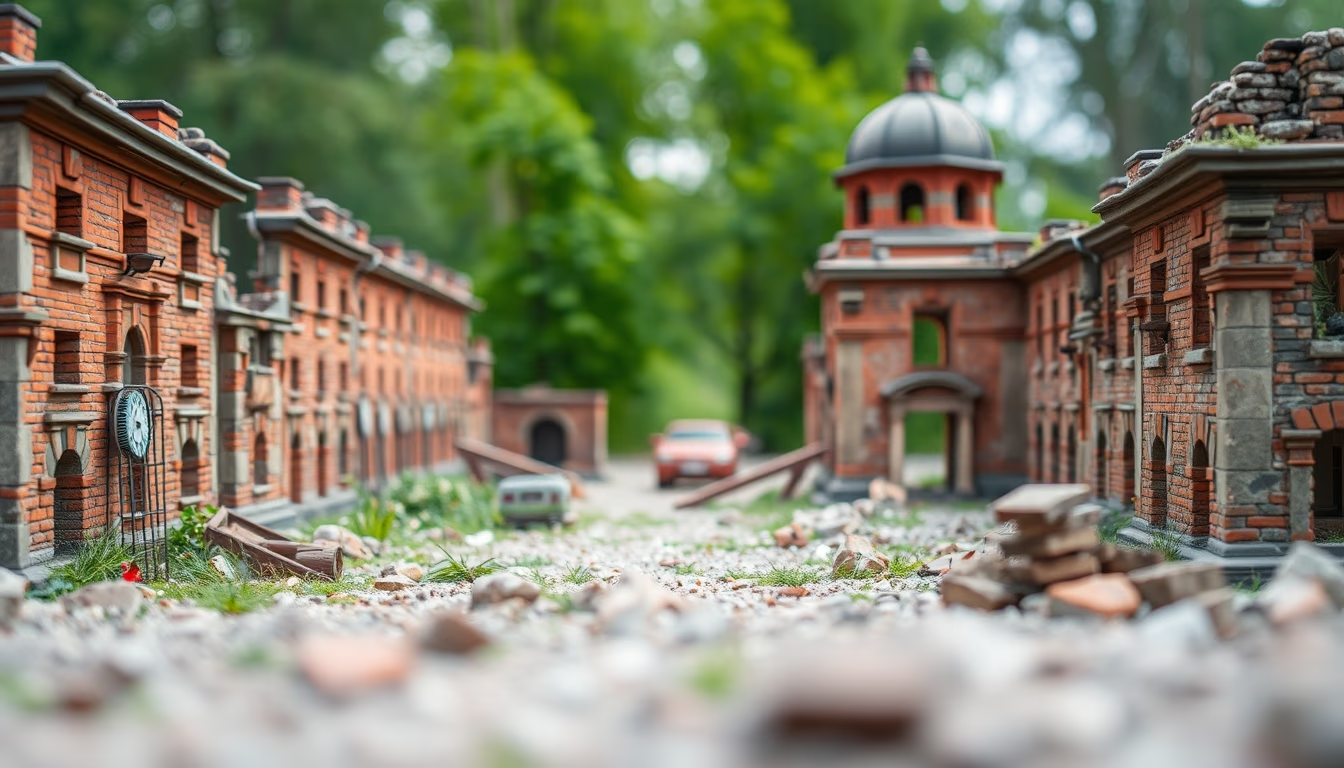
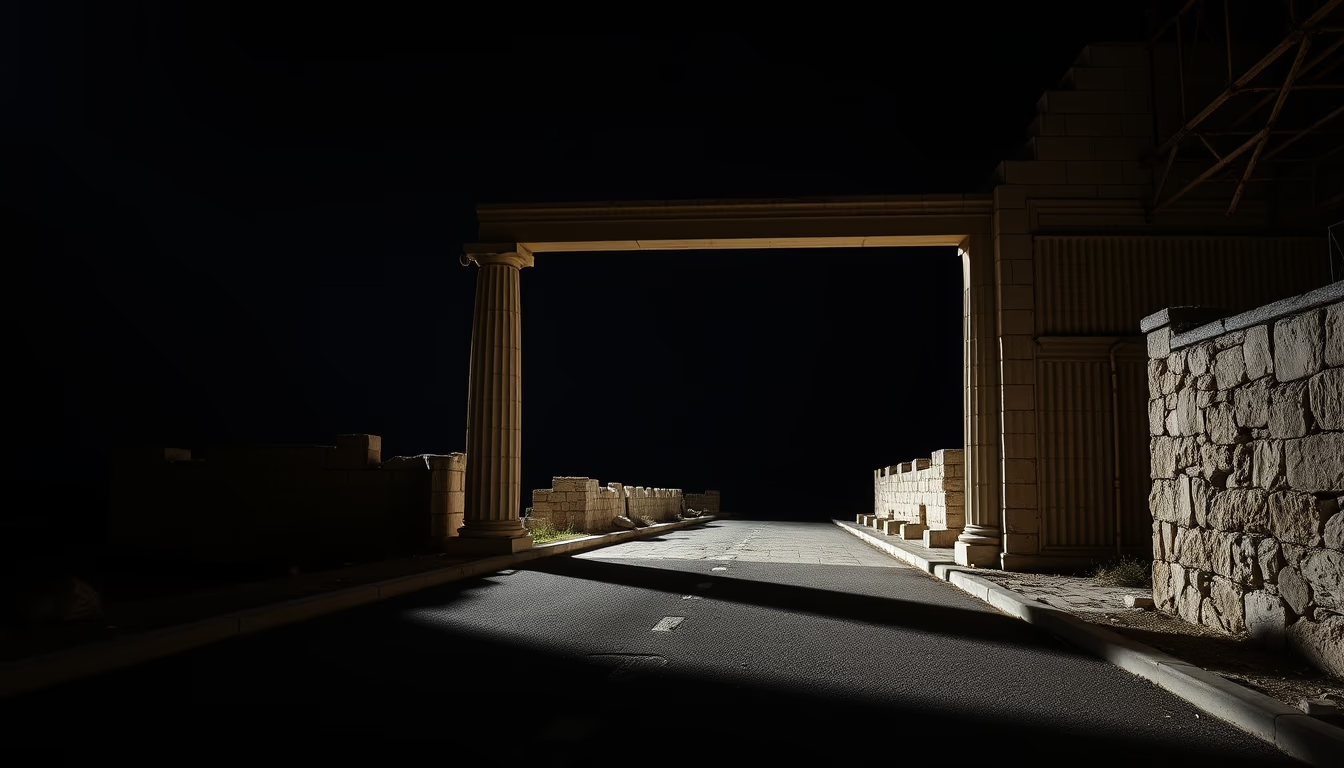
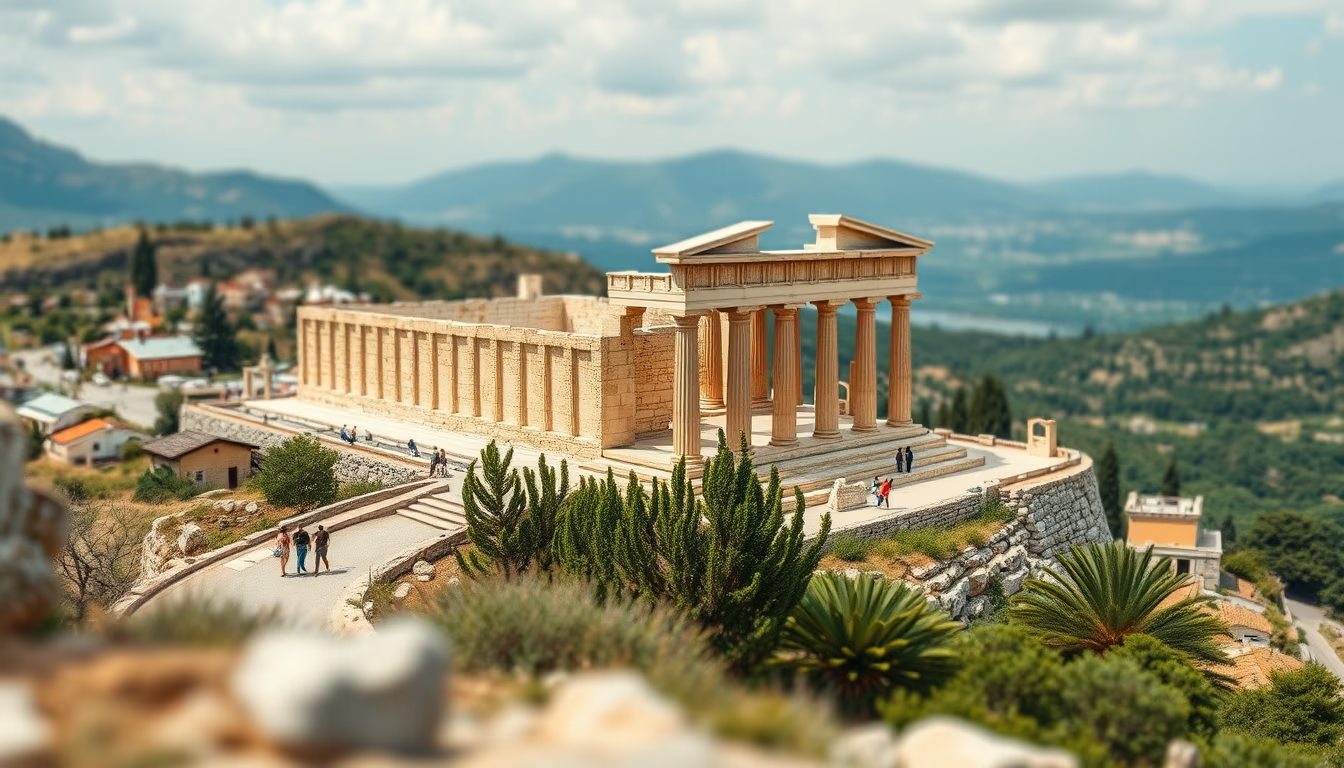
Thermopylae greek pass
1344×768 · AVIF · CC BY 4.0
Narrow coastal pass in central Greece, site of the legendary 480 BC battle against the Persian Empire.
About this subject
Thermopylae is a narrow coastal passage in central Greece, located in Phocis between Mount Kallidromo and the Malian Gulf. Its name comes from the hot sulfur springs in the area, meaning "Hot Gates." The pass has always been a strategic route for invading southern Greece, as it provides the only land path between Thessaly and Locris.
Worldwide fame came from the Battle of Thermopylae in 480 BC during the Second Greco-Persian War. A Greek allied force of about 7,000 soldiers, led by Spartan King Leonidas, faced the Persian army of Xerxes I, estimated in the hundreds of thousands. For three days, the Greeks held the pass, using its narrowness to negate the Persian numerical advantage. The turning point was the betrayal of Ephialtes, who revealed a mountain path, allowing the Persians to surround the defenders. Leonidas and his 300 Spartans, along with other allied troops who stayed, fought to the death.
The sacrifice at Thermopylae became a symbol of courage, resistance, and patriotism, deeply influencing Western culture. The site now features monuments such as the Leonidas statue and the epitaph by Simonides: "Go tell the Spartans, stranger passing by, that here, obedient to their laws, we lie." Today, the area is a tourist and archaeological destination, with the sea having receded due to sedimentation, altering the original landscape. The hot springs still exist, recalling the name.
Remains of ancient fortifications like the Phocian Wall can be seen, and historical reenactments take place. The battle has been immortalized in films, books, and games, but historically, the resistance allowed the Greek city-states to regroup, leading to later victories at Salamis and Plataea.
Frequently Asked Questions
How many Spartan soldiers actually fought at Thermopylae?
Traditionally, 300 Spartans led by Leonidas. However, there were about 7,000 allied Greek soldiers in total, including other contingents.
Why is Thermopylae called 'Hot Gates'?
The name comes from the hot sulfur springs in the area, which formed warm pools in the pass.
Has the landscape of Thermopylae changed since antiquity?
Yes, the sea has receded significantly due to sediment deposition from the Spercheios River. Today the site is a plain, quite different from the narrow pass described in ancient times.
Direct URL
https://pub-c7d6a6ea828543ac903a74a341ccb2e1.r2.dev/imagens/thermopylae-greek-pass-studio-still-life-fresh12.avifHow to credit
Include a visible link back to UtilizAí. Copy one of the snippets below:
<a href="https://xn--utiliza-eza.com/en/midia/imagens/thermopylae-greek-pass-studio-still-life-fresh12">Thermopylae greek pass</a> by <a href="https://xn--utiliza-eza.com">UtilizAí</a>, licensed under <a href="https://creativecommons.org/licenses/by/4.0/">CC BY 4.0</a>.
[Thermopylae greek pass](https://xn--utiliza-eza.com/en/midia/imagens/thermopylae-greek-pass-studio-still-life-fresh12) by [UtilizAí](https://xn--utiliza-eza.com), CC BY 4.0
License: CC-BY-4.0