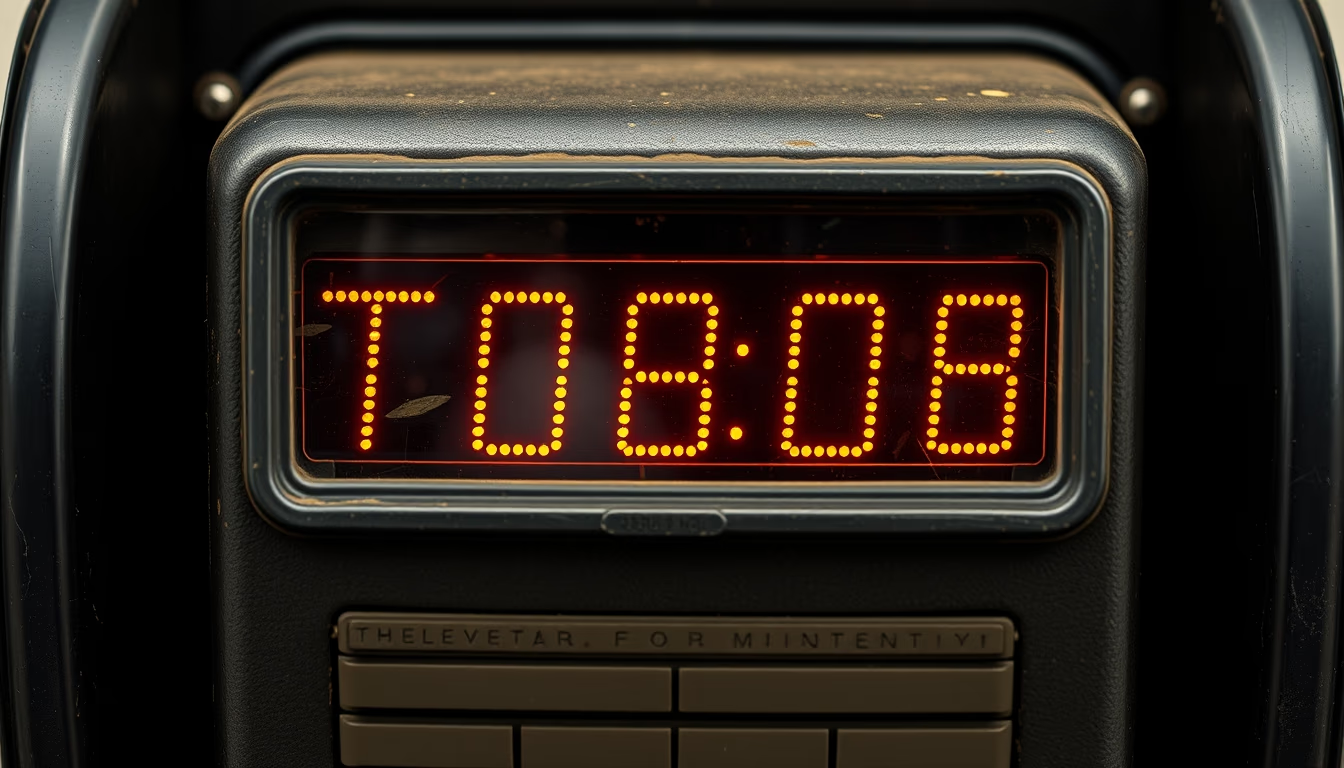
Telegraph machine ticker
1344×768 · AVIF · CC BY 4.0
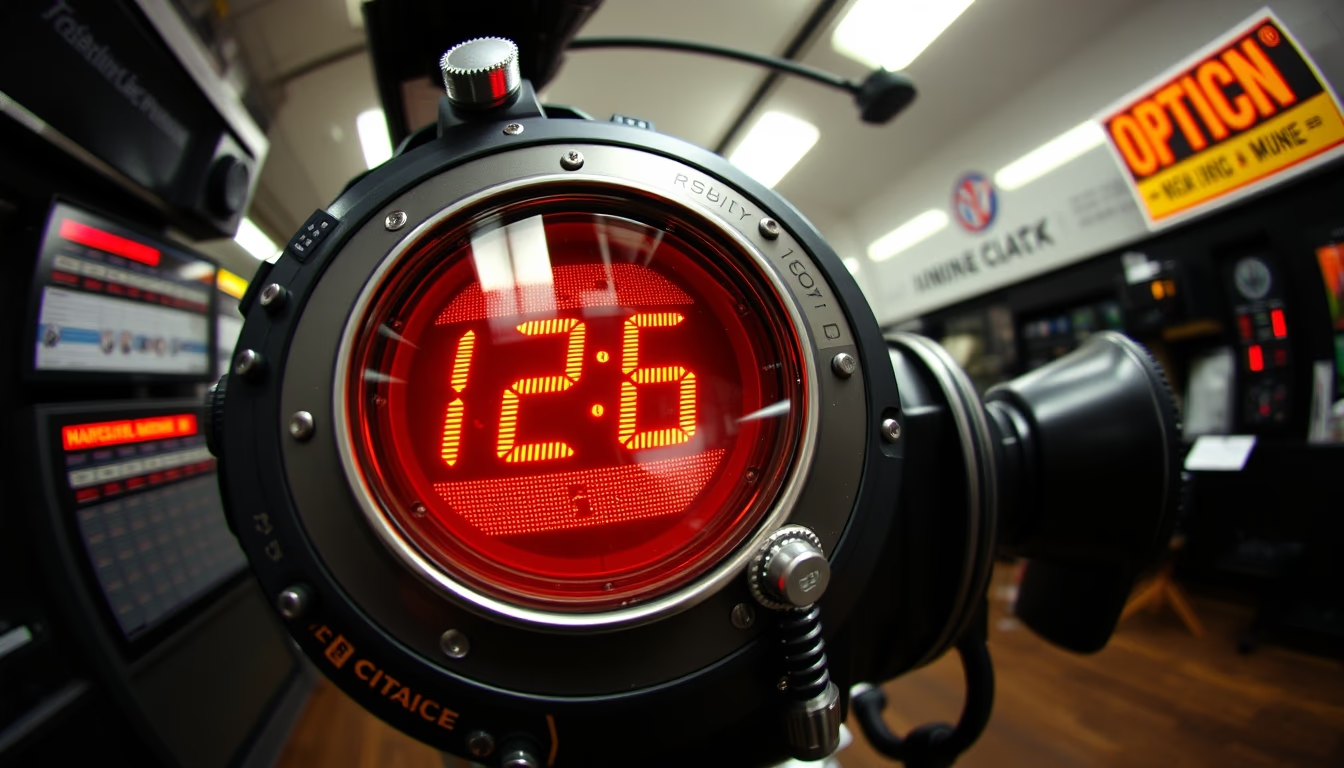
Discover the telegraph ticker, a device that revolutionized financial and news communication in the 19th century by transmitting Morse code messages on paper strips.
About this subject
The telegraph ticker, also known as a stock ticker, was one of the first mass communication systems to transmit real-time information. Invented by Edward Calahan in 1867 and improved by Thomas Edison, the device received telegraphic signals and printed them on a long strip of paper, allowing investors and newspapers to track stock prices and news instantly.
Each ticker was connected to a central telegraph line. When a message was sent, a series of hammers pressed the paper tape against an inked roller, forming dots and dashes of Morse code. Over time, alphanumeric characters were adopted for easier reading. The characteristic hammering sound gave rise to the term “ticker” (from the word tick).
The use of tickers expanded rapidly in stock exchanges, especially in New York. Discarded ticker tape was thrown during celebratory parades, originating the famous “ticker tape parades,” such as the one in 1886 for the dedication of the Statue of Liberty. The system was gradually replaced by more modern teleprinters and later digital technologies, but its legacy continues in popular culture.
Interestingly, the ticker also influenced the design of typewriters and printers. The Teletype Corporation, founded in 1906, dominated the teleprinter market for decades. Today, the term “ticker” is still used in online financial services that display real-time quotes, though without the characteristic hammer noise.
Frequently Asked Questions
What is a telegraph ticker?
It is a telegraphic device that receives electrical signals and prints them on a long paper strip, usually in Morse code or alphanumeric characters, used primarily to transmit stock prices and news in real time during the late 19th and early 20th centuries.
How did a ticker work?
The ticker was connected to a central telegraph line. When a signal arrived, an electromagnet activated hammers that pressed the paper tape against an inked roller, leaving dots and dashes (or letters) representing the transmitted information. The paper ran continuously, and the operator read the printed message.
Why do parades in New York throw strips of paper?
This tradition comes from ticker tape parades, beginning in 1886 when, during a parade for the Statue of Liberty, office workers threw discarded ticker paper strips. The term 'ticker tape parade' became a symbol of celebration, still used today for events such as sports championships.
Direct URL
https://pub-c7d6a6ea828543ac903a74a341ccb2e1.r2.dev/imagens/telegraph-machine-ticker-fish-eye-wide-angle-fresh5.avifHow to credit
Include a visible link back to UtilizAí. Copy one of the snippets below:
<a href="https://xn--utiliza-eza.com/en/midia/imagens/telegraph-machine-ticker-fish-eye-wide-angle-fresh5">Telegraph machine ticker</a> by <a href="https://xn--utiliza-eza.com">UtilizAí</a>, licensed under <a href="https://creativecommons.org/licenses/by/4.0/">CC BY 4.0</a>.
[Telegraph machine ticker](https://xn--utiliza-eza.com/en/midia/imagens/telegraph-machine-ticker-fish-eye-wide-angle-fresh5) by [UtilizAí](https://xn--utiliza-eza.com), CC BY 4.0
License: CC-BY-4.0