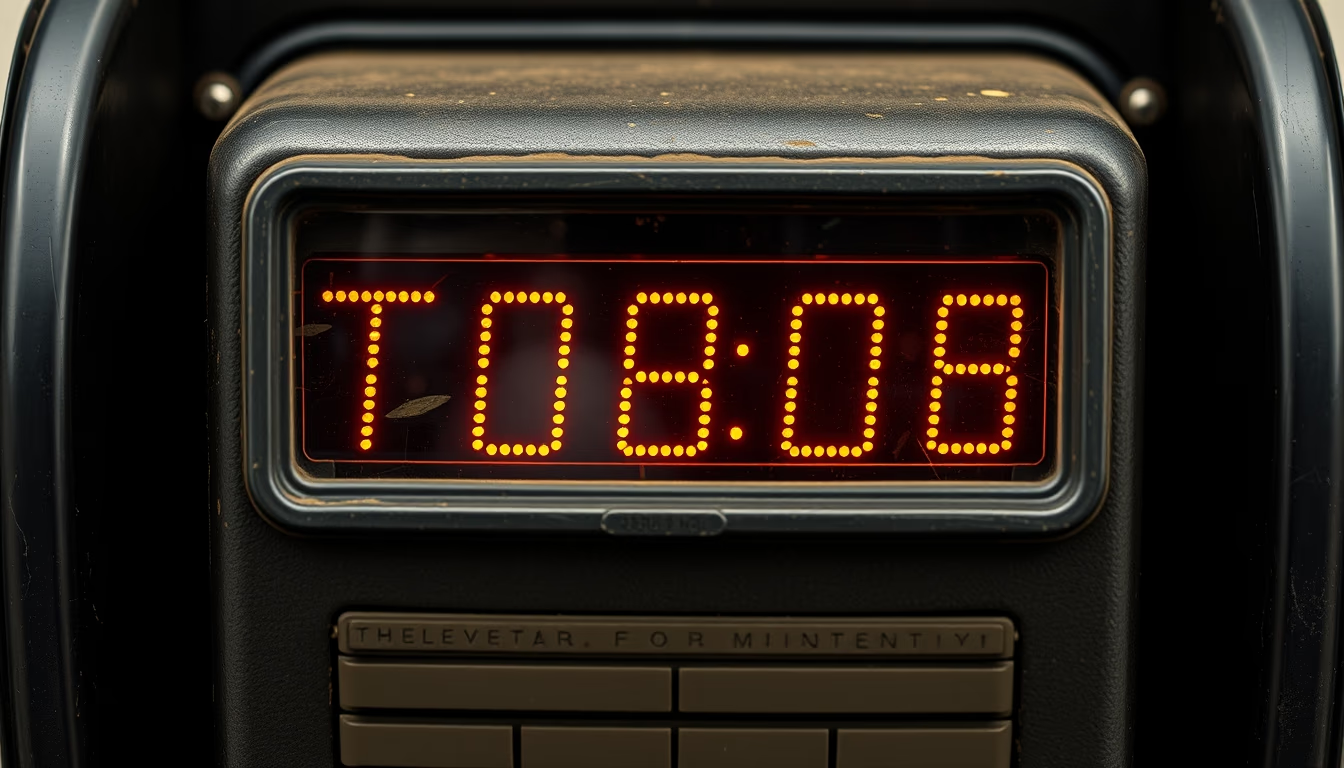
Telegraph machine ticker
1344×768 · AVIF · CC BY 4.0
The ticker tape machine was one of the first electronic financial communication devices, revolutionizing real-time stock quotes transmission in the 19th century.
About this subject
The ticker tape machine, also known as the stock ticker, was invented by Edward Calahan in 1867 and quickly adopted by the New York Stock Exchange (NYSE). It used a telegraph system to transmit stock prices directly to offices, printing them on a continuous paper tape. Before this, information took hours or days to arrive, making the market less efficient and prone to delays.
The operation was relatively simple: an operator on the trading floor typed the stock symbol and price into a keyboard, which converted the signals into Morse code and sent them via telegraph line. On the receiving end, the machine decoded the signals and printed characters on the tape, which investors read in real time. Each machine could process about one quote per second, which was revolutionary at the time. Although gradually replaced by digital screens from the 1960s onward, mechanical tickers remained in use until the 1970s.
Culturally, the ticker tape machine left a lasting legacy. The term "ticker tape" originated from the sound the machine made while printing, and the discarded tape was used in celebratory parades, such as the famous "ticker tape parades" in New York City. These parades began spontaneously in 1886 when workers threw tape strips from windows during the dedication of the Statue of Liberty. To this day, the image of colored paper tape falling upon heroes and champions symbolizes public recognition.
The technical legacy of the ticker tape machine is equally significant. It was the precursor to modern real-time financial information systems like Bloomberg and Reuters. The need to process and transmit large volumes of data quickly spurred innovations in telecommunications and computing. Moreover, nostalgia for the sound and aesthetics of mechanical machines keeps them alive in museum collections and films depicting the old stock market, perpetuating their importance in the history of technology.
Frequently Asked Questions
How did the ticker tape machine work?
The operator typed the stock symbol and price into a keyboard, which converted the signals into Morse code and sent them via telegraph line. On the receiving end, the machine decoded and printed the characters onto a continuous paper tape, allowing investors to read quotes in real time.
Who invented the ticker tape machine?
The ticker tape machine was invented by Edward Calahan, an employee of the American Telegraph Company, in 1867. It was later improved by Thomas Edison, who developed a faster and more reliable version.
Why are ticker tape parades called that?
The name comes from the use of discarded paper tape from ticker tape machines. In celebratory parades, such as those in New York City, people would throw these tapes from windows, creating a paper shower that became a symbol of honor.
Direct URL
https://pub-c7d6a6ea828543ac903a74a341ccb2e1.r2.dev/imagens/telegraph-machine-ticker-film-grain-authentic-fresh0.avifHow to credit
Include a visible link back to UtilizAí. Copy one of the snippets below:
<a href="https://xn--utiliza-eza.com/en/midia/imagens/telegraph-machine-ticker-film-grain-authentic-fresh0">Telegraph machine ticker</a> by <a href="https://xn--utiliza-eza.com">UtilizAí</a>, licensed under <a href="https://creativecommons.org/licenses/by/4.0/">CC BY 4.0</a>.
[Telegraph machine ticker](https://xn--utiliza-eza.com/en/midia/imagens/telegraph-machine-ticker-film-grain-authentic-fresh0) by [UtilizAí](https://xn--utiliza-eza.com), CC BY 4.0
License: CC-BY-4.0