Telegram paper yellow
1344×768 · AVIF · CC BY 4.0
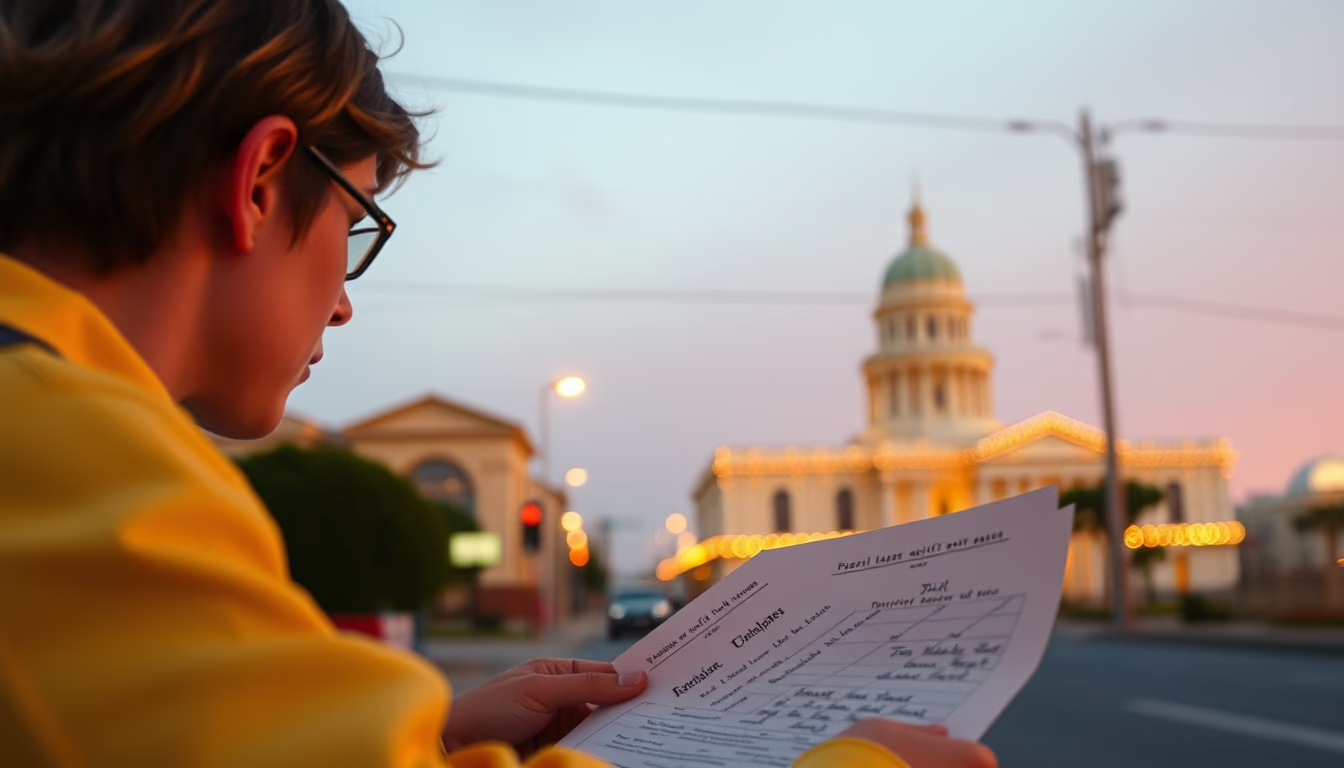
Discover the history of yellow telegram paper, an icon of 19th and 20th century communication that marked important moments in human history.
About this subject
Yellow telegram paper is one of the most recognizable symbols of the telegraph era, which revolutionized long-distance communication from the 1840s onward. Invented by Samuel Morse, the electric telegraph transmitted messages in Morse code via wires, and these messages were printed on paper strips. The characteristic yellow hue came from the use of low-cost paper, often recycled or chemically treated, which yellowed over time. Western Union, the leading telegraph company in the United States, popularized this visual standard, making it synonymous with urgency and formality.
Culturally, the telegram was the fastest communication method before the telephone became widespread. It was used to send news of births, deaths, marriages, and declarations of war. During wars, telegrams informed families about soldiers killed or wounded, evoking both hope and anxiety. The need for brevity due to cost per word gave rise to "telegraphic style", short phrases without articles, like "ARRIVING TOMORROW" or "MOTHER SICK RETURN." One of the most famous telegrams in history was sent by Samuel Morse himself in 1844: "What hath God wrought?", demonstrating the power of the new technology.
Interestingly, yellow paper also appears in movies and TV shows as a nostalgic element, evoking a time when communication was slower but laden with meaning. With the advent of the telephone, fax, and internet, telegram use declined dramatically. Today, services like Western Union's free telegram still exist for ceremonial or legal purposes, but original yellow paper is increasingly rare, preserved in museums and private collections as a testament to an era that transformed the world.
Frequently Asked Questions
Why was telegram paper yellow?
The paper was yellow due to the use of low-cost materials, such as recycled or chemically treated paper, which yellowed over time. The yellow color became a visual hallmark of telegraph service, especially after standardization by Western Union.
What is the difference between a telegram and a letter?
A telegram was transmitted electrically via Morse code and delivered within hours, while a letter traveled by traditional mail, taking days or weeks. Telegrams were concise and expensive per word, whereas letters allowed long, informal text.
Can you still send a telegram today?
Yes, but rarely. Western Union still offers telegram service for special occasions or legal requirements. However, most people use email, SMS, or instant messaging apps, which are much faster and cheaper.
Direct URL
https://pub-c7d6a6ea828543ac903a74a341ccb2e1.r2.dev/imagens/telegram-paper-yellow-cinematic-wide-shot-fresh7.avifHow to credit
Include a visible link back to UtilizAí. Copy one of the snippets below:
<a href="https://xn--utiliza-eza.com/en/midia/imagens/telegram-paper-yellow-cinematic-wide-shot-fresh7">Telegram paper yellow</a> by <a href="https://xn--utiliza-eza.com">UtilizAí</a>, licensed under <a href="https://creativecommons.org/licenses/by/4.0/">CC BY 4.0</a>.
[Telegram paper yellow](https://xn--utiliza-eza.com/en/midia/imagens/telegram-paper-yellow-cinematic-wide-shot-fresh7) by [UtilizAí](https://xn--utiliza-eza.com), CC BY 4.0
License: CC-BY-4.0