Tea room tatami
1344×768 · AVIF · CC BY 4.0
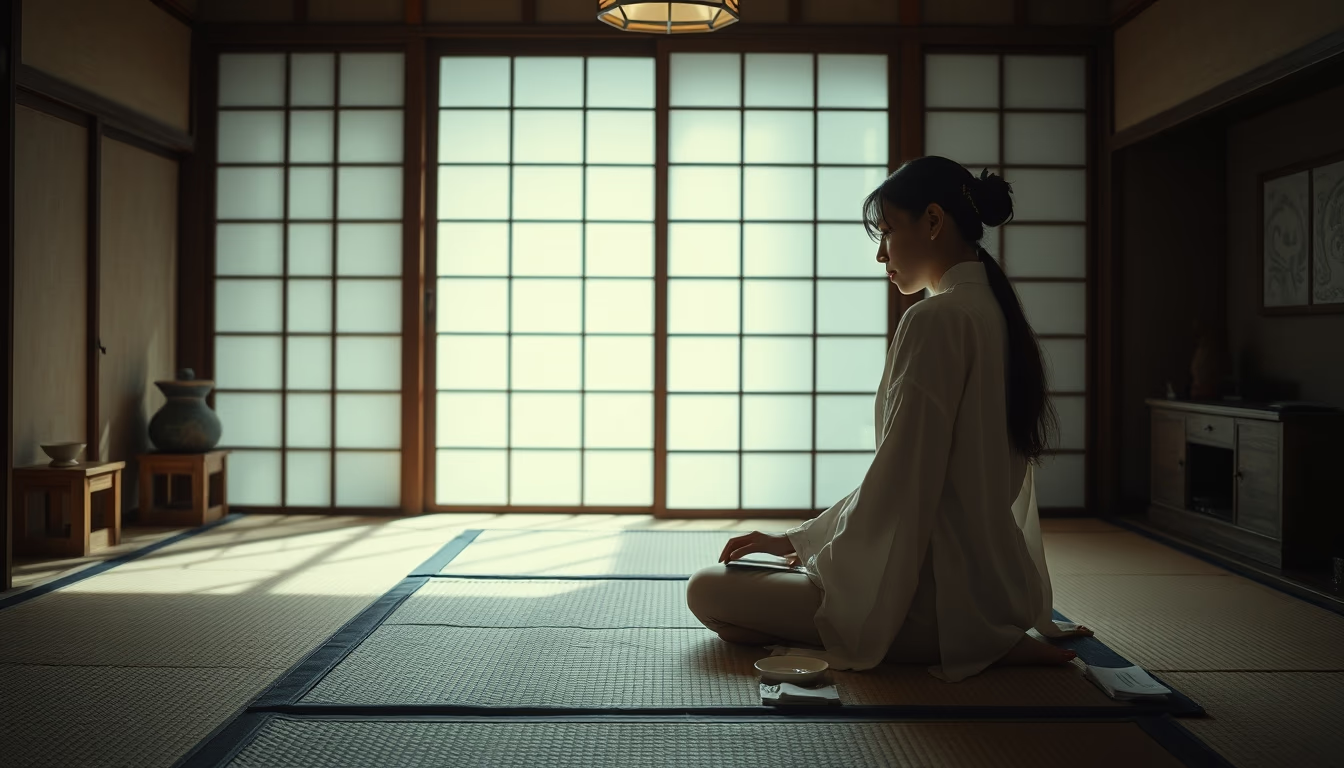
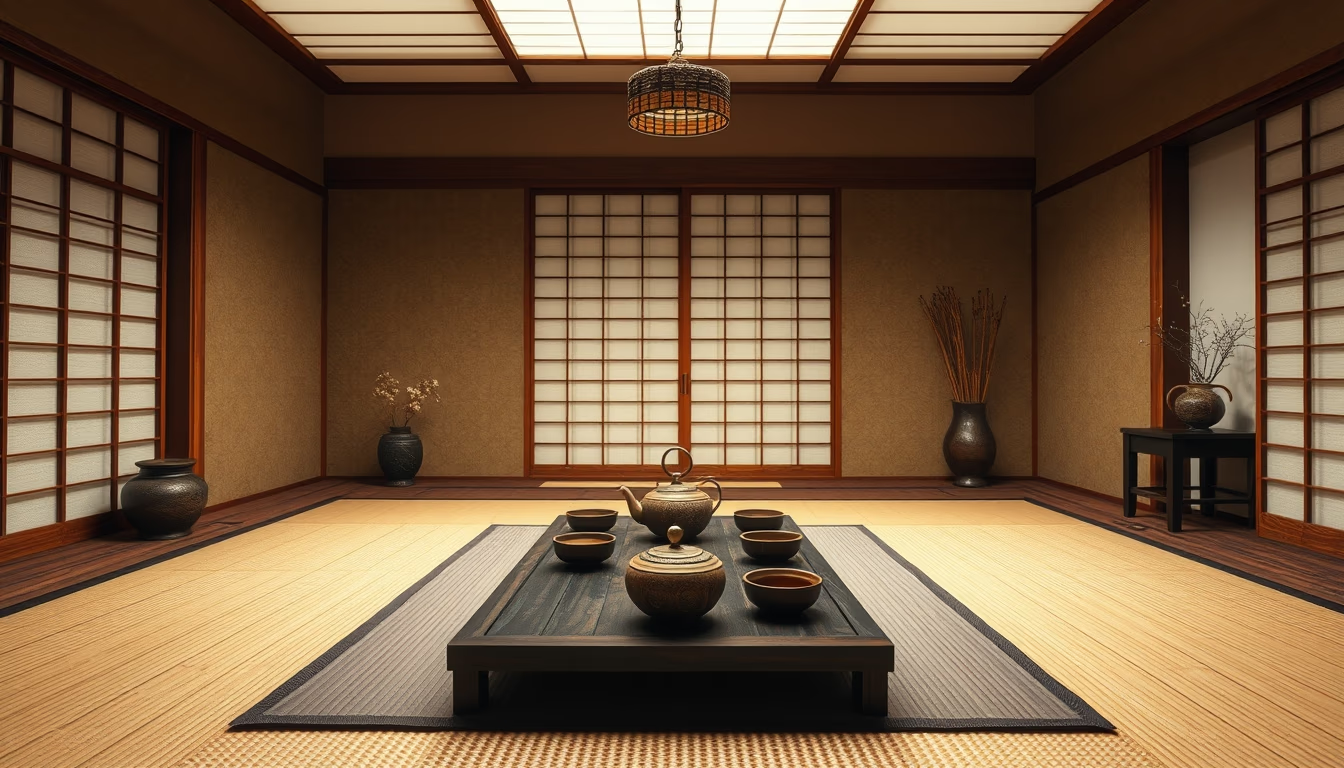
Tatami, made of woven rice straw, is the traditional flooring of Japanese tea rooms, symbolizing simplicity and harmony with nature.
About this subject
Tatami is a central element in Japanese architecture and culture, especially in tea rooms (chashitsu). Made of woven rice straw and covered with rush grass mats, each tatami measures approximately 1.8 meters by 0.9 meters, with a thickness of about 5 centimeters. In tea ceremonies (chanoyu), the number and arrangement of tatami mats define the room's size: the standard four-and-a-half-mat room (yojōhan) is considered ideal, providing sufficient space for the host's and guests' movements while maintaining intimacy.
The wabi-sabi aesthetic, which values imperfection and transience, is deeply connected to tatami. Its natural texture, straw scent, and color that yellows over time create an atmosphere of serenity and rusticity. In the tea ceremony, every detail matters: the orientation of the mats follows strict rules, and stepping on the edges (heri) is considered a breach of etiquette. Historically, tatami use was restricted to the upper classes, but today it is common in Japanese homes, although in tea rooms tradition is preserved.
An interesting fact is that tatami also influences modern design: its modularity allows flexible spaces, and the contrast with contemporary materials like glass and steel is explored in architectural projects. In high-end fashion editorials, tatami serves as a backdrop evoking timeless elegance, blending the traditional with the avant-garde. For instance, the "wave-fresh-10k" series uses tatami in compositions that highlight textures and silhouettes, showing how a centuries-old element can dialogue with current trends.
Frequently Asked Questions
What is the standard size of a tatami mat?
A traditional tatami measures approximately 1.8 m by 0.9 m, but dimensions vary by region in Japan. In Tokyo, tatami is slightly smaller (1.76 m x 0.88 m), while in Kyoto it is larger (1.91 m x 0.95 m).
Why is tatami important in the tea ceremony?
Tatami defines the sacred space of the tea room. Its texture and aroma contribute to the sensory experience, and the arrangement of mats determines the placement of utensils and participants' posture, following precise etiquette rules.
Is it true that stepping on the edges of tatami brings bad luck?
Yes, in Japanese tradition, stepping on the edges (heri) of tatami is avoided, as it is believed to bring bad luck or show disrespect. This practice is especially followed in formal settings such as tea rooms and temples.
Direct URL
https://pub-c7d6a6ea828543ac903a74a341ccb2e1.r2.dev/imagens/tea-room-tatami-high-fashion-editorial-fresh14.avifHow to credit
Include a visible link back to UtilizAí. Copy one of the snippets below:
<a href="https://xn--utiliza-eza.com/en/midia/imagens/tea-room-tatami-high-fashion-editorial-fresh14">Tea room tatami</a> by <a href="https://xn--utiliza-eza.com">UtilizAí</a>, licensed under <a href="https://creativecommons.org/licenses/by/4.0/">CC BY 4.0</a>.
[Tea room tatami](https://xn--utiliza-eza.com/en/midia/imagens/tea-room-tatami-high-fashion-editorial-fresh14) by [UtilizAí](https://xn--utiliza-eza.com), CC BY 4.0
License: CC-BY-4.0