Tea bricks china
1344×768 · AVIF · CC BY 4.0
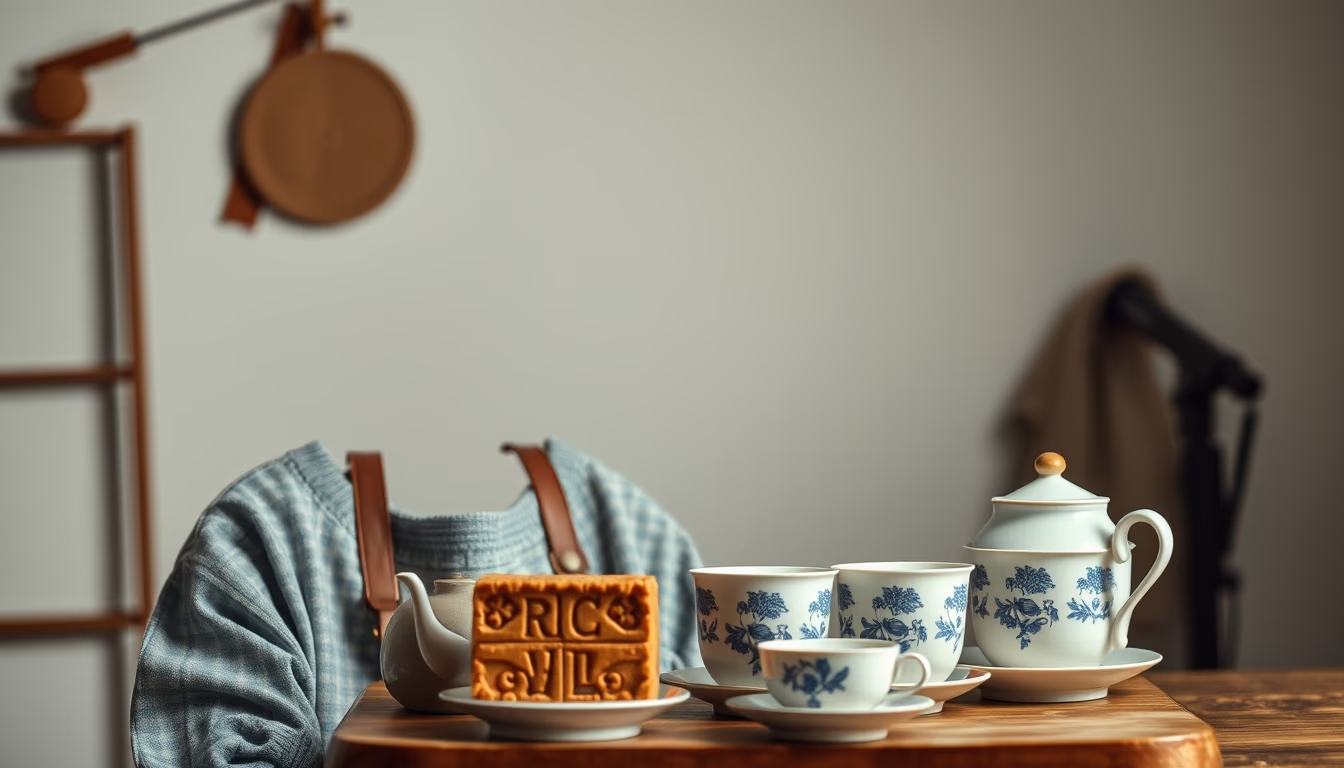
Discover tea bricks, a traditional form of compressed tea used for storage and trade across centuries in China and beyond.
About this subject
Tea bricks, also known as compressed tea, are leaves pressed into dense blocks. This technique originated in China during the Tang dynasty (618, 907 AD) to facilitate transportation and storage. The leaves were steamed, ground, and compressed in molds, creating blocks that could travel long distances without spoiling.
Historically, tea bricks served as currency along the Silk Road and in trade with Tibet and Mongolia. They were valued for their durability and standardization. In regions like Yunnan province, tea bricks were used to pay taxes and salaries. The format allowed the tea to be scraped and boiled, producing a strong, full-bodied infusion.
There are several types of tea bricks, with the most famous being pu'er and hei cha (Chinese dark tea). Pu'er undergoes controlled fermentation and can age for decades, developing complex flavors. Hei cha is mainly produced in Hunan, Hubei, and Sichuan provinces. Production involves steps such as withering, roasting, rolling, and pressing.
Today, tea bricks are prized by collectors and enthusiasts. Beyond cultural significance, they represent a method of preservation that retains tea characteristics for many years. Learning to break and prepare a tea brick is part of the experience, revealing aromas that evoke centuries of commercial and gastronomic history.
Frequently Asked Questions
How do you prepare tea from a tea brick?
Break a small piece from the brick using a knife or pick. Place it in a teapot and add hot water (around 90°C). Steep for 2 to 3 minutes. Amount varies, but typically 5 grams per 200 ml of water.
How long do tea bricks last?
High-quality tea bricks, especially pu'er, can last decades if stored in a dry, cool, odor-free environment. Over time, the flavor may become smoother and more complex.
What is the difference between tea bricks and loose leaf tea?
Tea bricks are compressed for easy transport and storage, while loose leaf retains whole or broken leaves. Compression can alter aging speed and extraction during brewing.
Direct URL
https://pub-c7d6a6ea828543ac903a74a341ccb2e1.r2.dev/imagens/tea-bricks-china-studio-editorial-portrait-fresh8.avifHow to credit
Include a visible link back to UtilizAí. Copy one of the snippets below:
<a href="https://xn--utiliza-eza.com/en/midia/imagens/tea-bricks-china-studio-editorial-portrait-fresh8">Tea bricks china</a> by <a href="https://xn--utiliza-eza.com">UtilizAí</a>, licensed under <a href="https://creativecommons.org/licenses/by/4.0/">CC BY 4.0</a>.
[Tea bricks china](https://xn--utiliza-eza.com/en/midia/imagens/tea-bricks-china-studio-editorial-portrait-fresh8) by [UtilizAí](https://xn--utiliza-eza.com), CC BY 4.0
License: CC-BY-4.0