Tea bricks china
1344×768 · AVIF · CC BY 4.0
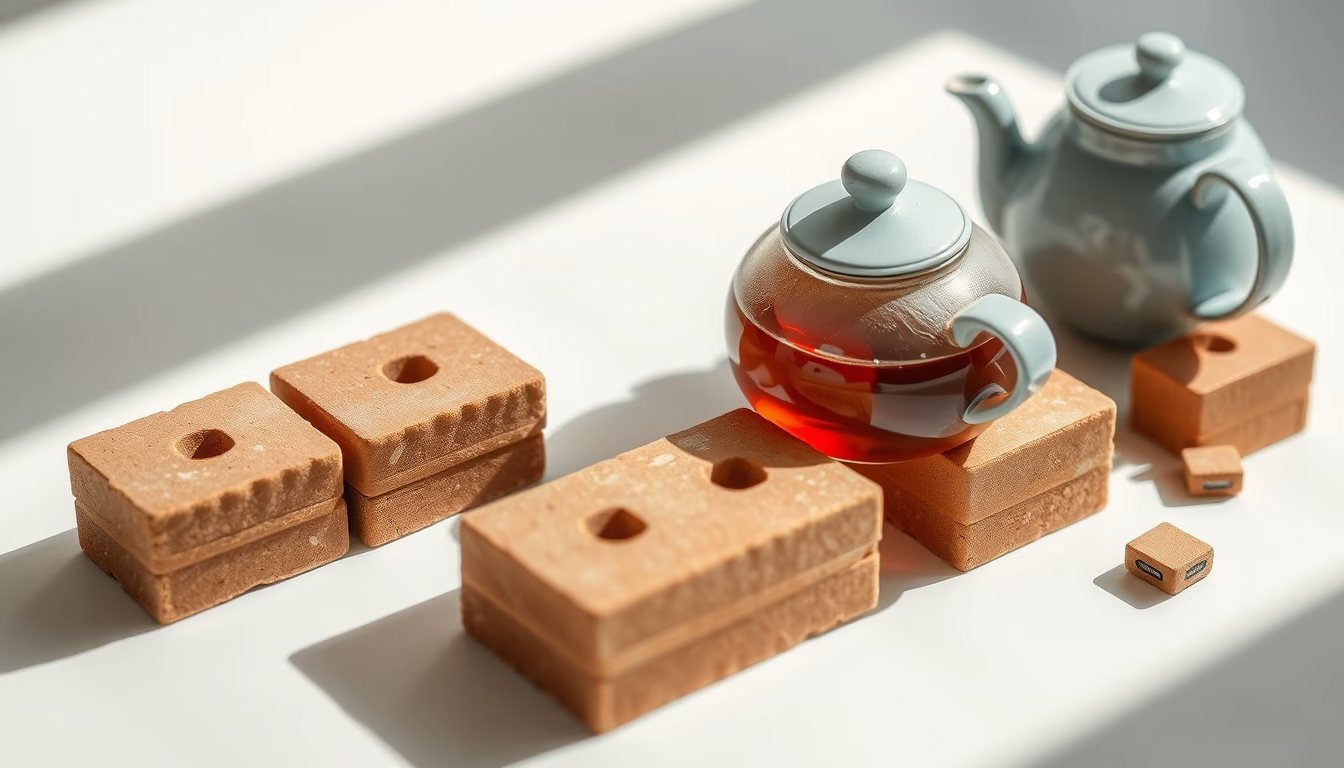
Chinese tea bricks, compressed into blocks, served as currency and a vital trade commodity along the Silk Road for centuries.
About this subject
Chinese tea bricks are an ancient form of preserving and transporting compressed tea leaves. Originating during the Tang (618, 907) and Song (960, 1279) dynasties, these blocks were primarily produced in Yunnan, Fujian, and Anhui provinces. The process involved steaming the leaves, pressing them into rectangular or circular molds, and drying them in the sun or over a fire. The resulting dense brick could be stored for years without significant quality loss.
Historically, tea bricks played a crucial role in the Silk Road economy. In Tibet and Mongolia, they were used as currency for trading horses, furs, and other goods. Value varied by size, quality, and origin; some bricks even featured imprints or producer seals, acting as certificates of authenticity. During the Ming dynasty (1368, 1644), the government regulated production to control trade with nomadic peoples.
Culturally, consuming brick tea was ritualized. A piece was chipped off, lightly roasted, and boiled in water to produce a strong, bitter brew. It was often mixed with yak butter and salt to make Tibetan butter tea (po cha). Today, tea bricks are mainly appreciated by collectors and aged tea enthusiasts, such as pu-erh, which is sold in similar compressed forms. This ancient tradition persists on a small scale, keeping alive a millenary practice linked to the economy and culture of the Far East.
Frequently Asked Questions
What were tea bricks used for in ancient China?
They served as currency along the Silk Road and as a convenient way to transport and store tea for daily consumption.
How do you prepare a beverage from a tea brick?
A piece is chipped off, lightly roasted, and boiled in water. It can be mixed with yak butter and salt to make Tibetan butter tea.
Are tea bricks still produced today?
Yes, especially for aged teas like pu-erh and for collectors. Small-scale production keeps the tradition alive.
Direct URL
https://pub-c7d6a6ea828543ac903a74a341ccb2e1.r2.dev/imagens/tea-bricks-china-magazine-editorial-fresh13.avifHow to credit
Include a visible link back to UtilizAí. Copy one of the snippets below:
<a href="https://xn--utiliza-eza.com/en/midia/imagens/tea-bricks-china-magazine-editorial-fresh13">Tea bricks china</a> by <a href="https://xn--utiliza-eza.com">UtilizAí</a>, licensed under <a href="https://creativecommons.org/licenses/by/4.0/">CC BY 4.0</a>.
[Tea bricks china](https://xn--utiliza-eza.com/en/midia/imagens/tea-bricks-china-magazine-editorial-fresh13) by [UtilizAí](https://xn--utiliza-eza.com), CC BY 4.0
License: CC-BY-4.0