Tea bricks china
1344×768 · AVIF · CC BY 4.0
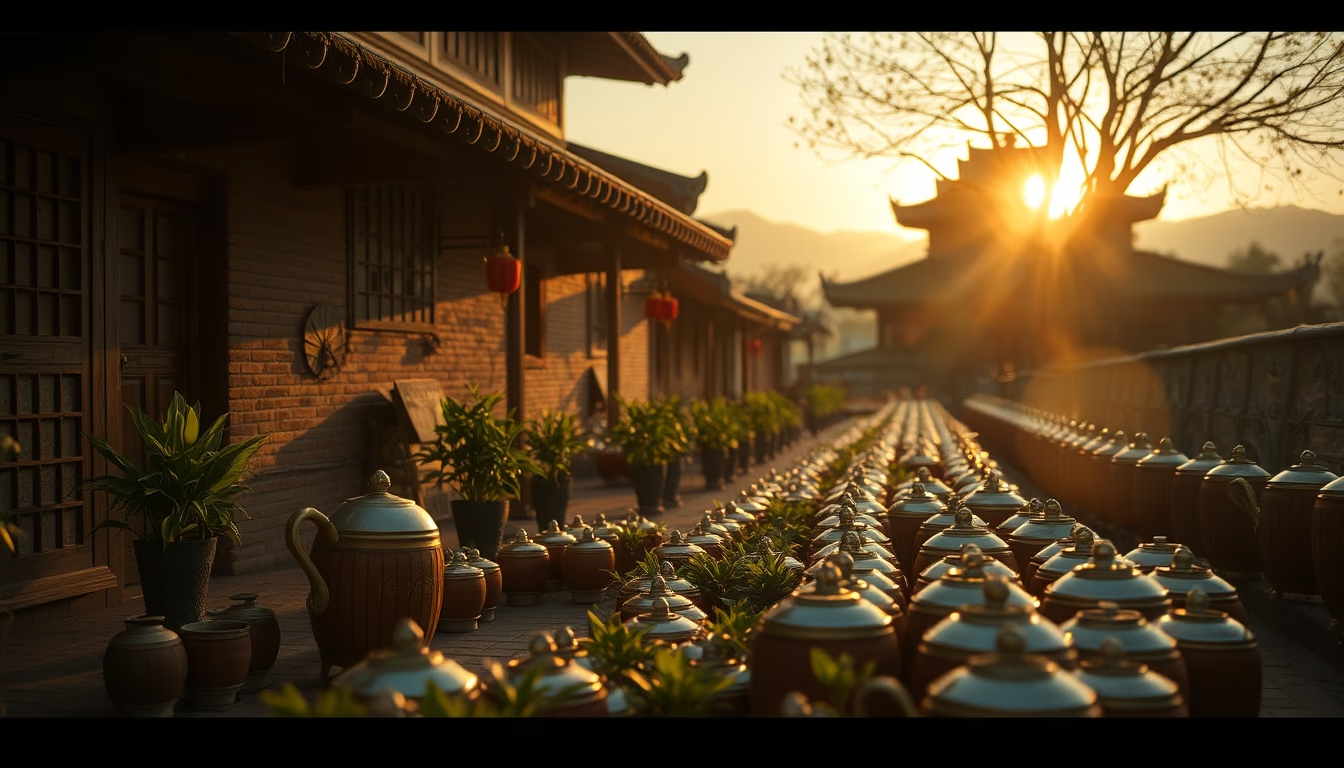
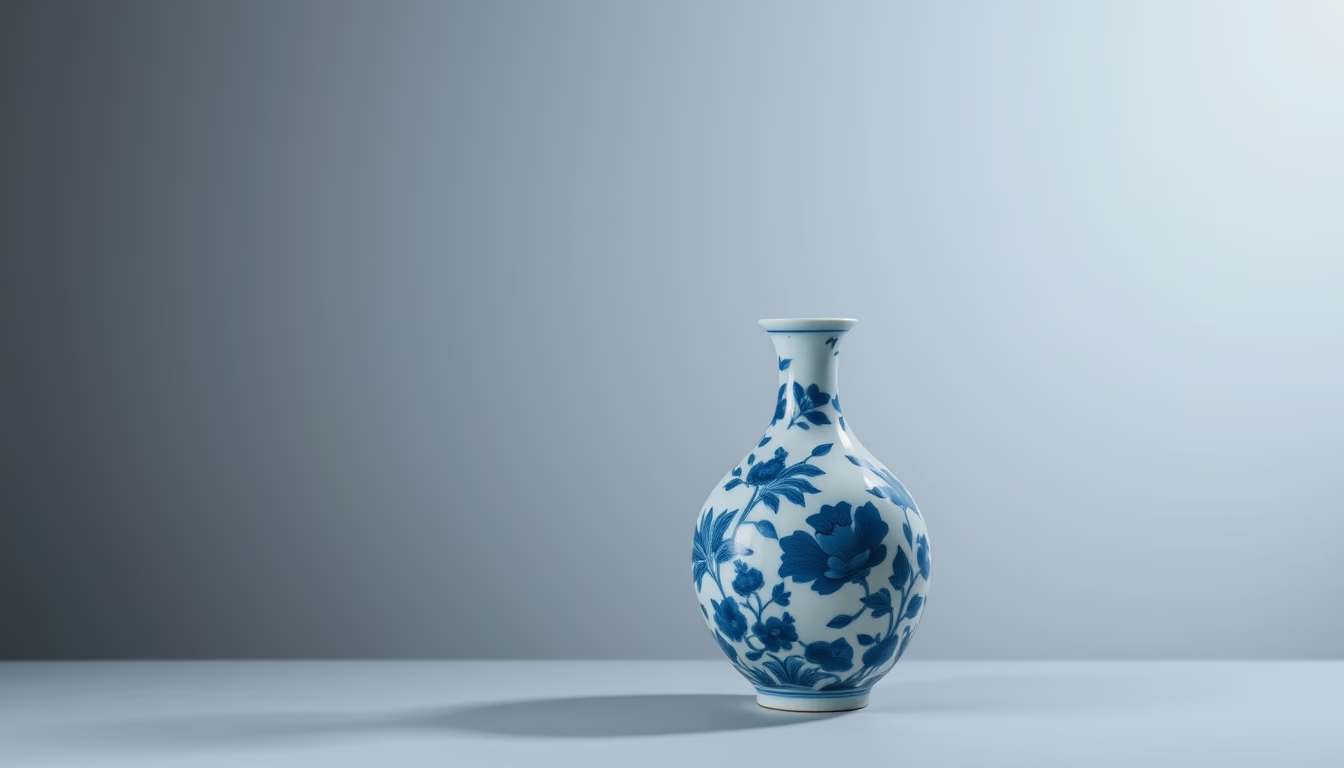
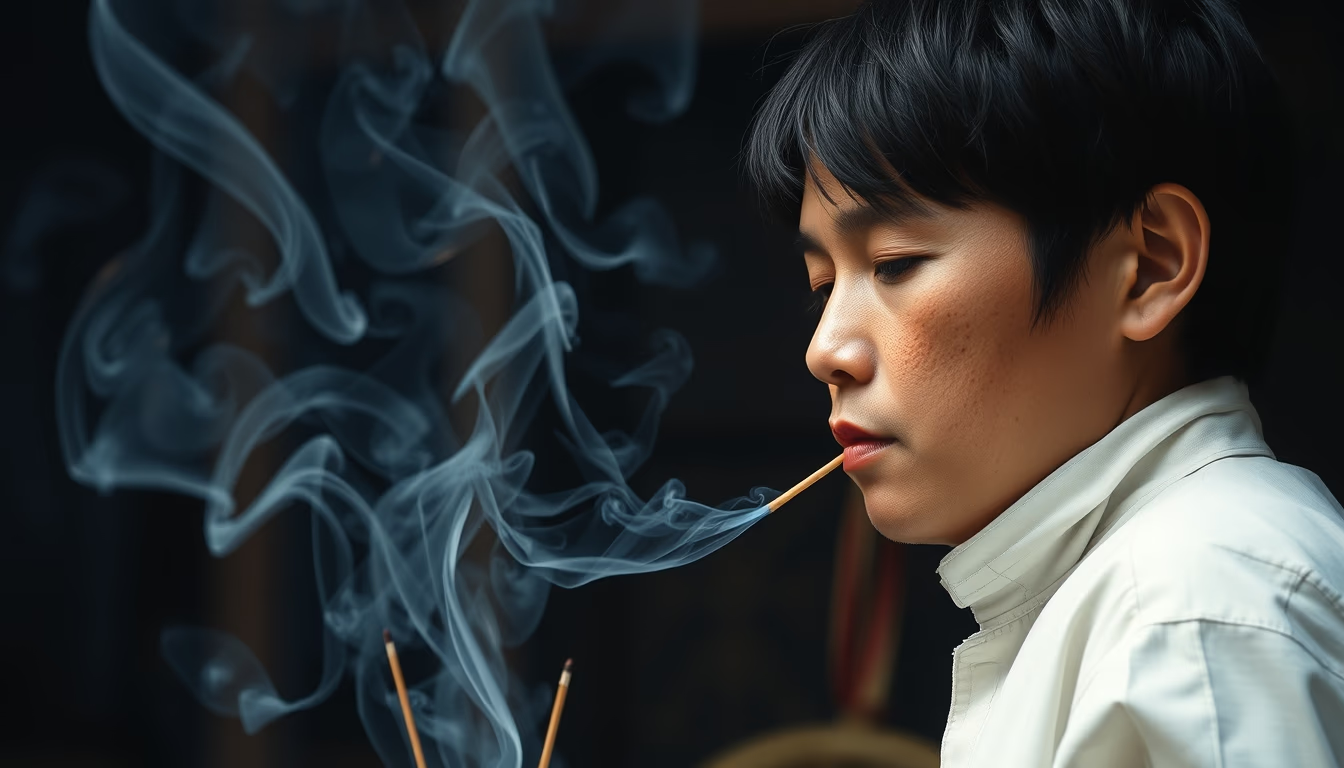
Tea bricks, compressed blocks of tea, were essential in Chinese trade and culture for centuries, serving as currency and medicine.
About this subject
Tea bricks are compressed blocks of tea leaves, a technique developed in China during the Tang dynasty (618-907 AD) to facilitate transport and storage. Unlike loose tea, these bricks were molded under pressure, often with binders like rice flour. This form allowed tea to travel along long trade routes like the Silk Road and the Tea Horse Road without losing quality. They were consumed by scraping a portion and boiling it in water, a practice still common in parts of Central Asia.
Beyond their value as a beverage, tea bricks served as currency in various periods. In imperial China during the Ming dynasty (1368-1644) and in regions like Tibet, tea bricks were accepted as tax payments and as money. Their value was so stable that they were sometimes equivalent to precious metals. This economic role was crucial for integrating remote areas into Chinese trade networks.
Culturally, compressed tea is associated with traditions like pu-erh, a fermented tea that improves with age. Tea bricks were also used in traditional Chinese medicine, believed to aid digestion and fight illnesses. Today, despite the prevalence of loose and bagged tea, tea bricks are still produced artisanally and prized by collectors and enthusiasts worldwide, keeping an ancient practice alive.
Frequently Asked Questions
How were tea bricks traditionally consumed?
A small piece was scraped off and boiled in water, sometimes with milk, butter, or salt. In Tibet, for example, brick tea was prepared with yak butter.
Why were tea bricks used as currency?
They were durable, standardized, and widely accepted. In regions like Tibet and Mongolia, where metal coins were scarce, tea bricks served as a medium of exchange and for paying taxes.
What is the difference between compressed tea and loose tea?
Compressed tea is compacted into blocks, making it easier to transport and age, while loose tea consists of whole or broken leaves, better for immediate consumption. Compressed tea often develops a richer flavor after aging.
Direct URL
https://pub-c7d6a6ea828543ac903a74a341ccb2e1.r2.dev/imagens/tea-bricks-china-cinematic-wide-shot-fresh7.avifHow to credit
Include a visible link back to UtilizAí. Copy one of the snippets below:
<a href="https://xn--utiliza-eza.com/en/midia/imagens/tea-bricks-china-cinematic-wide-shot-fresh7">Tea bricks china</a> by <a href="https://xn--utiliza-eza.com">UtilizAí</a>, licensed under <a href="https://creativecommons.org/licenses/by/4.0/">CC BY 4.0</a>.
[Tea bricks china](https://xn--utiliza-eza.com/en/midia/imagens/tea-bricks-china-cinematic-wide-shot-fresh7) by [UtilizAí](https://xn--utiliza-eza.com), CC BY 4.0
License: CC-BY-4.0