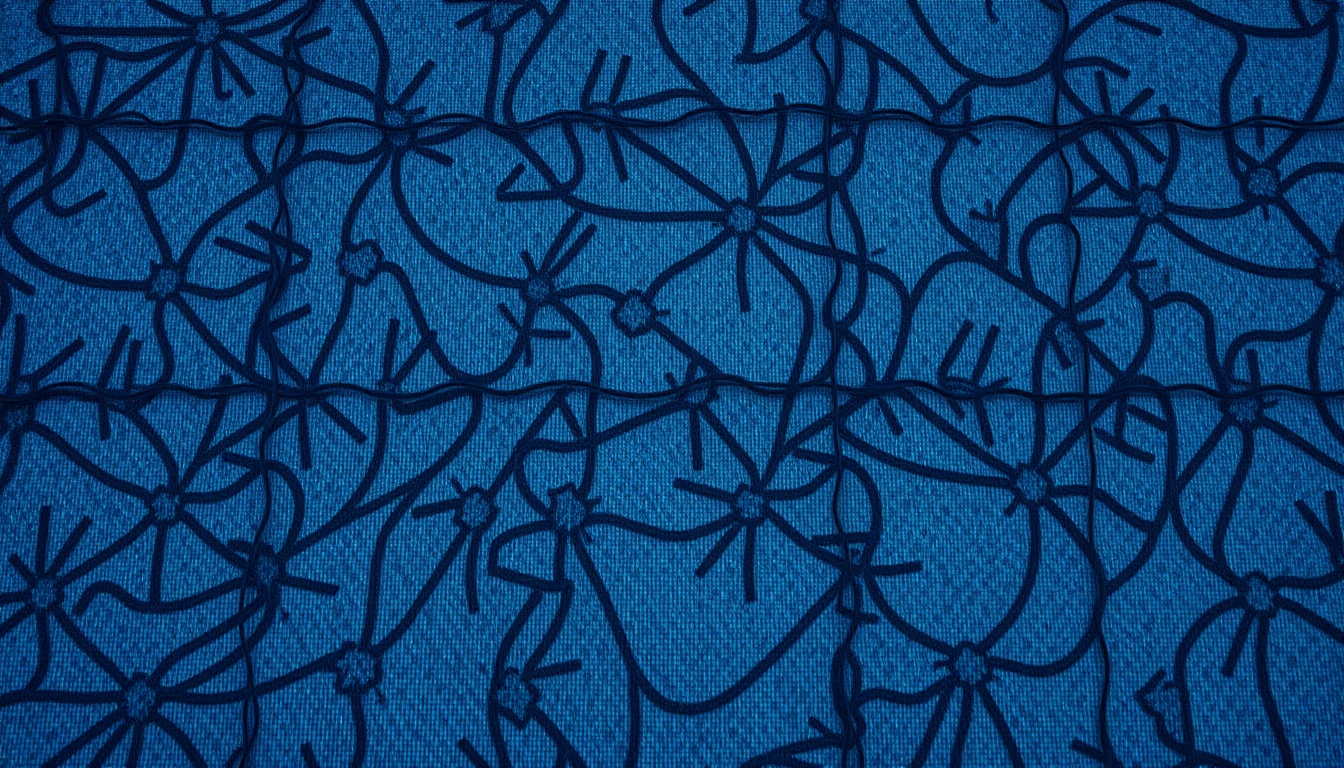
Tapestry medieval flemish
1344×768 · AVIF · CC BY 4.0

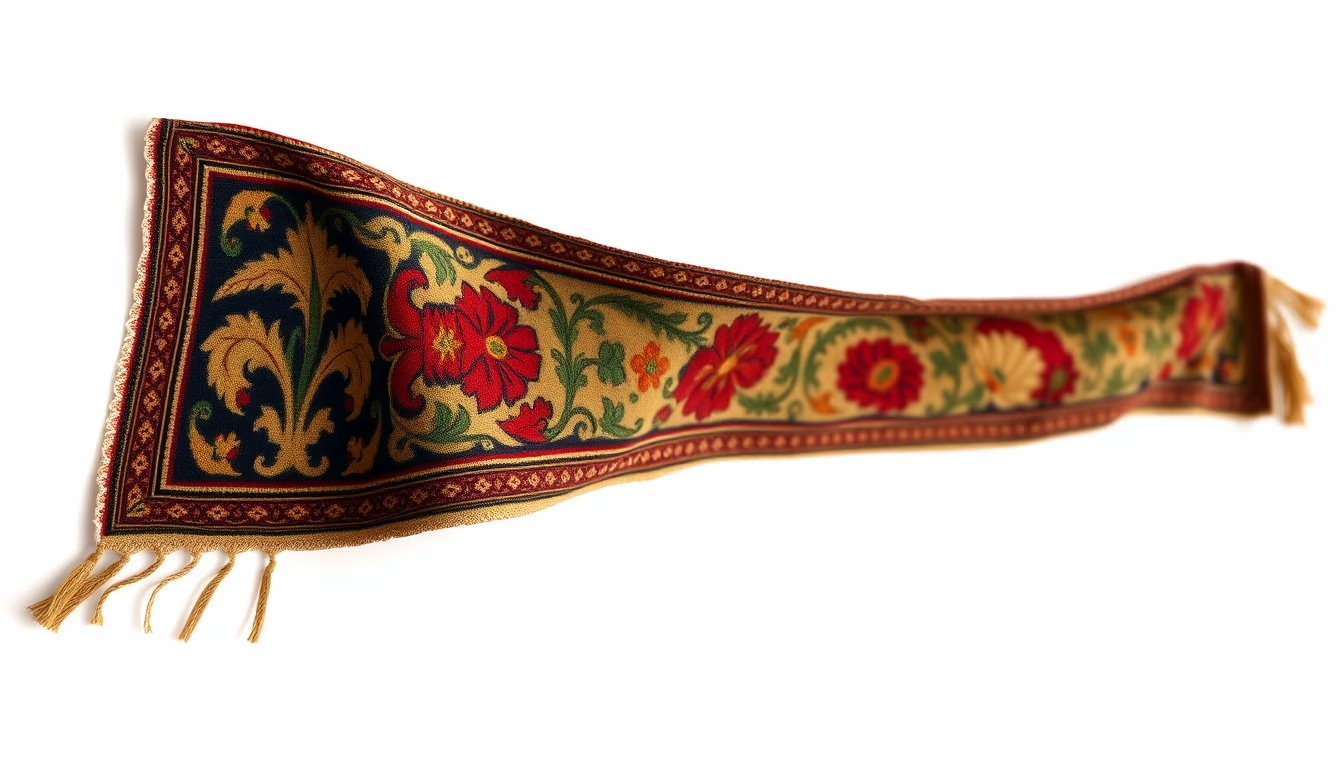
Flemish medieval tapestries are textile masterpieces depicting historical and mythological scenes with refined technique.
About this subject
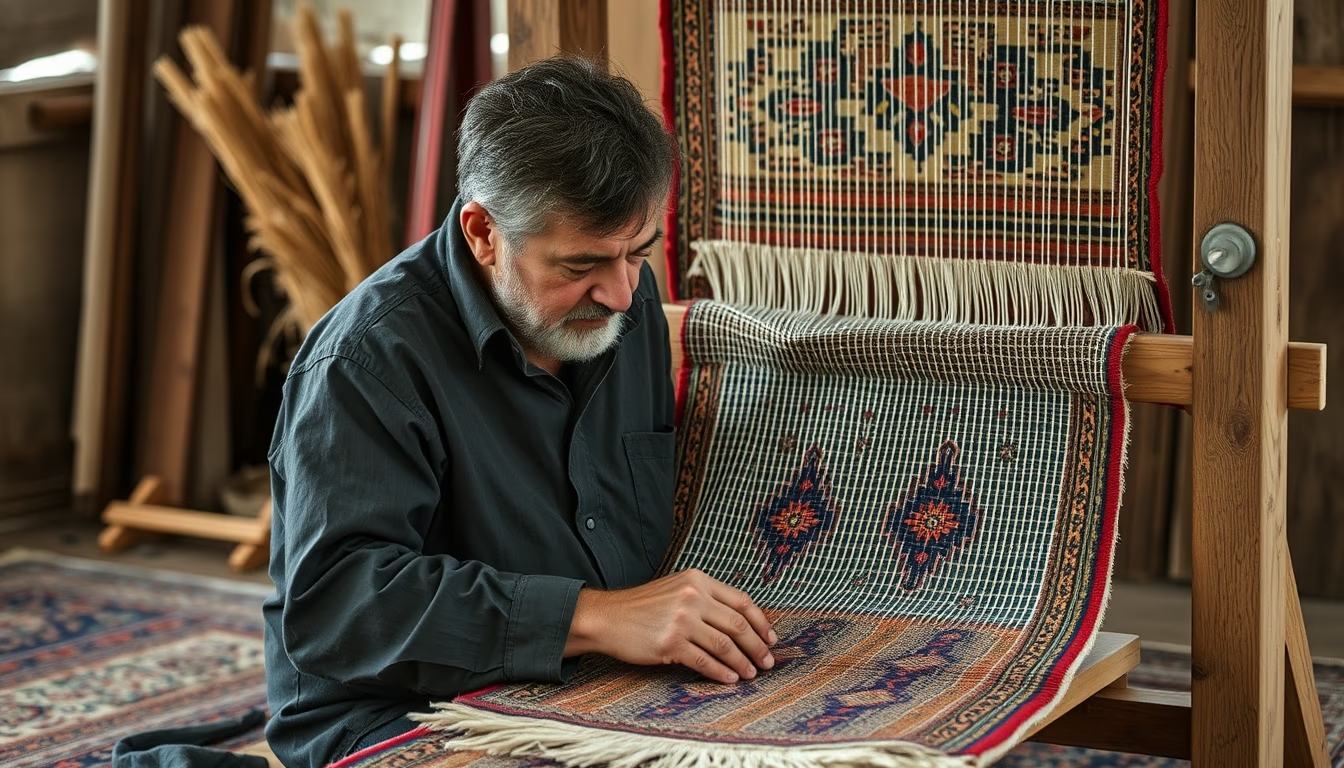
Flemish medieval tapestries represent one of the peaks of textile art in Europe. Produced mainly in the 15th and 16th centuries in the regions of Flanders (modern Belgium and northern France), these works were hand-woven on looms using wool, silk, and occasionally gold and silver threads. The most famous centers included Arras, Tournai, and Brussels, where highly specialized weavers' guilds mastered the technique.
These tapestries often depicted biblical scenes, episodes from classical mythology, or historical events such as battles and royal ceremonies. A notable example is the series "The Lady and the Unicorn" from the late 15th century, now at the Musée de Cluny in Paris. Tapestries not only decorated castles and churches but also served as thermal insulation, warming stone interiors. They were symbols of power and wealth, commissioned by nobles and monarchs.
The creation process was complex: a designer (cartoonist) produced a sketch on paper, which was then transferred to the loom. Weaving could take years for a single large piece. Vibrant colors came from natural dyes such as madder (red), woad (blue), and saffron (yellow). Flemish tapestry influenced all of Europe, being exported to Italy, England, and Germany. Many pieces survive in museums such as the Victoria and Albert Museum in London and the Metropolitan Museum of Art in New York.
Frequently Asked Questions
What are Flemish medieval tapestries?
They are textile works produced in the Flanders region between the 15th and 16th centuries, known for refined weaving techniques and the use of colored threads, often with gold and silver. They depicted historical, mythological, or religious scenes.
Where can I see Flemish medieval tapestries today?
Museums such as the Musée de Cluny (Paris), the Victoria and Albert Museum (London), and the Metropolitan Museum of Art (New York) have important collections. They are also found in European castles and cathedrals.
What is the cultural significance of Flemish tapestries?
They were status symbols and power displays, as well as providing thermal insulation. They influenced textile art across Europe and are considered artistic heritage from the Renaissance period.
Direct URL
https://pub-c7d6a6ea828543ac903a74a341ccb2e1.r2.dev/imagens/tapestry-medieval-flemish-long-exposure-fresh5.avifHow to credit
Include a visible link back to UtilizAí. Copy one of the snippets below:
<a href="https://xn--utiliza-eza.com/en/midia/imagens/tapestry-medieval-flemish-long-exposure-fresh5">Tapestry medieval flemish</a> by <a href="https://xn--utiliza-eza.com">UtilizAí</a>, licensed under <a href="https://creativecommons.org/licenses/by/4.0/">CC BY 4.0</a>.
[Tapestry medieval flemish](https://xn--utiliza-eza.com/en/midia/imagens/tapestry-medieval-flemish-long-exposure-fresh5) by [UtilizAí](https://xn--utiliza-eza.com), CC BY 4.0
License: CC-BY-4.0