Taj mahal symmetric reflection
1344×768 · AVIF · CC BY 4.0
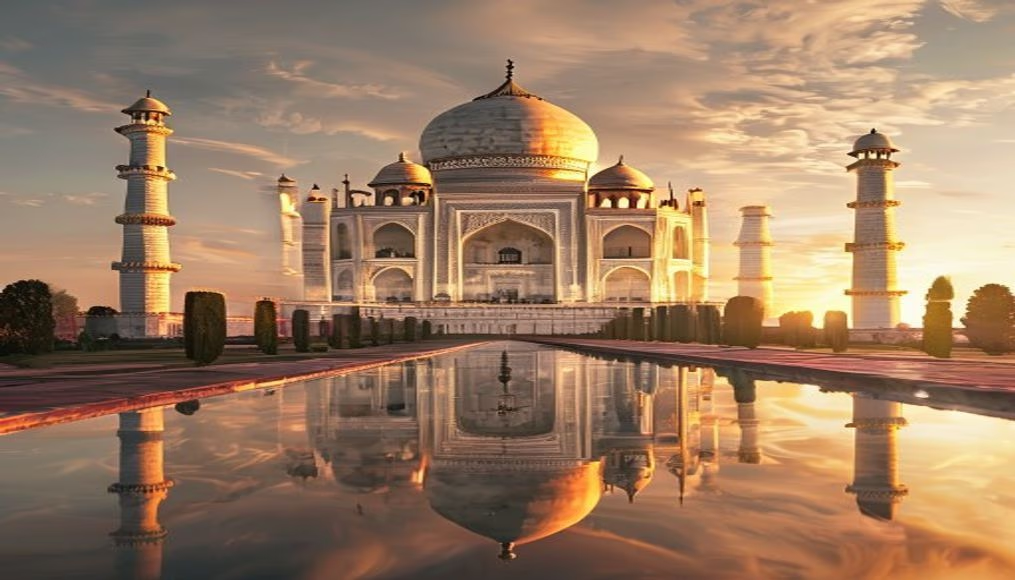
The Taj Mahal in Agra, India, is a white marble mausoleum built by Emperor Shah Jahan in memory of his wife Mumtaz Mahal, renowned for its perfect symmetry and symmetric reflection in the water channels.
About this subject
The Taj Mahal was built between 1632 and 1653 on the southern bank of the Yamuna River in Agra, India. Designed by the Persian architect Ustad Ahmad Lahauri, the complex is a magnificent example of Mughal architecture, blending Persian, Islamic, and Indian elements. The main building is made of white marble quarried from Makrana, Rajasthan, and decorated with inlays of precious and semi-precious stones such as lapis lazuli, jade, and crystal. Symmetry is one of its most striking features: the mausoleum, mosque, and garden follow a strict central axis, with the exception of Shah Jahan's tomb, added later beside that of Mumtaz Mahal.
The Charbagh garden, divided into four parts by water channels, is a symbolic paradise. The central channel, aligned with the entrance gate and the mausoleum, creates a water mirror that reflects the Taj Mahal, enhancing the perception of symmetry. The four 40-meter minarets are not perfectly vertical: they lean slightly outward so that, in case of an earthquake, they fall away from the main building. Studies indicate that the main dome, 35 meters high, was built using a double-shell technique to ensure stability and acoustics.
The Taj Mahal is one of the most visited monuments in the world, receiving about 7 to 8 million tourists annually. In 1983, it was declared a UNESCO World Heritage Site and is also listed among the New Seven Wonders of the World. Despite its fame, the complex suffers from air pollution, which yellows the marble, and from excessive visitation, leading to measures such as daily visitor limits. The symmetric image of the Taj Mahal reflected in the water is one of the most photographed scenes in India, representing harmony and eternal love that inspired its construction.
Frequently Asked Questions
Why does the Taj Mahal appear to change color?
The white marble of the Taj Mahal reflects sunlight differently throughout the day, showing pinkish tones at dawn, bright white at noon, and golden or orange at sunset.
Is the Taj Mahal perfectly symmetrical?
Almost, with one exception: Shah Jahan's tomb was added beside Mumtaz Mahal's, breaking perfect symmetry inside. Externally, the complex is symmetrical in nearly every aspect.
What is the purpose of the water channels in the garden?
The channels of the Charbagh garden represent the four rivers of Paradise in Islam. The central pool reflects the Taj Mahal, creating a double symmetry illusion and symbolizing purity and eternal life.
Direct URL
https://pub-c7d6a6ea828543ac903a74a341ccb2e1.r2.dev/imagens/taj-mahal-symmetric-reflection-travel-photography-v10.avifHow to credit
Include a visible link back to UtilizAí. Copy one of the snippets below:
<a href="https://xn--utiliza-eza.com/en/midia/imagens/taj-mahal-symmetric-reflection-travel-photography-v10">Taj mahal symmetric reflection</a> by <a href="https://xn--utiliza-eza.com">UtilizAí</a>, licensed under <a href="https://creativecommons.org/licenses/by/4.0/">CC BY 4.0</a>.
[Taj mahal symmetric reflection](https://xn--utiliza-eza.com/en/midia/imagens/taj-mahal-symmetric-reflection-travel-photography-v10) by [UtilizAí](https://xn--utiliza-eza.com), CC BY 4.0
License: CC-BY-4.0