Taj mahal symmetric reflection
1344×768 · AVIF · CC BY 4.0
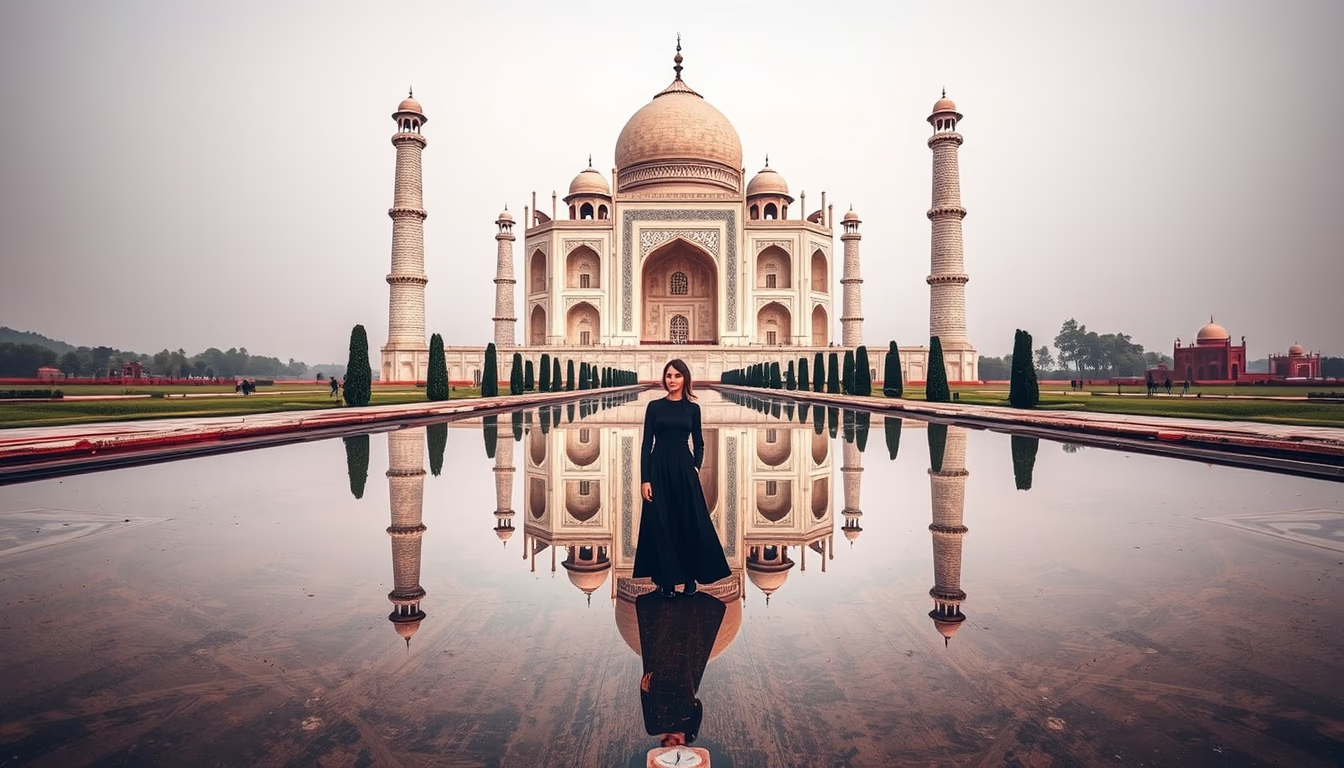
The Taj Mahal in Agra is renowned for its perfect symmetry and the reflection in the pool that doubles it, an icon of Mughal architecture.
About this subject
The Taj Mahal, located in Agra, India, is a white marble mausoleum built between 1632 and 1653 by Emperor Shah Jahan in memory of his wife Mumtaz Mahal. Designated a UNESCO World Heritage site in 1983, it is considered a masterpiece of Mughal architecture, blending Persian, Islamic, and Indian elements. Its near-perfect symmetry is one of its most striking features: the central building, four minarets, and garden are arranged to create a balanced composition. The central pool, known as the 'reflecting tank', was deliberately designed to mirror the Taj Mahal, visually doubling its grandeur. The symmetry, however, is not absolute: the minarets are slightly tilted outward to protect the mausoleum in case of an earthquake, and Shah Jahan's tomb is offset from Mumtaz's. Still, the illusion of perfect balance has fascinated visitors and scholars for centuries. The Taj Mahal is also a symbol of eternal love, attracting millions of tourists annually. Its marble dome, which changes color throughout the day, and the intricate pietra dura inlays with semiprecious stones highlight its unique beauty. The reflection in the water, especially at dawn or dusk, creates a symmetric image that is among the most photographed in the world.
Frequently Asked Questions
Why is the Taj Mahal considered an example of symmetry?
The Taj Mahal was designed with bilateral symmetry along a central axis, with the mausoleum, minarets, and garden arranged in a mirrored layout. The pool reflects the structure, reinforcing this visual symmetry.
Is the Taj Mahal perfectly symmetrical?
No, there are minor asymmetries. The minarets are tilted outward for safety, and Shah Jahan's tomb was added later, offsetting the interior. Externally, the illusion of symmetry is maintained.
What is the significance of the reflecting pool at the Taj Mahal?
The central pool was created to reflect the image of the Taj Mahal, enhancing its beauty and the illusion of symmetry. It is a key element in the Mughal garden design, representing duality and harmony.
Direct URL
https://pub-c7d6a6ea828543ac903a74a341ccb2e1.r2.dev/imagens/taj-mahal-symmetric-reflection-high-fashion-editorial-p11.avifHow to credit
Include a visible link back to UtilizAí. Copy one of the snippets below:
<a href="https://xn--utiliza-eza.com/en/midia/imagens/taj-mahal-symmetric-reflection-high-fashion-editorial-p11">Taj mahal symmetric reflection</a> by <a href="https://xn--utiliza-eza.com">UtilizAí</a>, licensed under <a href="https://creativecommons.org/licenses/by/4.0/">CC BY 4.0</a>.
[Taj mahal symmetric reflection](https://xn--utiliza-eza.com/en/midia/imagens/taj-mahal-symmetric-reflection-high-fashion-editorial-p11) by [UtilizAí](https://xn--utiliza-eza.com), CC BY 4.0
License: CC-BY-4.0