Taj mahal symmetric reflection
1344×768 · AVIF · CC BY 4.0
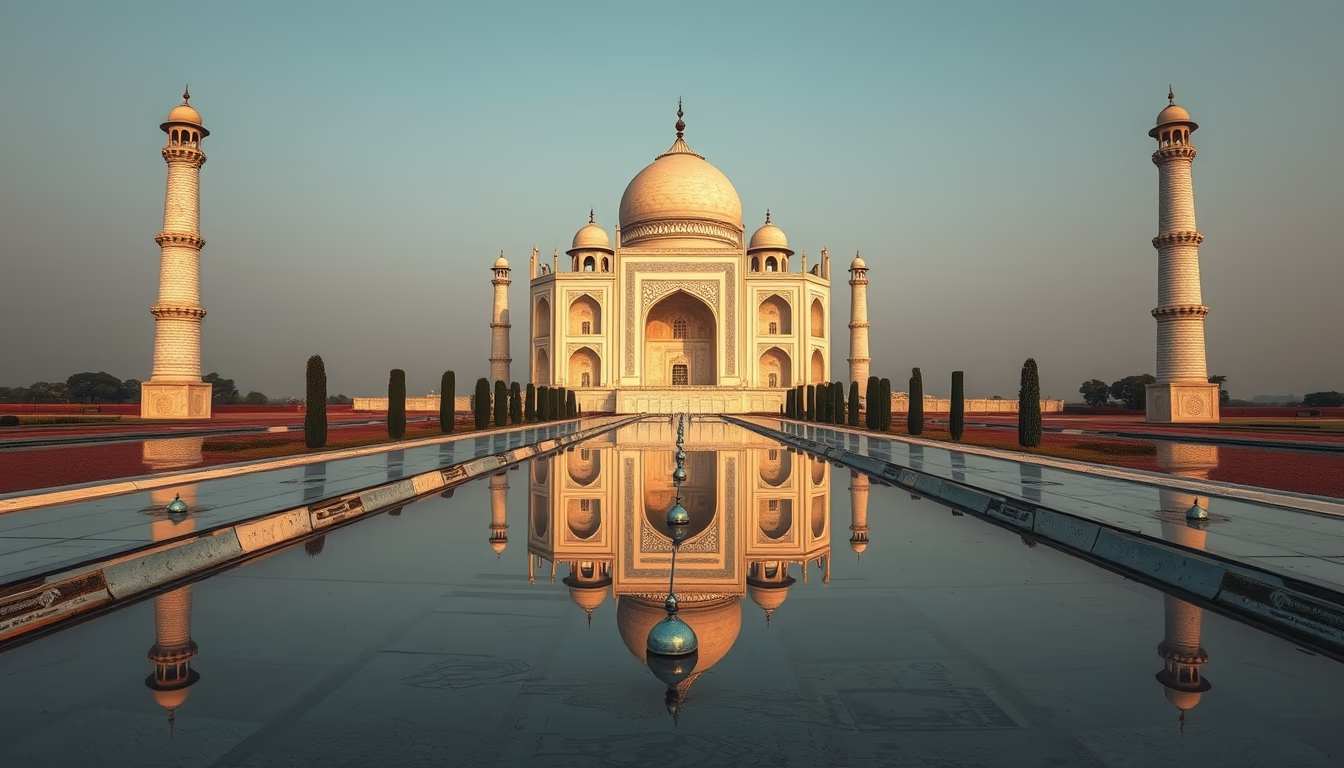
The Taj Mahal in Agra, India, is renowned for its perfect symmetry and the symmetric reflection in the water channels that flank the monument.
About this subject
The Taj Mahal is a white marble mausoleum located in Agra, on the banks of the Yamuna River, India. It was commissioned by Mughal emperor Shah Jahan in 1632 to house the tomb of his beloved wife Mumtaz Mahal. Construction took about 22 years and involved thousands of artisans and workers. The monument is considered a masterpiece of Mughal architecture, blending Islamic, Persian, Indian, and Turkish elements.
Symmetry is a key aspect of the Taj Mahal's design. The entire complex, including gardens, pathways, and water channels, was planned along a central axis that divides the space into two mirrored halves. The water channels extending from the entrance reflect the main structure, creating an impressive visual composition. This symmetry reflects the Islamic belief in divine order and celestial harmony.
Beyond axial symmetry, the Taj Mahal uses specific geometric proportions. The main building is a cube with chamfered corners, crowned by a large onion-shaped dome. The four minarets at the corners are slightly tilted outward, a safety measure so that in case of an earthquake they fall away from the mausoleum. The white marble is inlaid with semi-precious stones in floral and calligraphic patterns.
The symmetric reflection in the water channels is one of the most iconic images of the Taj Mahal. The longitudinal water channels were designed to create a perfect reflection of the facade, visually duplicating the structure. Due to pollution and siltation, the water quality does not always allow a clear reflection, but the Indian government has undertaken conservation efforts to preserve this feature.
Frequently Asked Questions
Why is the Taj Mahal so symmetrical?
The symmetry of the Taj Mahal reflects Islamic aesthetics and the quest for divine perfection. Emperor Shah Jahan aimed to create an earthly representation of paradise, where order and harmony are fundamental.
Is the symmetric reflection in the water channels intentional?
Yes, the water channels were specifically designed to create a symmetric reflection of the Taj Mahal facade, visually doubling the monument and enhancing its grandeur.
Have there been recent restorations of the water channels?
Yes, the Indian government has carried out cleaning and restoration projects of the Taj Mahal's water channels to improve water quality and preserve the iconic reflection.
Direct URL
https://pub-c7d6a6ea828543ac903a74a341ccb2e1.r2.dev/imagens/taj-mahal-symmetric-reflection-commercial-product-photography-v9.avifHow to credit
Include a visible link back to UtilizAí. Copy one of the snippets below:
<a href="https://xn--utiliza-eza.com/en/midia/imagens/taj-mahal-symmetric-reflection-commercial-product-photography-v9">Taj mahal symmetric reflection</a> by <a href="https://xn--utiliza-eza.com">UtilizAí</a>, licensed under <a href="https://creativecommons.org/licenses/by/4.0/">CC BY 4.0</a>.
[Taj mahal symmetric reflection](https://xn--utiliza-eza.com/en/midia/imagens/taj-mahal-symmetric-reflection-commercial-product-photography-v9) by [UtilizAí](https://xn--utiliza-eza.com), CC BY 4.0
License: CC-BY-4.0