Taj mahal symmetric reflection
1344×768 · AVIF · CC BY 4.0
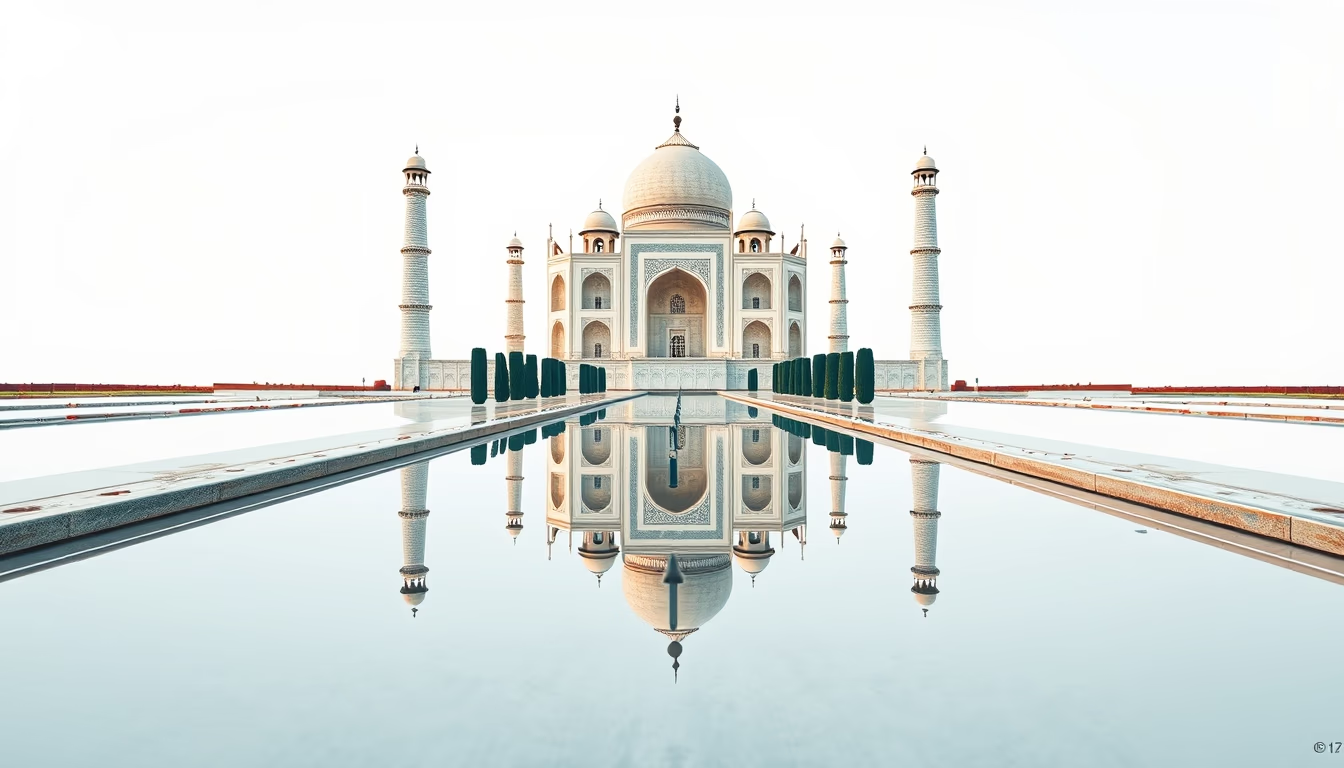
The Taj Mahal in Agra, India, is a white marble mausoleum built by Emperor Shah Jahan in memory of his wife Mumtaz Mahal, a symbol of love and symmetry.
About this subject
The Taj Mahal is one of the world's most iconic monuments, located on the banks of the Yamuna River in Agra, India. Built between 1632 and 1653 by Mughal emperor Shah Jahan, it houses the tomb of his beloved wife, Mumtaz Mahal. The structure is a supreme example of Mughal architecture, blending Islamic, Persian, Ottoman, and Indian elements. Perfect symmetry is a hallmark: the main building is flanked by two red sandstone pavilions, a mosque to the west and a guest house to the east, all mirrored along the central axis.
The formal garden, known as Charbagh, is divided into four quadrants by water channels, representing the rivers of Paradise. A long central pool reflects the mausoleum's facade, creating the famous symmetric image that attracts photographers and tourists. The central dome, 35 meters high, is surrounded by four 40-meter minarets, slightly tilted outward to protect the building in case of collapse. The white marble is inlaid with semi-precious stones in floral and calligraphic patterns using pietra dura technique.
The Taj Mahal has been a UNESCO World Heritage Site since 1983 and is considered one of the New Seven Wonders of the World. Around 7 to 8 million annual visitors face strict conservation measures, such as vehicle emission restrictions and daily visitor limits. The dome changes color throughout the day: pinkish at dawn, milky white in the afternoon, and golden under moonlight. Symmetry reflects Islamic belief in divine harmony, but there is a deliberate asymmetry: the tombs of Shah Jahan and Mumtaz Mahal are off-center from the main axis, as the emperor was buried after his death in 1666.
Interestingly, the southeast minaret was removed during restoration in the 20th century due to dangerous tilting, but was faithfully rebuilt. Air pollution in Agra, caused by industries and vehicles, yellows the marble, requiring periodic clay treatments. Some theories suggest the Taj Mahal was originally a Hindu temple, but historians dismiss this. The symmetric reflection in water is not merely aesthetic: it symbolizes the transience of life, contrasting with the eternity of love.
Frequently Asked Questions
Why is the Taj Mahal considered a symbol of love?
Emperor Shah Jahan commissioned its construction after the death of his wife Mumtaz Mahal in 1631, as an eternal memorial. The monument's grandeur and beauty reflect the emperor's deep love for her.
What is the significance of symmetry in the Taj Mahal?
Symmetry represents divine harmony in Islam and the perfection of Paradise. The garden, water channels, and mirrored buildings create a balanced composition symbolizing celestial order.
How does pollution affect the Taj Mahal?
Air pollution in Agra, especially sulfur dioxide and soot, yellows the white marble. Conservation techniques, such as applying clay (multani mitti), are used periodically to restore its original color.
Direct URL
https://pub-c7d6a6ea828543ac903a74a341ccb2e1.r2.dev/imagens/taj-mahal-symmetric-reflection-commercial-product-photography-p8.avifHow to credit
Include a visible link back to UtilizAí. Copy one of the snippets below:
<a href="https://xn--utiliza-eza.com/en/midia/imagens/taj-mahal-symmetric-reflection-commercial-product-photography-p8">Taj mahal symmetric reflection</a> by <a href="https://xn--utiliza-eza.com">UtilizAí</a>, licensed under <a href="https://creativecommons.org/licenses/by/4.0/">CC BY 4.0</a>.
[Taj mahal symmetric reflection](https://xn--utiliza-eza.com/en/midia/imagens/taj-mahal-symmetric-reflection-commercial-product-photography-p8) by [UtilizAí](https://xn--utiliza-eza.com), CC BY 4.0
License: CC-BY-4.0