Sushi platter on slate elegant
1344×768 · AVIF · CC BY 4.0
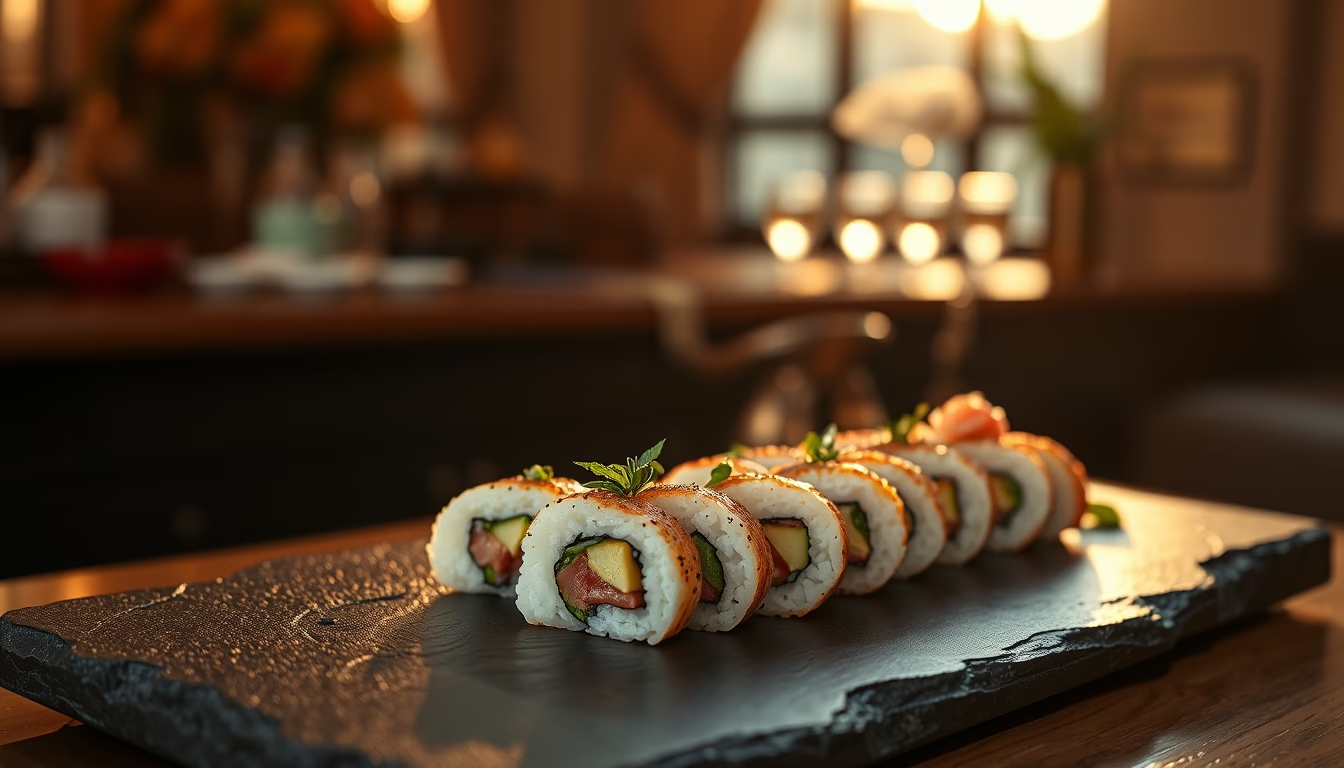
Sushi platter on slate: minimalist presentation that highlights ingredient freshness and the chef's technique.
About this subject
Sushi is one of the most refined expressions of Japanese cuisine, combining vinegared rice with fresh fish and other ingredients. Serving it on a slate platter is not merely aesthetic: the natural stone helps maintain ideal food temperature and contrasts with the vibrant colors of the sushi. This choice of tableware has become popular in high-end restaurants worldwide, especially in omakase and tasting menus.
The tradition of sushi dates back to 8th-century Japan, where fish was fermented with rice for preservation. Over time, the technique evolved into what we know today: nigiri, maki, and sashimi. Slate, in turn, is a metamorphic rock formed millions of years ago, composed mainly of quartz and clay. Its smooth, dark surface enhances food presentation and is also used for cheeses and cold cuts.
In Brazil, sushi has gained unique adaptations, such as the use of cream cheese, grilled salmon, and tropical sauces. Nevertheless, the traditional version remains the most appreciated by purists. The combination of fresh ingredients like salmon, tuna, shrimp, and vegetables requires years of training for the sushi chef to master fish cutting and rice preparation.
Fun fact: the word “sushi” means “sour” in Japanese, referring to the vinegared rice. Slate is known for its durability and use in school blackboards, but in gastronomy it offers a non-porous surface that does not interfere with the flavor of the food.
Frequently Asked Questions
Why is sushi served on slate?
Slate maintains food temperature, enhances colors, and does not affect flavor, while adding an elegant touch to the presentation.
What is the difference between sushi and sashimi?
Sushi is vinegared rice combined with other ingredients; sashimi is simply sliced raw fish or seafood, without rice.
Is Brazilian sushi different from Japanese sushi?
Yes, Brazilian sushi often incorporates cream cheese, fruits, and sauces like tare or chili sauce, adapting to local tastes.
Direct URL
https://pub-c7d6a6ea828543ac903a74a341ccb2e1.r2.dev/imagens/sushi-platter-on-slate-elegant-cinematic-wide-shot-v2.avifHow to credit
Include a visible link back to UtilizAí. Copy one of the snippets below:
<a href="https://xn--utiliza-eza.com/en/midia/imagens/sushi-platter-on-slate-elegant-cinematic-wide-shot-v2">Sushi platter on slate elegant</a> by <a href="https://xn--utiliza-eza.com">UtilizAí</a>, licensed under <a href="https://creativecommons.org/licenses/by/4.0/">CC BY 4.0</a>.
[Sushi platter on slate elegant](https://xn--utiliza-eza.com/en/midia/imagens/sushi-platter-on-slate-elegant-cinematic-wide-shot-v2) by [UtilizAí](https://xn--utiliza-eza.com), CC BY 4.0
License: CC-BY-4.0