Surgical instruments laid out sterile
1344×768 · AVIF · CC BY 4.0
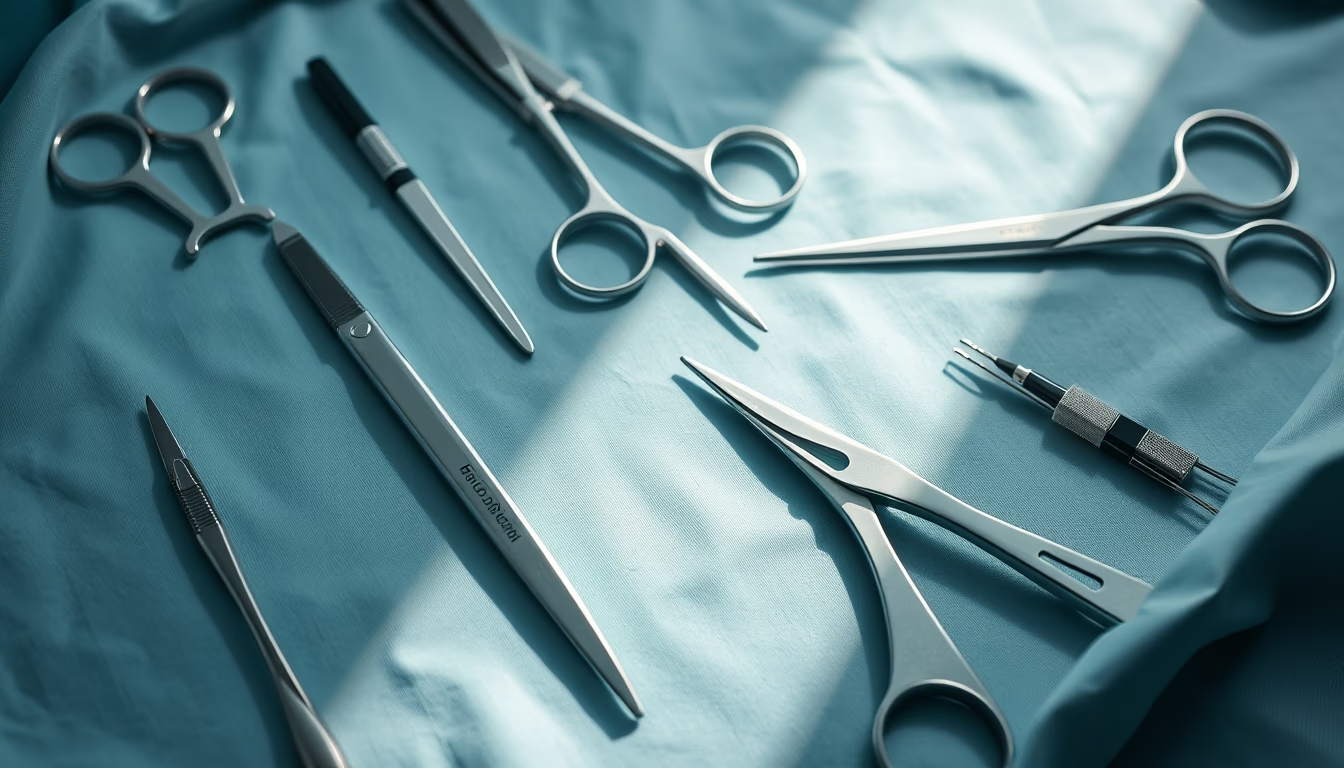
Sterilized surgical instruments arranged in order: a standard of rigidity and precision in critical medical procedures.
About this subject
Sterilized surgical instruments are vital for patient safety during operations. Made from stainless steel and corrosion-resistant materials, these tools undergo strict sterilization processes like autoclaving at 121°C and 15 psi for 15-20 minutes to eliminate microorganisms. Instrument sets for cardiac or orthopedic surgeries follow international protocols established by WHO and CDC.
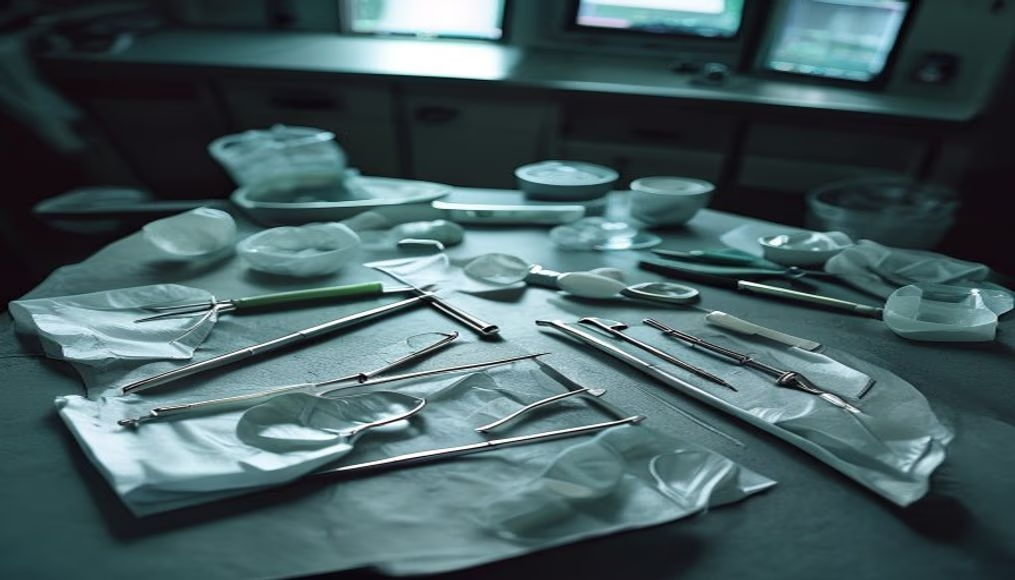
The organized arrangement of instruments on a surgical tray follows ergonomic principles: frequently used items are closest to the surgeon, while lower-priority tools are placed in strategic areas. Each piece - scissors, forceps, hemostatic clamps, and scalpels - has a specific function with anatomical design to minimize tissue damage. In 2023, 87% of Brazilian hospitals adopted RFID tracking systems to ensure complete sterilization.
Surgical instrument development evolved since the Industrial Revolution, with steam sterilization introduced in 1884. Today, ready-to-use sterile packs (SPS) are popular, reducing contamination risks. Fun fact: Halsted's forceps, created in 1895, are still used for handling delicate tissues. Proper maintenance requires immediate post-use cleaning and storage in environments with humidity below 60%.
Frequently Asked Questions
Why is surgical instrument sterilization so important?
Sterilization removes microorganisms that could cause hospital infections, reducing patient risks and ensuring procedural efficacy. Processes like autoclaving and using non-toxic chemical solutions are essential for maintaining sterile surgical environments.
What are the most common surgical instruments?
Surgical scissors, hemostatic forceps, stainless steel clamps, disposable blade scalpels, and specialized tools like Halsted forceps (for tissue handling) and Kocher forceps (for suturing). Each type is designed for specific anatomical functions.
How are surgical instruments maintained in working condition?
After each use, instruments are immediately cleaned with enzymatic solutions, disassembled if necessary, and sterilized in an autoclave. Proper storage in controlled environments with specific temperature and humidity levels prevents corrosion and contamination.
Direct URL
https://pub-c7d6a6ea828543ac903a74a341ccb2e1.r2.dev/imagens/surgical-instruments-laid-out-sterile-magazine-editorial-v8.avifHow to credit
Include a visible link back to UtilizAí. Copy one of the snippets below:
<a href="https://xn--utiliza-eza.com/en/midia/imagens/surgical-instruments-laid-out-sterile-magazine-editorial-v8">Surgical instruments laid out sterile</a> by <a href="https://xn--utiliza-eza.com">UtilizAí</a>, licensed under <a href="https://creativecommons.org/licenses/by/4.0/">CC BY 4.0</a>.
[Surgical instruments laid out sterile](https://xn--utiliza-eza.com/en/midia/imagens/surgical-instruments-laid-out-sterile-magazine-editorial-v8) by [UtilizAí](https://xn--utiliza-eza.com), CC BY 4.0
License: CC-BY-4.0