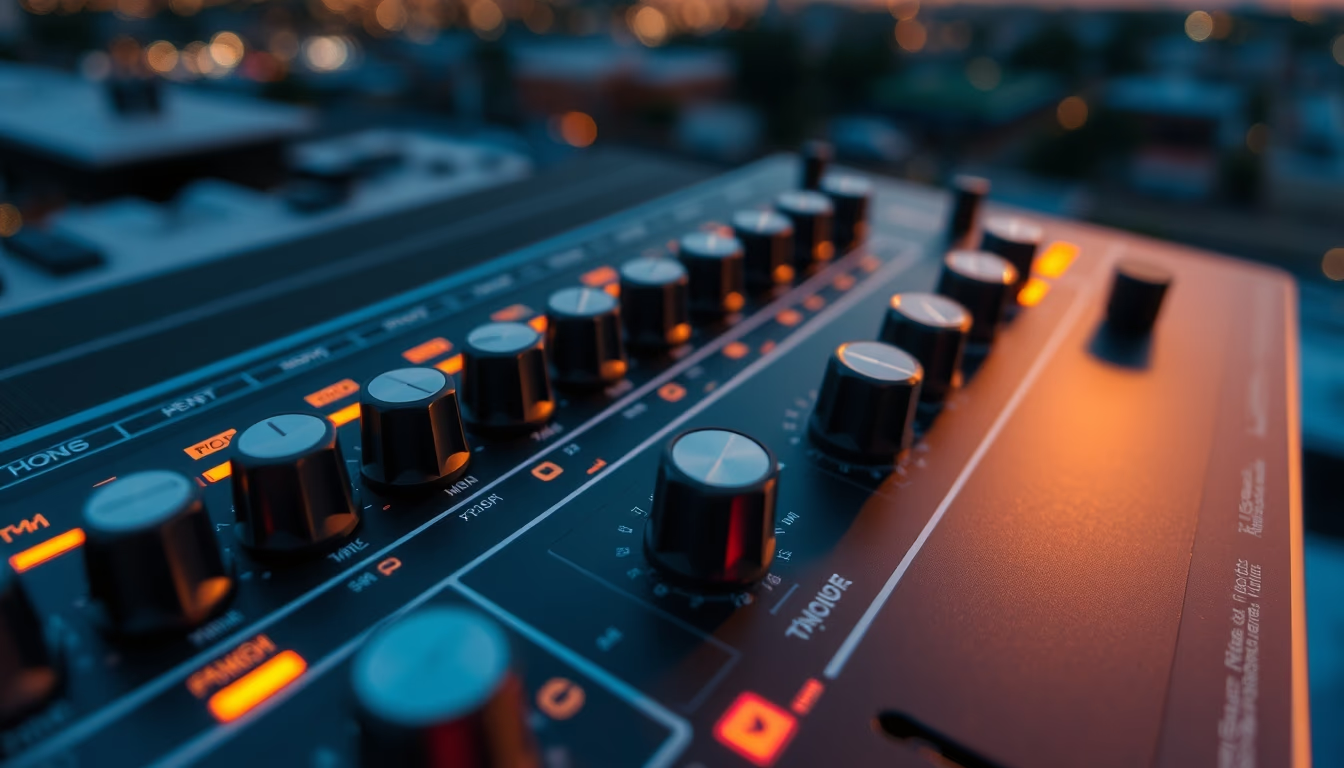
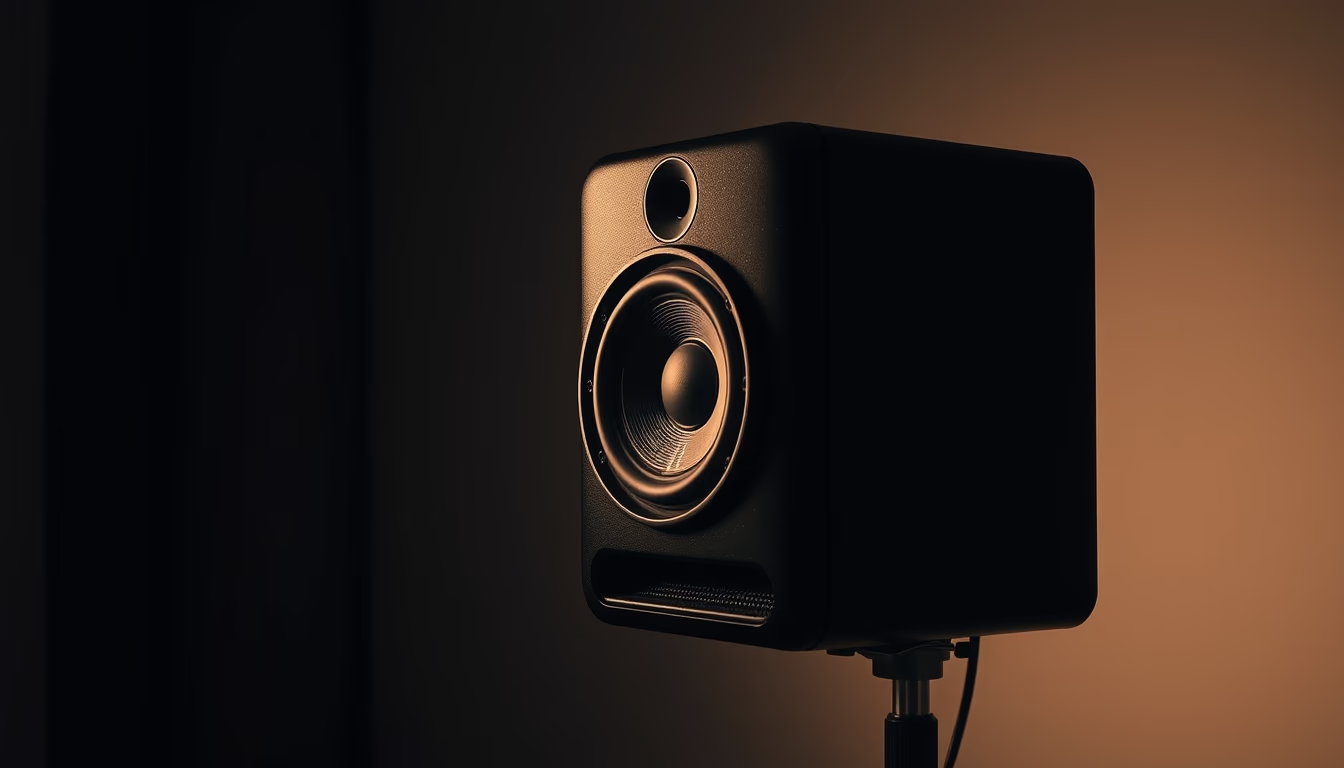
Studio monitor speaker
1344×768 · AVIF · CC BY 4.0
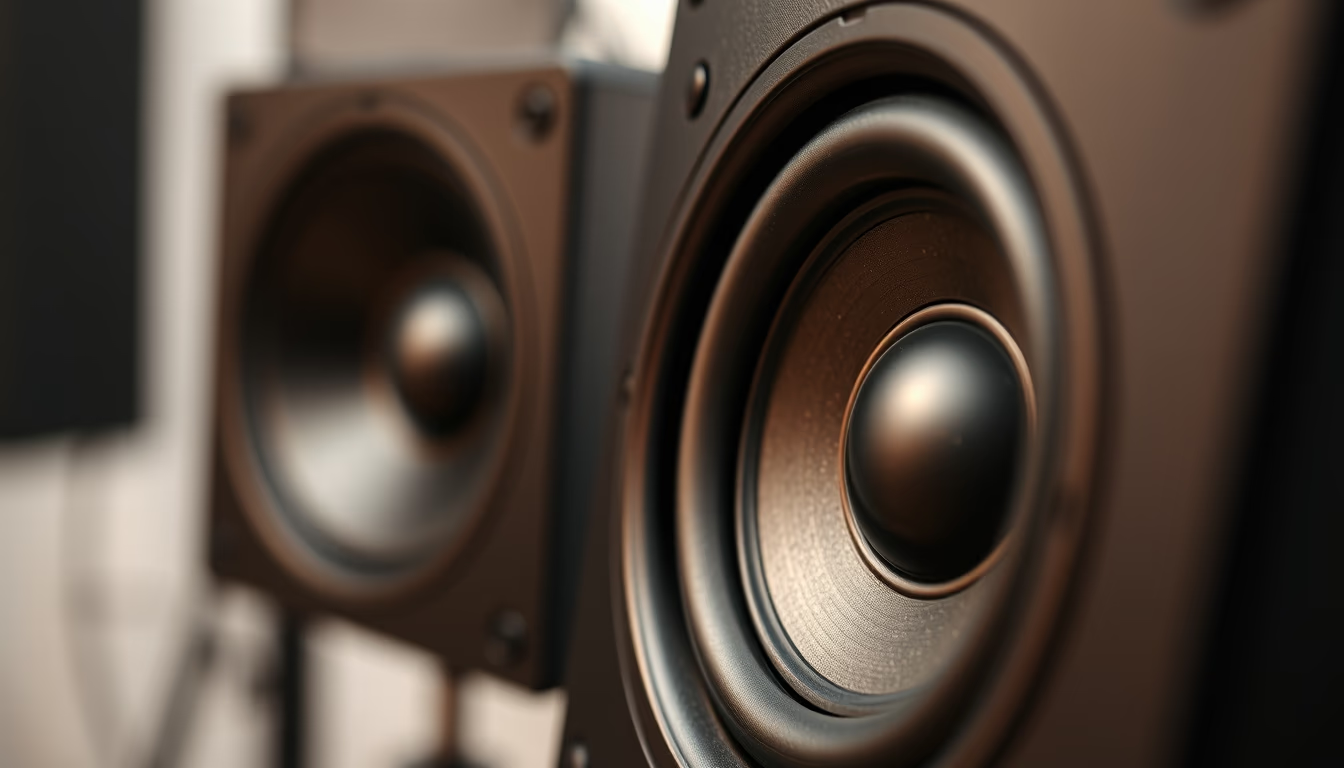
Studio monitors are loudspeakers designed for accurate and neutral sound reproduction, essential in professional music production.
About this subject
A studio monitor is a specialized loudspeaker used in recording, mixing, and mastering studios. Unlike consumer speakers, its primary goal is to provide a flat frequency response, meaning it neither emphasizes nor attenuates any frequency range artificially. This allows audio engineers to hear the material exactly as it is, without coloration that could mask issues in the mix. This characteristic is crucial for making accurate decisions about equalization, dynamics, and balance between instruments.
There are two main types of studio monitors: active and passive. Active monitors have built-in amplifiers, each dedicated to a specific driver (woofer and tweeter), with an electronic crossover that splits the signal before amplification. This provides greater efficiency and consistency. Passive monitors, on the other hand, rely on an external amplifier and are less common in modern studios. Most studio monitors are designed for nearfield listening, meaning they are placed close to the listener (about 1 to 2 meters) to minimize the influence of room acoustics. This configuration is standard in both home and professional studios.
Proper placement of studio monitors is essential for accurate listening. They should form an equilateral triangle with the listener's head, with tweeters at ear level. It is also recommended to avoid early reflections from side walls and ceiling by using acoustic panels and bass traps. Many monitors have high-frequency and low-frequency adjustment controls to compensate for problematic room acoustics, but ideally the room should be treated. Brands like Yamaha (NS series), KRK, Genelec, Adam Audio, and Focal are industry references.
Interestingly, studio monitors are not suitable for casual listening or home theater, as their neutrality can sound dry or uninspiring to untrained ears. They are tools, not entertainment speakers. However, with the rise of home music production, more musicians and producers are investing in entry-level monitors, such as the PreSonus Eris or JBL 300 Series, which offer good accuracy at affordable prices. A good studio monitor should have a frequency response between 50 Hz and 20 kHz, low total harmonic distortion, and sufficient power for the room size.
Frequently Asked Questions
What is the difference between a studio monitor and a regular speaker?
Studio monitors are designed for flat (neutral) frequency response, while consumer speakers often boost bass and treble to please listeners. This makes monitors tools for music production, not casual listening.
Why do studio monitors have a flat response?
A flat response ensures the audio engineer hears the sound without artificial alterations, allowing detection of problems like frequency conflicts or imbalance. Any coloration could lead to incorrect mixing decisions.
How should studio monitors be positioned?
Position the monitors to form an equilateral triangle with your head, with tweeters at ear level. Avoid early reflections by keeping distance from walls and using acoustic treatment. Angle them so the listening axis points directly at your ears.
Direct URL
https://pub-c7d6a6ea828543ac903a74a341ccb2e1.r2.dev/imagens/studio-monitor-speaker-macro-closeup-fresh3.avifHow to credit
Include a visible link back to UtilizAí. Copy one of the snippets below:
<a href="https://xn--utiliza-eza.com/en/midia/imagens/studio-monitor-speaker-macro-closeup-fresh3">Studio monitor speaker</a> by <a href="https://xn--utiliza-eza.com">UtilizAí</a>, licensed under <a href="https://creativecommons.org/licenses/by/4.0/">CC BY 4.0</a>.
[Studio monitor speaker](https://xn--utiliza-eza.com/en/midia/imagens/studio-monitor-speaker-macro-closeup-fresh3) by [UtilizAí](https://xn--utiliza-eza.com), CC BY 4.0
License: CC-BY-4.0