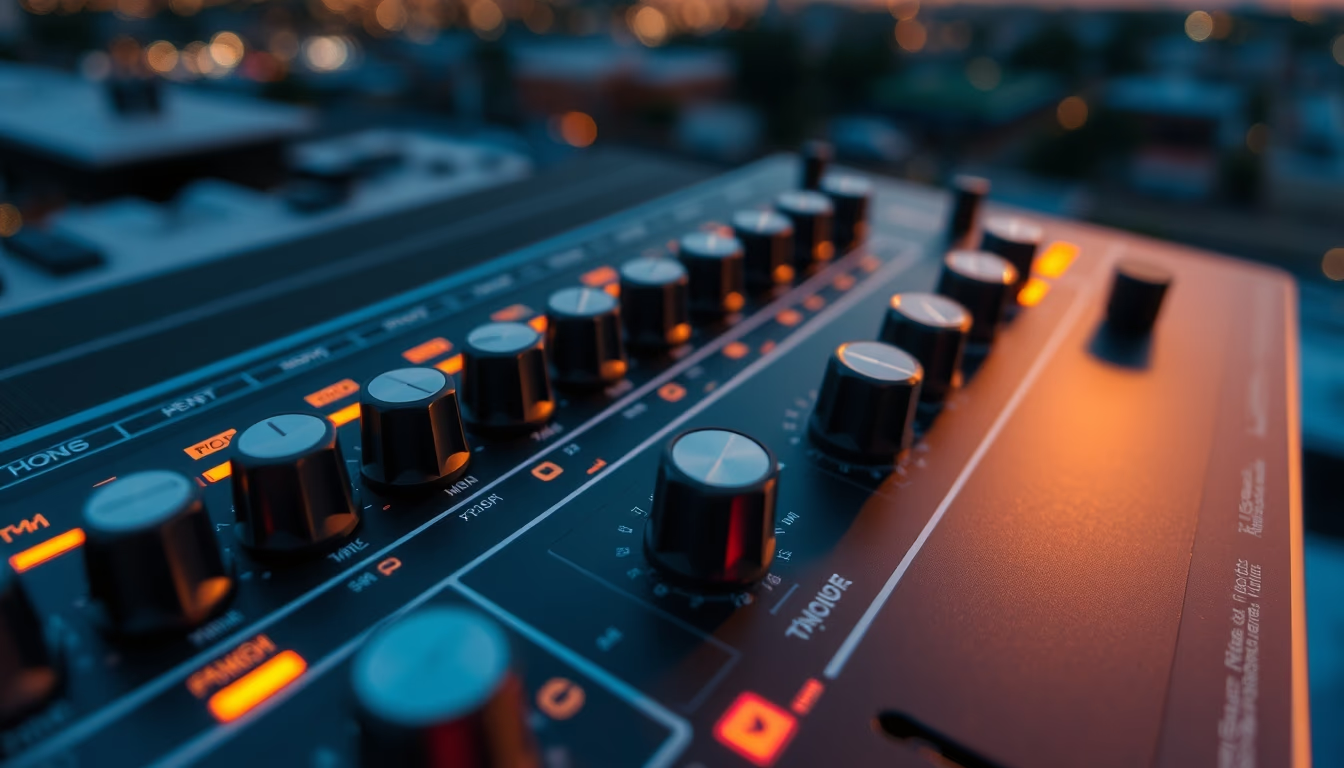
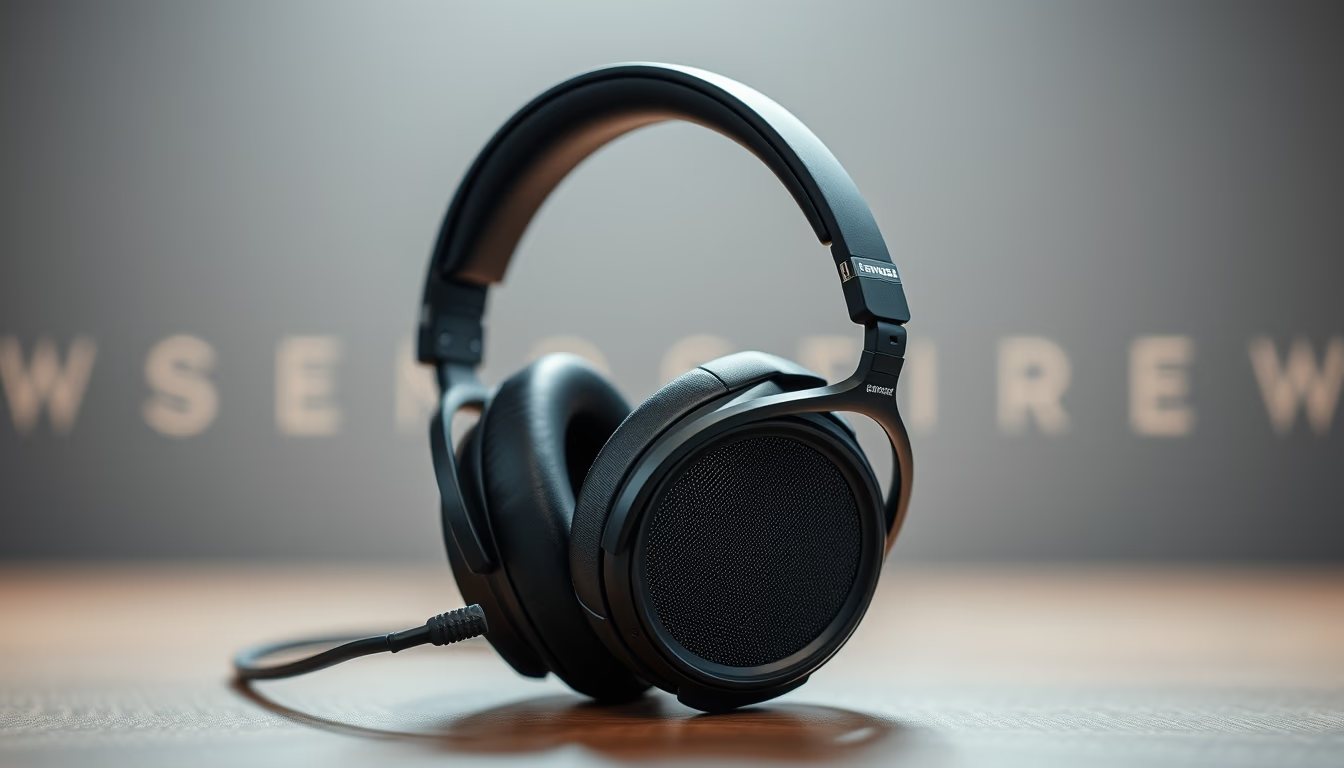
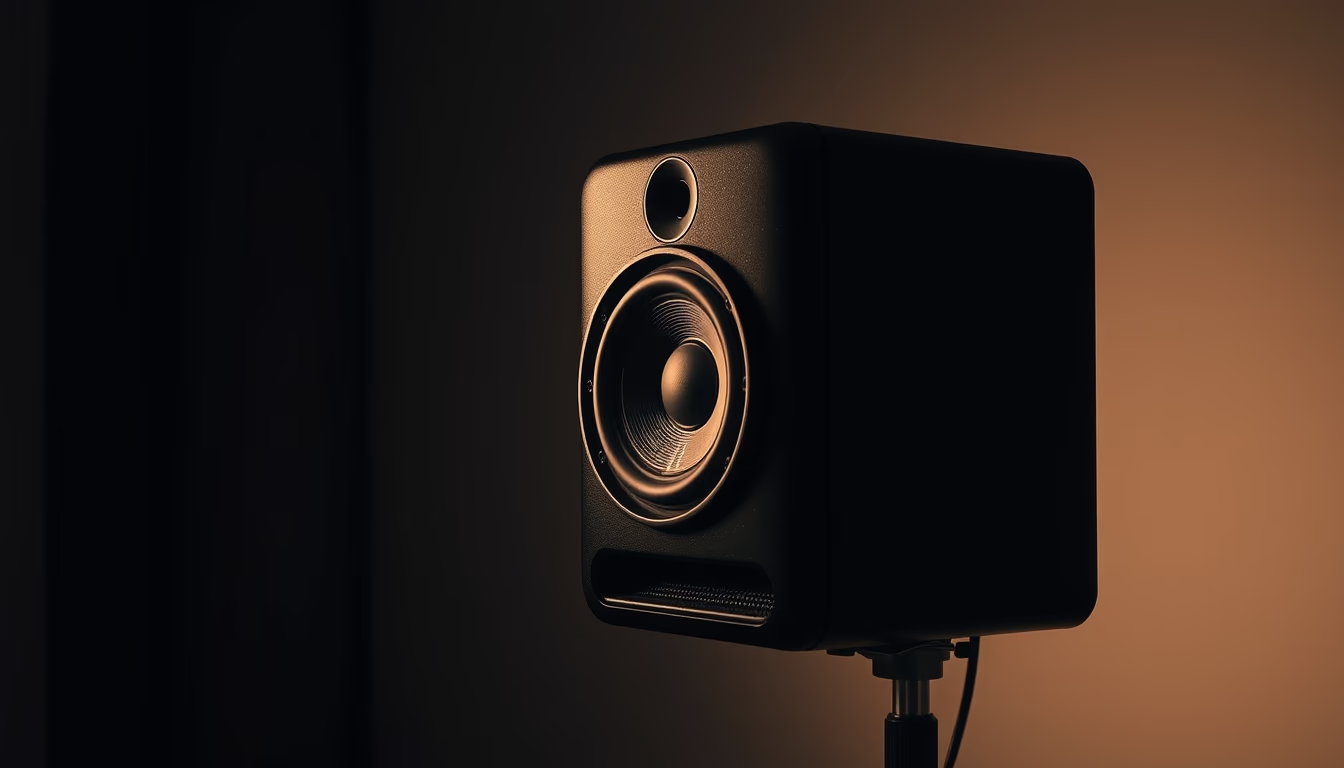
Studio monitor speaker
1344×768 · AVIF · CC BY 4.0
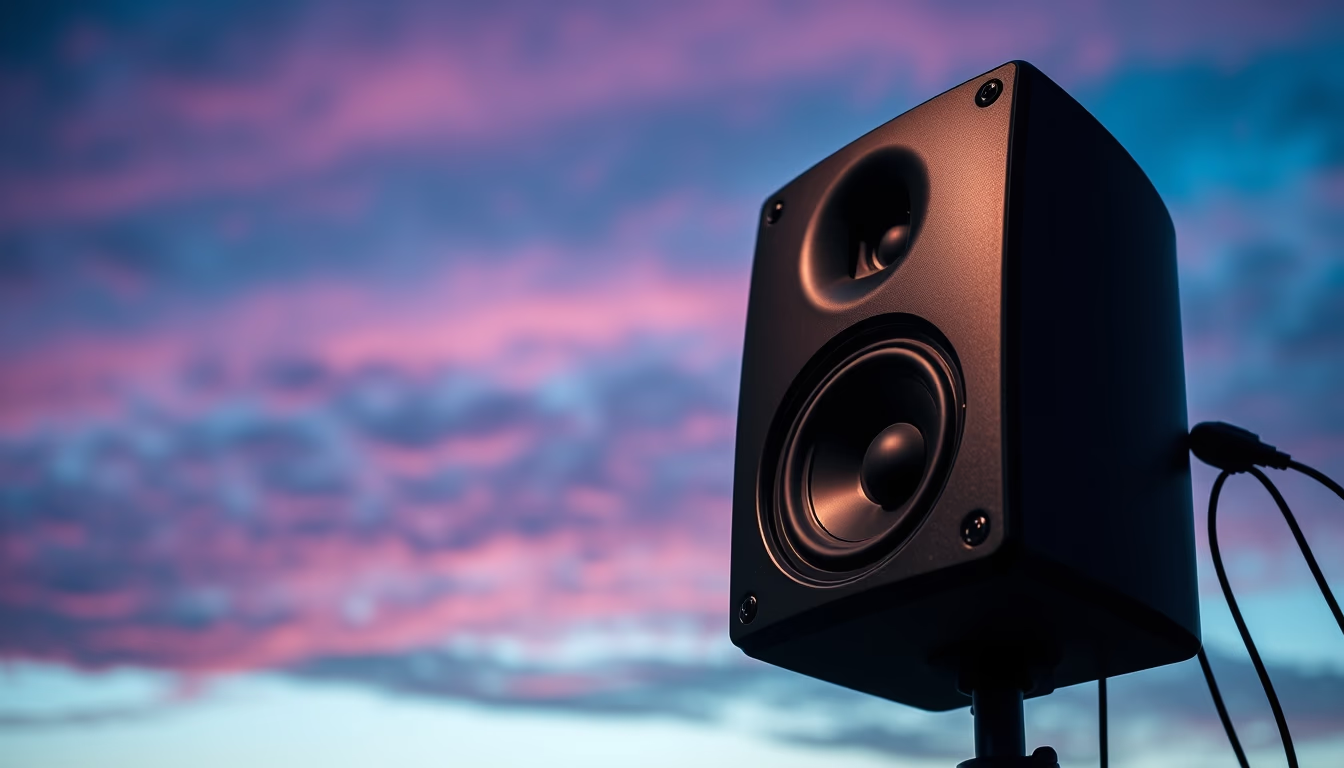
Studio monitor speakers are essential tools for music production, featuring flat frequency response and precise acoustic design.
About this subject
Studio monitor speakers, also known as audio monitors, are designed to reproduce sound with the highest possible accuracy, without coloration or distortion. Unlike consumer speakers, which often boost bass or treble to please the listener, studio monitors aim for a flat frequency response, allowing audio engineers to hear exactly what was recorded. This is crucial for mixing and mastering, where precise decisions about equalization, dynamics, and sonic balance need to be made.
Studio monitors can be active or passive. Active models have built-in amplifiers, simplifying setup and ensuring the amplifier is optimized for the specific driver. Passive models require an external amplifier. Most professional studios use active monitors, such as the famous Yamaha NS series, Genelec, KRK, and Adam Audio. Each brand has distinct sonic characteristics, but all aim for accuracy.
The history of studio monitors dates back to the 1970s when Yamaha released the NS-10, which became an industry standard for its ability to reveal mix imperfections. Since then, technology has evolved with ribbon tweeters, Kevlar woofers, and digital processing. Room acoustics where monitors are placed are also critical; acoustic treatments like absorption panels and diffusers help minimize reflections that can distort sound perception.
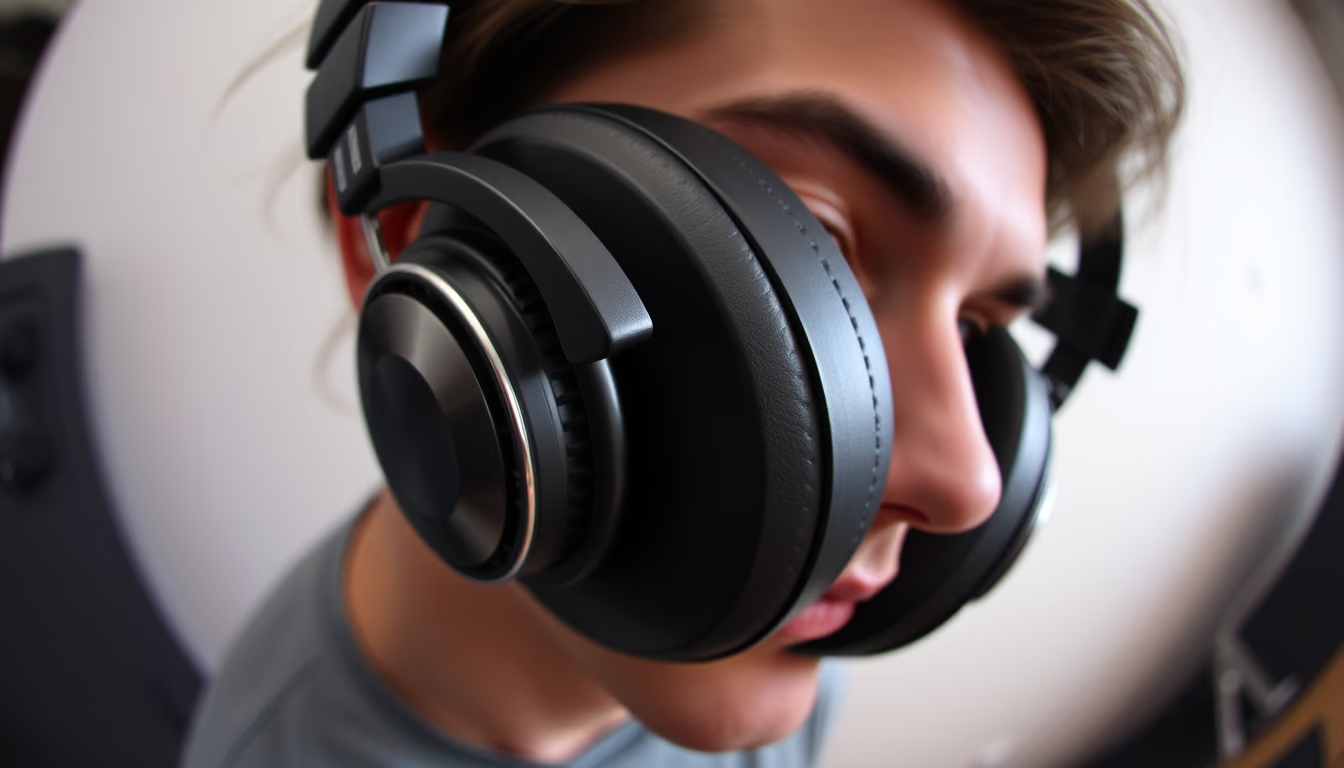
Interestingly, many engineers use studio monitors alongside reference headphones, as each reveals different aspects of the audio. Near-field monitors, positioned close to the listener, are common in home studios, while mid-field and far-field monitors are used in larger rooms. Calibration with measurement microphones and software like Sonarworks can further refine in-room response.
Frequently Asked Questions
What is the difference between studio monitors and regular speakers?
Studio monitors have a flat frequency response, with no bass or treble boost, to reproduce sound exactly as recorded. Regular speakers often have a 'smile' curve to sound more pleasing for casual listening.
Do I need acoustic treatment to use studio monitors?
Yes, ideally. The room greatly affects sound. Treatments like absorption panels and bass traps minimize reflections and resonances, allowing monitors to perform accurately.
What is the ideal power for studio monitors in a home studio?
It depends on room size. For small rooms (up to 160 sq ft), 5-inch monitors with 30-60W are sufficient. Larger rooms may need 8-inch woofers and more power.
Direct URL
https://pub-c7d6a6ea828543ac903a74a341ccb2e1.r2.dev/imagens/studio-monitor-speaker-long-exposure-fresh14.avifHow to credit
Include a visible link back to UtilizAí. Copy one of the snippets below:
<a href="https://xn--utiliza-eza.com/en/midia/imagens/studio-monitor-speaker-long-exposure-fresh14">Studio monitor speaker</a> by <a href="https://xn--utiliza-eza.com">UtilizAí</a>, licensed under <a href="https://creativecommons.org/licenses/by/4.0/">CC BY 4.0</a>.
[Studio monitor speaker](https://xn--utiliza-eza.com/en/midia/imagens/studio-monitor-speaker-long-exposure-fresh14) by [UtilizAí](https://xn--utiliza-eza.com), CC BY 4.0
License: CC-BY-4.0