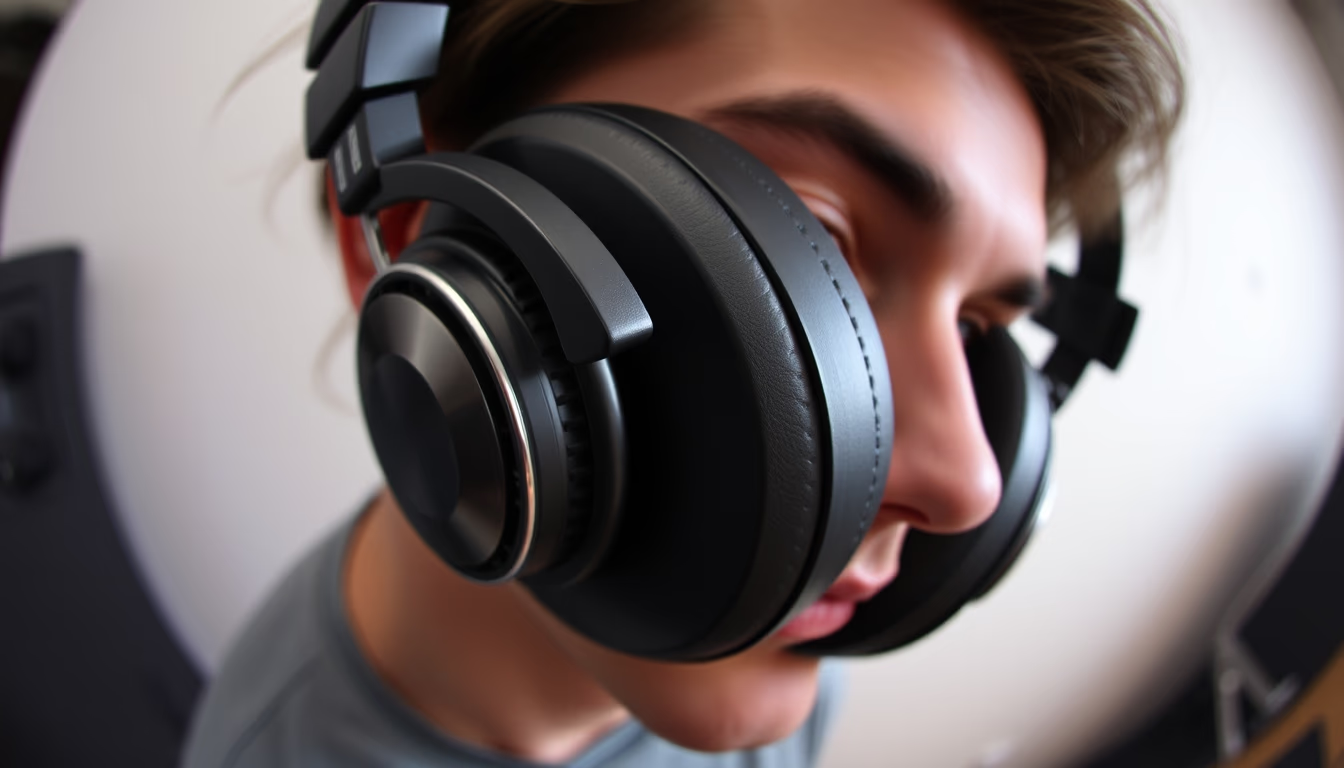
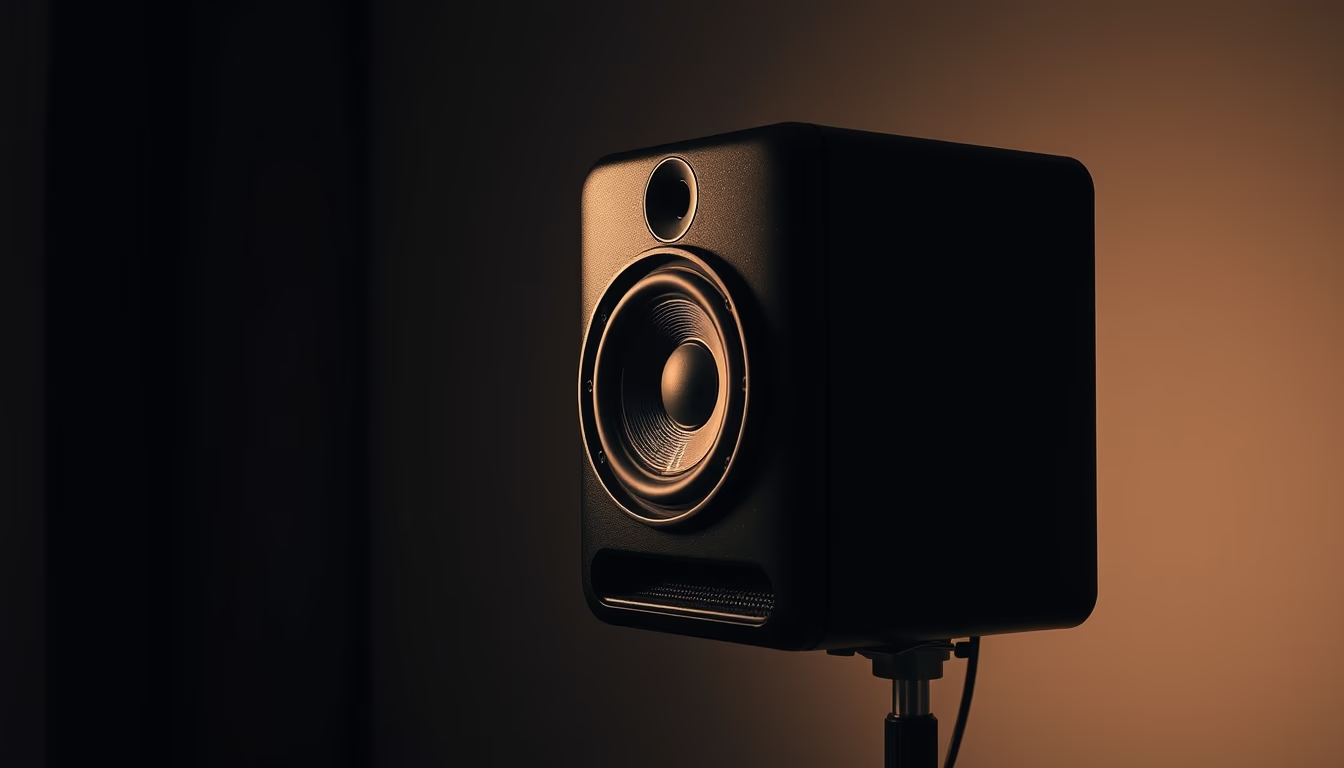
Studio monitor speaker
1344×768 · AVIF · CC BY 4.0
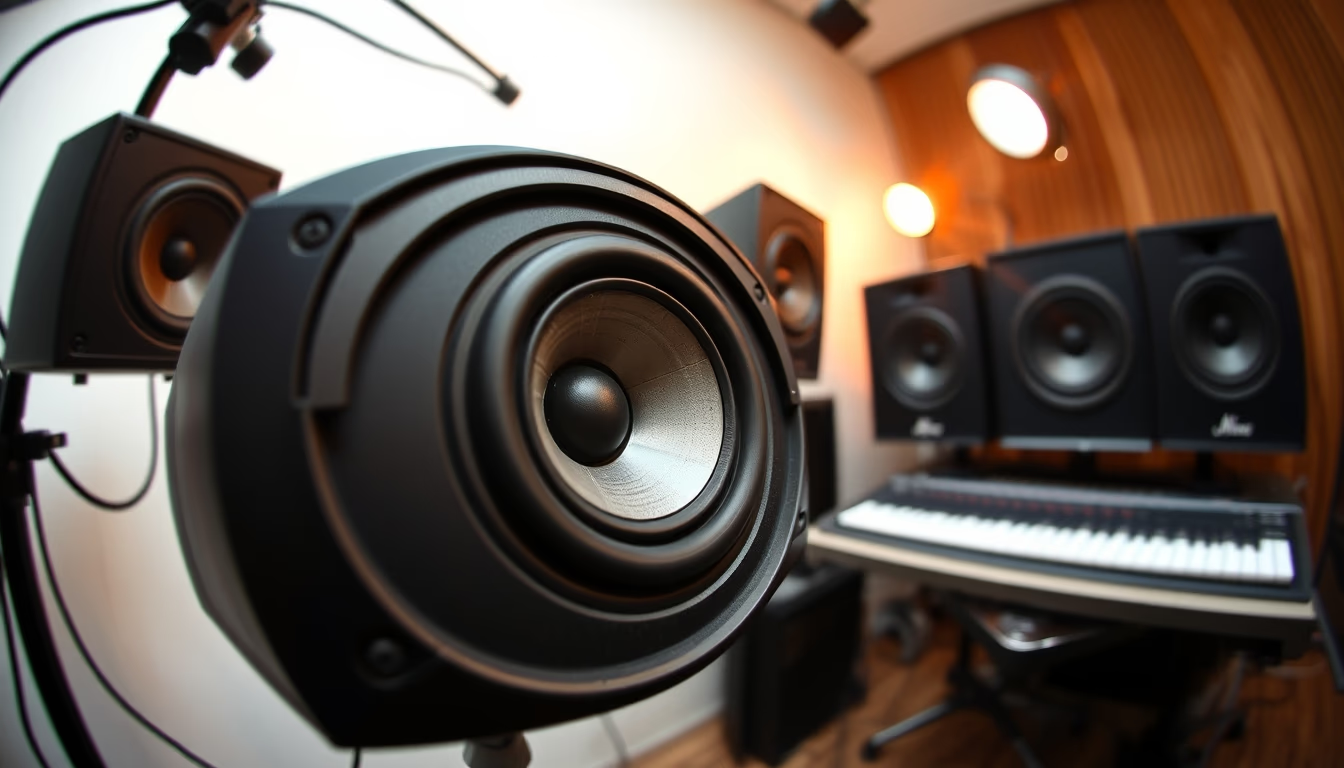
Professional loudspeakers designed for accurate and uncolored sound reproduction, essential in recording studios and music production.
About this subject
Studio monitors, or reference loudspeakers, are devices engineered to reproduce audio with maximum fidelity, without adding or emphasizing frequencies. Unlike consumer speakers, which often boost bass or treble to please the ear, monitors aim for a flat frequency response. This allows sound engineers, producers, and musicians to hear exactly what was recorded, identifying flaws such as sibilance, resonances, or tonal imbalances. This characteristic is crucial during mixing and mastering, ensuring the final result sounds good across different systems, from headphones to car audio.
There are two main types of studio monitors: passive, requiring external amplifiers, and active, with built-in amplification, the latter being more common today. Brands like Yamaha, KRK, Genelec, and Adam Audio are industry references, each with specific sonic signatures. The Yamaha NS-10, for instance, became legendary for its harsh response that revealed mixing errors. Near-field monitors are positioned close to the listener to minimize room interference. The ideal setup involves an equilateral triangle with the listening position, along with acoustic treatment using absorbers and diffusers, to achieve accuracy.
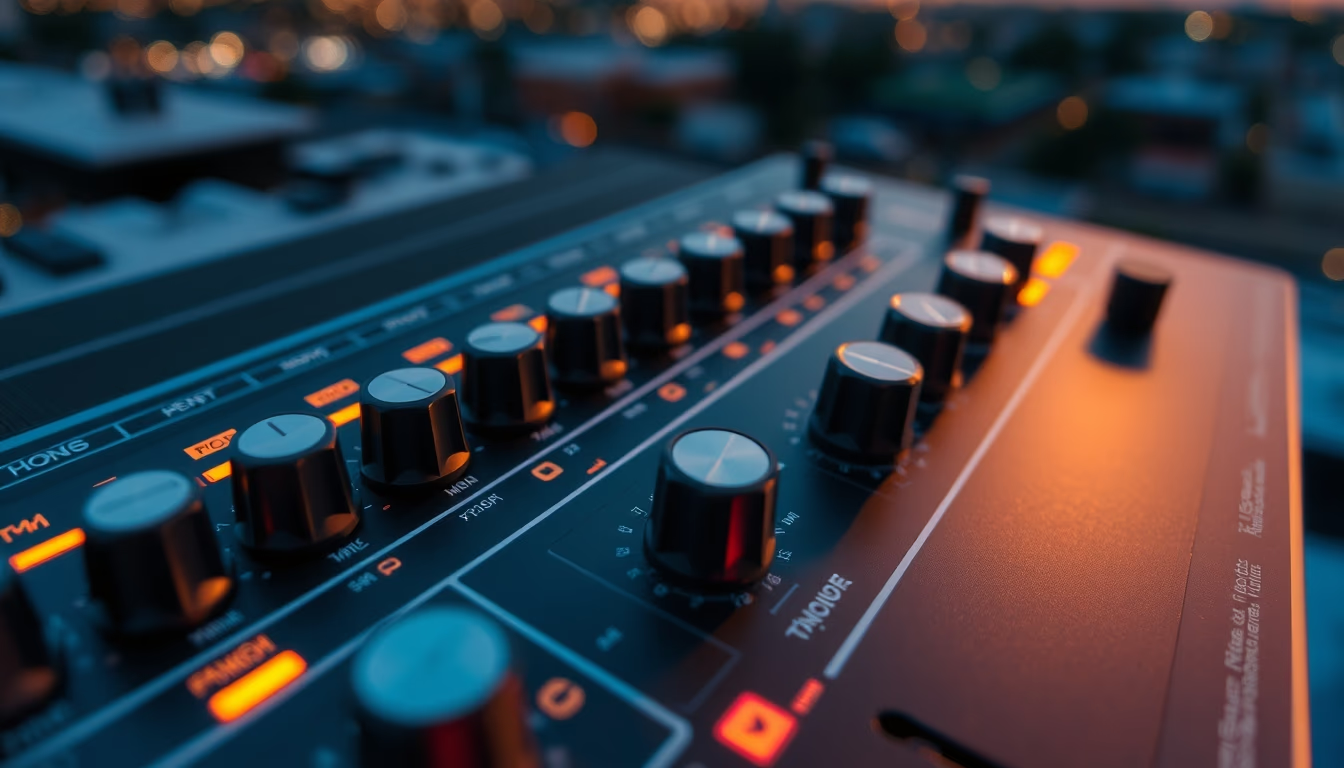
An interesting fact: many studio monitors are painted black or dark gray to reduce visual reflections and avoid distracting the professional during long working sessions. Moreover, the use of a fisheye lens (extreme wide-angle) in promotional images is common to highlight the imposing presence of the equipment in the studio environment, reinforcing the idea that acoustics and technology go hand in hand in the pursuit of sonic fidelity.
Frequently Asked Questions
What is the difference between studio monitors and regular speakers?
Studio monitors have a flat frequency response, without artificial boosts, allowing you to hear the audio exactly as recorded. Regular speakers often emphasize bass or treble to sound more pleasing, which can mask imperfections in a mix.
Why are studio monitors expensive?
They require high-precision components, careful acoustic design, quality amplification, and often reinforced cabinets to avoid vibrations. They also undergo rigorous calibration to ensure flat response and professional durability.
How should I position studio monitors correctly?
Place them forming an equilateral triangle with the listening position, with tweeters at ear height. Keep the speakers away from walls to avoid reflections, and use decoupled stands or pads. Acoustic treatment with absorption panels at first reflection points is also recommended.
Direct URL
https://pub-c7d6a6ea828543ac903a74a341ccb2e1.r2.dev/imagens/studio-monitor-speaker-fish-eye-wide-angle-fresh16.avifHow to credit
Include a visible link back to UtilizAí. Copy one of the snippets below:
<a href="https://xn--utiliza-eza.com/en/midia/imagens/studio-monitor-speaker-fish-eye-wide-angle-fresh16">Studio monitor speaker</a> by <a href="https://xn--utiliza-eza.com">UtilizAí</a>, licensed under <a href="https://creativecommons.org/licenses/by/4.0/">CC BY 4.0</a>.
[Studio monitor speaker](https://xn--utiliza-eza.com/en/midia/imagens/studio-monitor-speaker-fish-eye-wide-angle-fresh16) by [UtilizAí](https://xn--utiliza-eza.com), CC BY 4.0
License: CC-BY-4.0