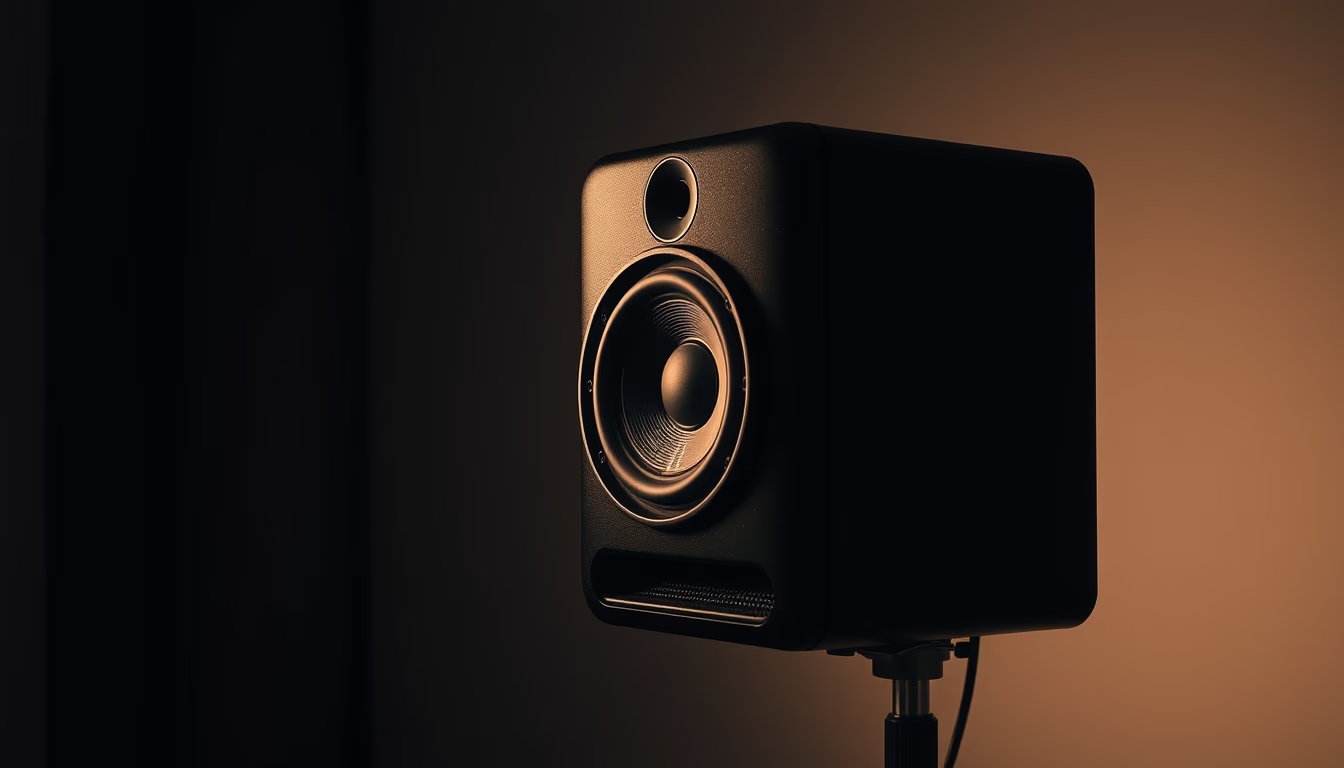
Studio monitor speaker
1344×768 · AVIF · CC BY 4.0
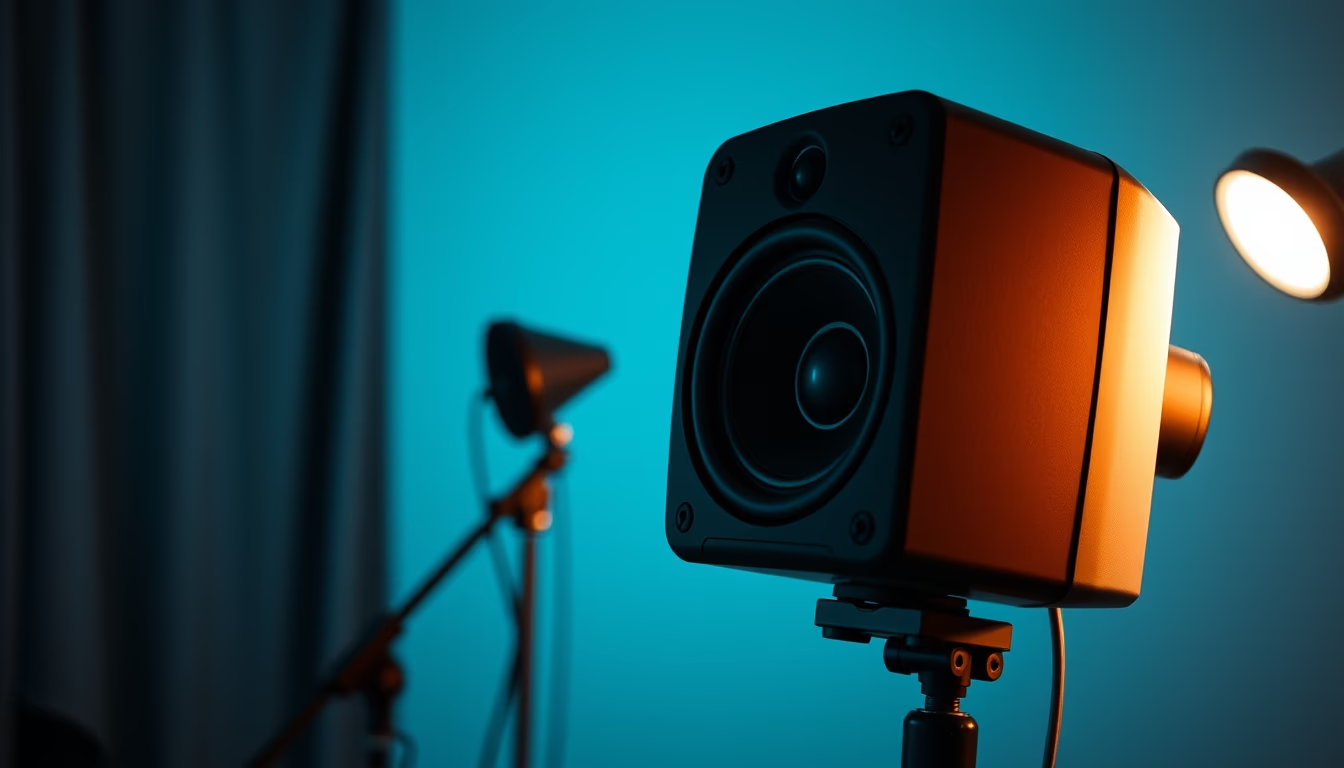
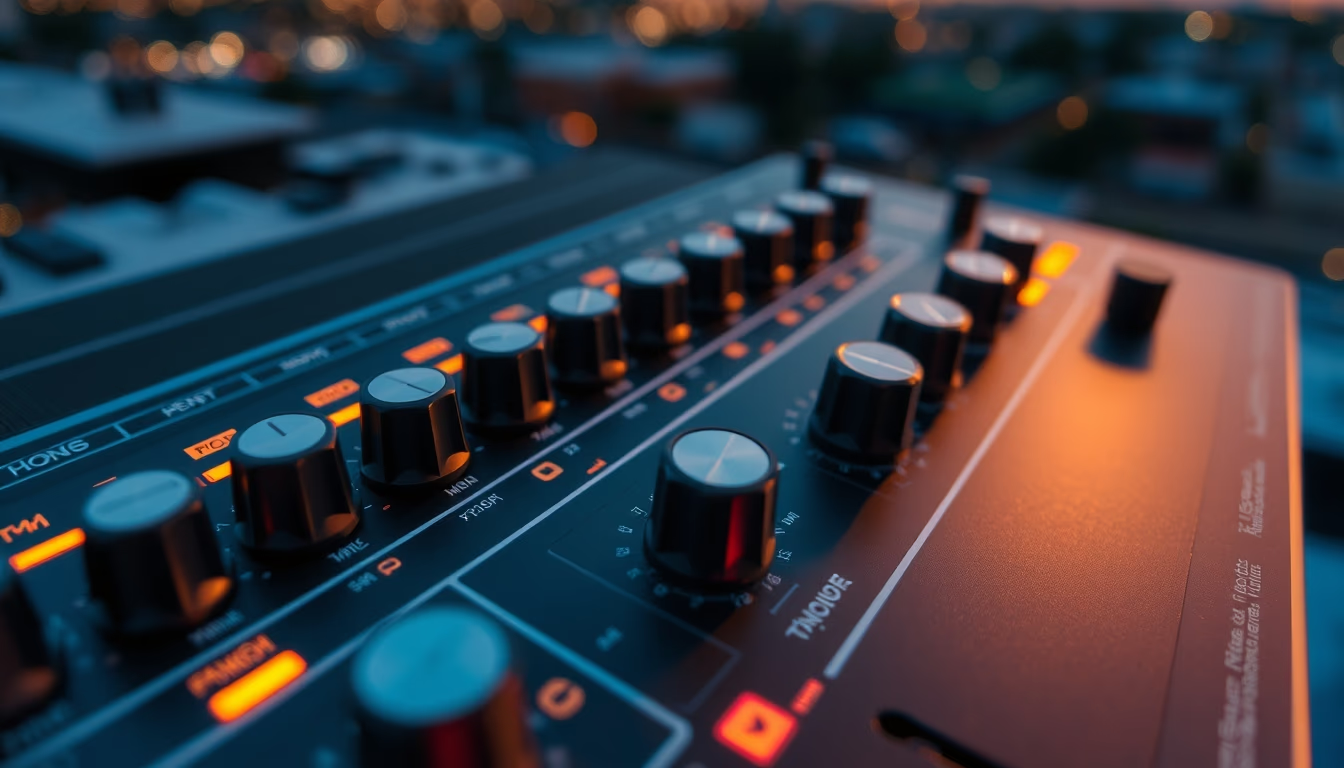
Studio monitor speakers are reference speakers for mixing and mastering, reproducing audio with flat frequency response and minimal coloration, essential for sound engineers and music producers.
About this subject
Studio monitor speakers, also known as reference monitors, are designed to reproduce audio with a flat frequency response, ensuring that the sound is as neutral and accurate as possible. Unlike consumer speakers, which often boost bass and treble to make music more enjoyable, studio monitors aim for transparency, allowing sound engineers and producers to hear the true characteristics of the recording. This accuracy is essential for critical listening tasks such as mixing, mastering, and audio post-production, as it ensures that decisions made in the studio translate well to other playback systems.
There are two main types of studio monitors: active and passive. Active monitors have built-in amplifiers, often with bi-amping or tri-amping configurations that power each driver separately, resulting in better control and efficiency. Passive monitors require an external amplifier and are less common in modern studios. The choice depends on budget, room acoustics, and personal preference. Proper placement is also crucial: monitors should be positioned at ear level and form an equilateral triangle with the listener to achieve a correct stereo image and minimize reflections.
Studio monitors play a vital role in identifying mix issues like harsh sibilance, uncontrolled bass, or muddy mids. Audio professionals often use multiple sets of monitors, including nearfield and farfield models, to cross-reference their mixes. Legendary models such as the Yamaha NS-10, Genelec 1031A, and KRK Rokit have become industry standards. Additionally, room acoustics must be treated with absorbers and diffusers to prevent reflections from coloring the sound. Even high-end monitors cannot compensate for a poorly treated room, making acoustic treatment an integral part of any professional studio setup.
Frequently Asked Questions
What is the difference between a studio monitor and a regular speaker?
Studio monitors have a flat frequency response and neutral sound reproduction, without boosting bass or treble, unlike consumer speakers that color the sound for enjoyment. This allows engineers to hear accurately for mixing decisions.
Do I need acoustic treatment in my room to use studio monitors?
Yes, acoustic treatment is crucial. Accurate monitors reveal room problems like reflections and resonances that can distort perception. Absorbers and bass traps help create a neutral listening environment for critical monitoring.
What is the best placement for studio monitors?
Monitors should be at ear height, forming an equilateral triangle with the listener. The speakers should point directly at the listening position, with tweeters aligned to the ears, and distance between monitors equal to the distance from each monitor to the listener.
Direct URL
https://pub-c7d6a6ea828543ac903a74a341ccb2e1.r2.dev/imagens/studio-monitor-speaker-film-grain-authentic-fresh11.avifHow to credit
Include a visible link back to UtilizAí. Copy one of the snippets below:
<a href="https://xn--utiliza-eza.com/en/midia/imagens/studio-monitor-speaker-film-grain-authentic-fresh11">Studio monitor speaker</a> by <a href="https://xn--utiliza-eza.com">UtilizAí</a>, licensed under <a href="https://creativecommons.org/licenses/by/4.0/">CC BY 4.0</a>.
[Studio monitor speaker](https://xn--utiliza-eza.com/en/midia/imagens/studio-monitor-speaker-film-grain-authentic-fresh11) by [UtilizAí](https://xn--utiliza-eza.com), CC BY 4.0
License: CC-BY-4.0