Studio microphone with pop filter
1344×768 · AVIF · CC BY 4.0
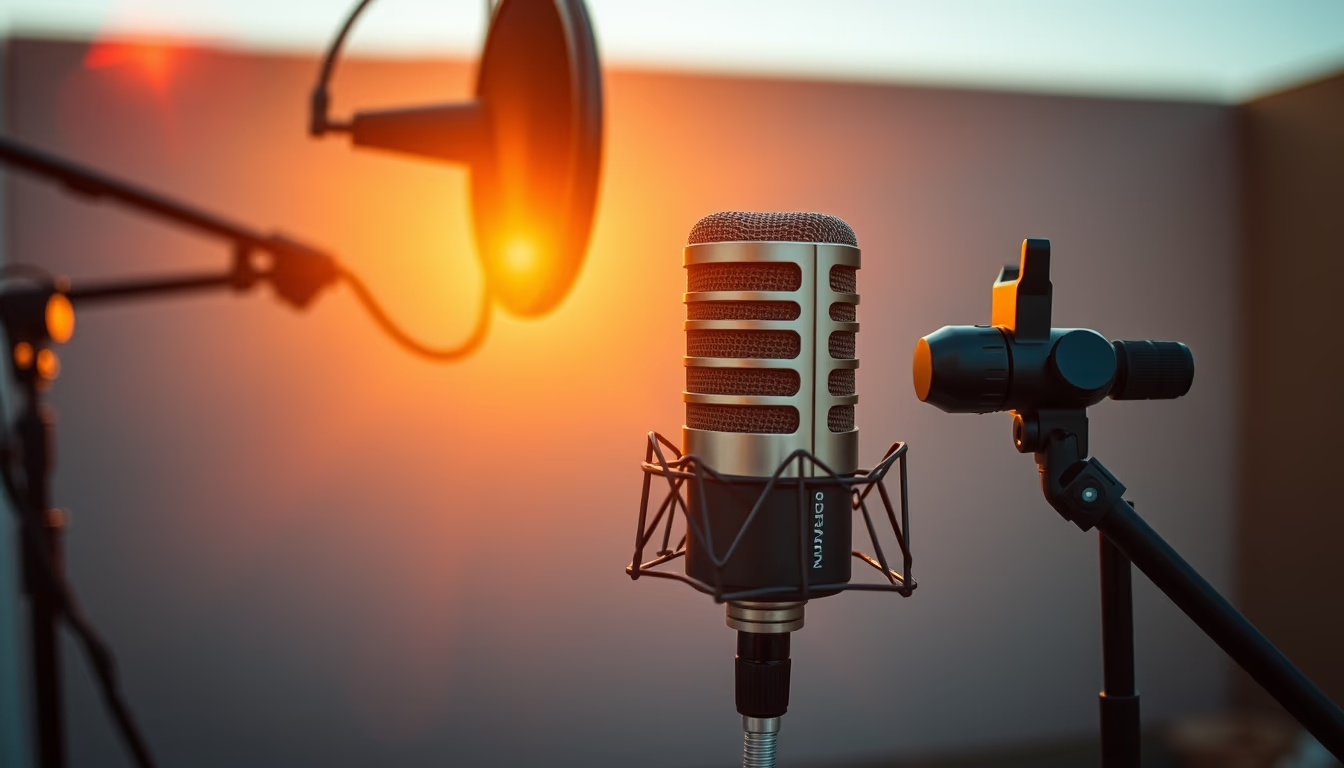
A studio microphone with pop filter is essential for professional vocal recordings, reducing plosives and sibilance.
About this subject
The studio microphone with pop filter is a standard tool in recording studios, broadcasting, and podcasting. The pop filter, also known as a windscreen, functions to attenuate explosive sounds (plosives) such as 'p' and 'b', which produce bursts of air that distort the microphone diaphragm. Sibilance (sounds like 's' and 'z') is also reduced, resulting in cleaner capture with fewer artifacts.
Two main types of pop filters exist: screen types (usually nylon mesh stretched over a metal ring) and foam types (covers that wrap around the microphone). Screen types are more effective against plosives when voices are close, while foam types better protect against wind and spittle. Both are common, with screen types preferred in studios for less high-frequency attenuation.
The origin of the pop filter dates back to the early days of radio, when announcers used silk stockings over microphones to reduce pops. Today, its application extends beyond music: it is indispensable in voice recording for games, audiobooks, dubbing, and live streaming. Materials like nylon, metal, and acoustic foam are used, with designs ranging from simple frames to articulated arm systems.
Typical installation places the filter between the vocalist and the microphone, 5 to 10 centimeters from the capsule. This spacing allows pressure waves from plosives to dissipate before reaching the microphone. Without this device, post-production would have to correct excessive lows and clicks, which does not always completely solve the problem. Therefore, the pop filter is considered an essential investment for any professional or semi-professional recording setup.
Frequently Asked Questions
Why use a pop filter on a microphone?
A pop filter reduces plosive sounds (such as 'p' and 'b') and sibilance, preventing distortion and clicks in the recording. It improves audio clarity and reduces post-production work.
What is the difference between a foam and a screen pop filter?
A screen (nylon) pop filter is more effective against plosives and attenuates high frequencies less, making it ideal for close vocals. A foam filter protects against wind and moisture, but may slightly soften high frequencies.
How to install a pop filter on a microphone stand?
Most pop filters have an articulated arm with a clamp that attaches to the microphone stand. Position it between the microphone and the sound source, 5-10 cm from the capsule, adjusting the angle so it does not block the singer's view.
Direct URL
https://pub-c7d6a6ea828543ac903a74a341ccb2e1.r2.dev/imagens/studio-microphone-with-pop-filter-cinematic-wide-shot-p0.avifHow to credit
Include a visible link back to UtilizAí. Copy one of the snippets below:
<a href="https://xn--utiliza-eza.com/en/midia/imagens/studio-microphone-with-pop-filter-cinematic-wide-shot-p0">Studio microphone with pop filter</a> by <a href="https://xn--utiliza-eza.com">UtilizAí</a>, licensed under <a href="https://creativecommons.org/licenses/by/4.0/">CC BY 4.0</a>.
[Studio microphone with pop filter](https://xn--utiliza-eza.com/en/midia/imagens/studio-microphone-with-pop-filter-cinematic-wide-shot-p0) by [UtilizAí](https://xn--utiliza-eza.com), CC BY 4.0
License: CC-BY-4.0