Stonehenge england
1344×768 · AVIF · CC BY 4.0
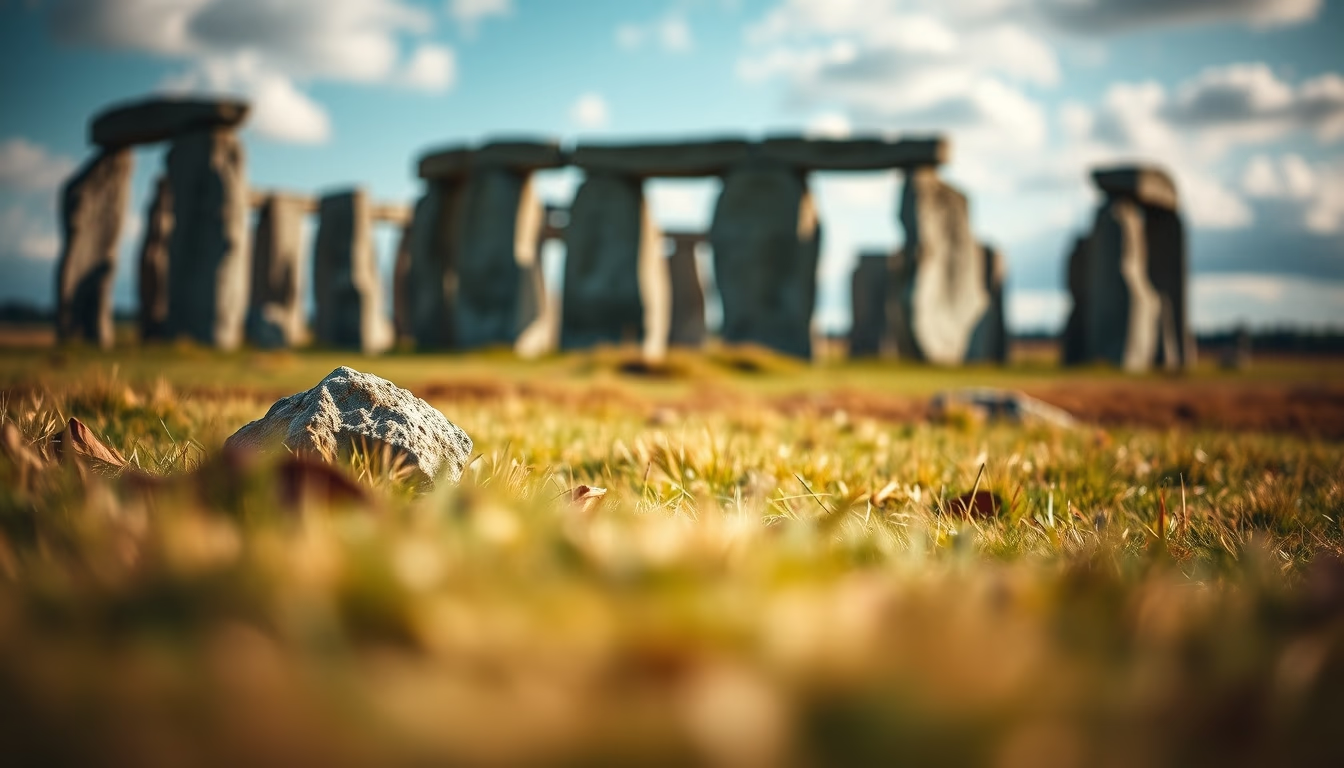
Stonehenge, on Salisbury Plain in England, is a prehistoric monument consisting of massive stone blocks arranged in a circle, dating from 3000 to 2000 BC.
About this subject
Stonehenge is one of the world's most iconic monuments, located in Wiltshire, southern England. Its construction occurred in several phases over roughly 1500 years, starting around 3000 BC with the digging of a circular ditch and banks. The sarsen stones, up to 9 meters tall and weighing 25 tons, were transported from Marlborough Downs, about 30 kilometers away. The smaller bluestones, weighing up to 4 tons, came from the Preseli Mountains in Wales, over 200 kilometers away.
The exact purpose of Stonehenge remains a mystery, but archaeological evidence suggests it was a ceremonial and astronomical site. The alignment of the monument with the sunrise at the summer solstice and sunset at the winter solstice supports the theory that it served as a solar calendar. Excavations have revealed cremated human remains, indicating it was also a burial site and a place for passage rituals.
The construction required advanced engineering and social organization. The sarsen stones were fitted using mortise and tenon joints, a woodworking technique applied to stone. Transporting the bluestones over land and water demonstrates a complex logistical network. It is estimated that thousands of people worked on the monument, coming from farming communities across the region.
Today, Stonehenge is a UNESCO World Heritage Site and attracts over one million visitors each year. Despite ongoing research, many questions remain unanswered, such as the precise meaning of the lintels and why the bluestones were brought from so far away. The monument continues to inspire fascination and theories, ranging from Druidic speculation to aliens, but modern archaeology points to a complex Bronze Age spiritual and astronomical center.
Frequently Asked Questions
Who built Stonehenge and how were the stones raised?
Stonehenge was built by Neolithic and Bronze Age communities living in the region. The stones were raised using techniques such as levers, earth ramps, and ropes, based on advanced engineering knowledge for the time.
What is the relationship between Stonehenge and the solstices?
Stonehenge is aligned with the sunrise at the summer solstice and the sunset at the winter solstice. This suggests the monument functioned as a solar calendar and held religious significance tied to agricultural cycles.
Did the bluestones at Stonehenge really come from Wales?
Yes, geological analysis confirms that the bluestones (dolerite and other rocks) were quarried from the Preseli Mountains in west Wales and transported over 200 km to the current site.
Direct URL
https://pub-c7d6a6ea828543ac903a74a341ccb2e1.r2.dev/imagens/stonehenge-england-macro-closeup-p1.avifHow to credit
Include a visible link back to UtilizAí. Copy one of the snippets below:
<a href="https://xn--utiliza-eza.com/en/midia/imagens/stonehenge-england-macro-closeup-p1">Stonehenge england</a> by <a href="https://xn--utiliza-eza.com">UtilizAí</a>, licensed under <a href="https://creativecommons.org/licenses/by/4.0/">CC BY 4.0</a>.
[Stonehenge england](https://xn--utiliza-eza.com/en/midia/imagens/stonehenge-england-macro-closeup-p1) by [UtilizAí](https://xn--utiliza-eza.com), CC BY 4.0
License: CC-BY-4.0