Stonehenge england
1344×768 · AVIF · CC BY 4.0
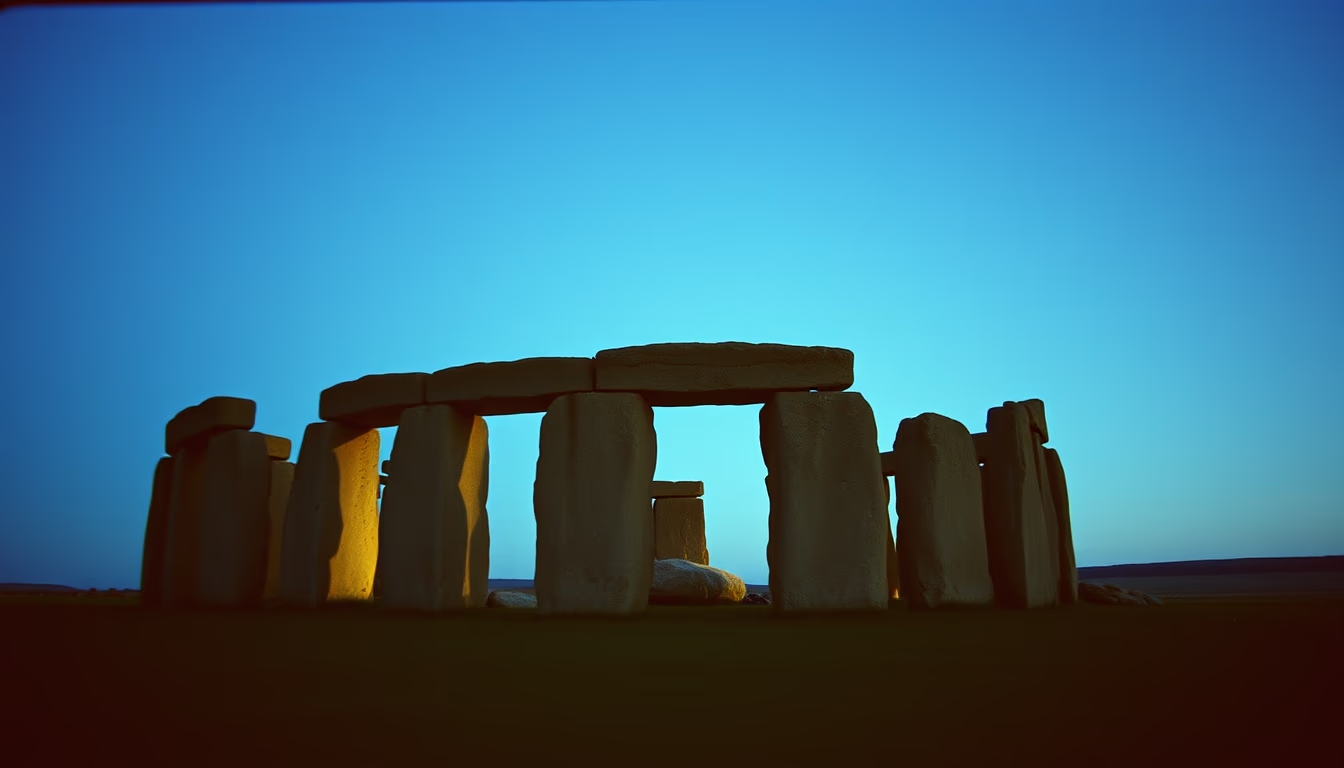
Stonehenge, a megalithic monument on Salisbury Plain in England, is one of the world's most enigmatic archaeological sites.
About this subject
Stonehenge is a stone circle erected between 3000 BC and 2000 BC, during the Neolithic and Bronze Ages. Located in Wiltshire, England, the monument consists of sarsen stones and bluestones, some transported over 200 km from Wales. The exact purpose of Stonehenge remains debated: evidence points to ceremonial use, astronomical alignment, and burial site. During the summer solstice, the sun rises aligned with the Heel Stone, indicating advanced astronomical knowledge by its builders. Excavations have revealed cremated remains of hundreds of individuals, reinforcing its importance as a prehistoric cemetery. The monument was declared a UNESCO World Heritage Site in 1986 and attracts over one million visitors annually. The surrounding landscape contains other Neolithic sites, such as Avebury and the Cursus, forming a ritual complex. Construction required immense collective effort, estimated at millions of hours of labor, and the techniques used to move and raise the stones still intrigue researchers. Some stones weigh up to 40 tons. Modern theories suggest Stonehenge was a healing center, based on the presence of bluestones considered curative in Welsh legends. Despite centuries of study, the site keeps its secrets, fueling popular imagination and inspiring myths about druids and Celtic kings, although there is no evidence linking them. Access inside the circle is restricted for preservation, but visitors can appreciate the monument up close during special times. Stonehenge remains a symbol of human ingenuity and the mystery of ancient civilizations.
Frequently Asked Questions
Who built Stonehenge?
Stonehenge was built by Neolithic and Bronze Age peoples in Britain, not by druids or Romans. Archaeological evidence indicates different construction phases over generations.
What was the purpose of Stonehenge?
The exact purpose remains uncertain, but it is believed to have been a ceremonial site, a burial ground, and an astronomical observatory. The alignment with the summer solstice suggests use for seasonal rituals.
How were the stones of Stonehenge transported?
The sarsen stones were quarried locally, while the bluestones came from Wales, 200 km away. They were likely moved by water and land using sledges, rollers, and rafts, though the exact methods are still debated.
Direct URL
https://pub-c7d6a6ea828543ac903a74a341ccb2e1.r2.dev/imagens/stonehenge-england-lo-fi-disposable-camera-p11.avifHow to credit
Include a visible link back to UtilizAí. Copy one of the snippets below:
<a href="https://xn--utiliza-eza.com/en/midia/imagens/stonehenge-england-lo-fi-disposable-camera-p11">Stonehenge england</a> by <a href="https://xn--utiliza-eza.com">UtilizAí</a>, licensed under <a href="https://creativecommons.org/licenses/by/4.0/">CC BY 4.0</a>.
[Stonehenge england](https://xn--utiliza-eza.com/en/midia/imagens/stonehenge-england-lo-fi-disposable-camera-p11) by [UtilizAí](https://xn--utiliza-eza.com), CC BY 4.0
License: CC-BY-4.0