Stonehenge england
1344×768 · AVIF · CC BY 4.0
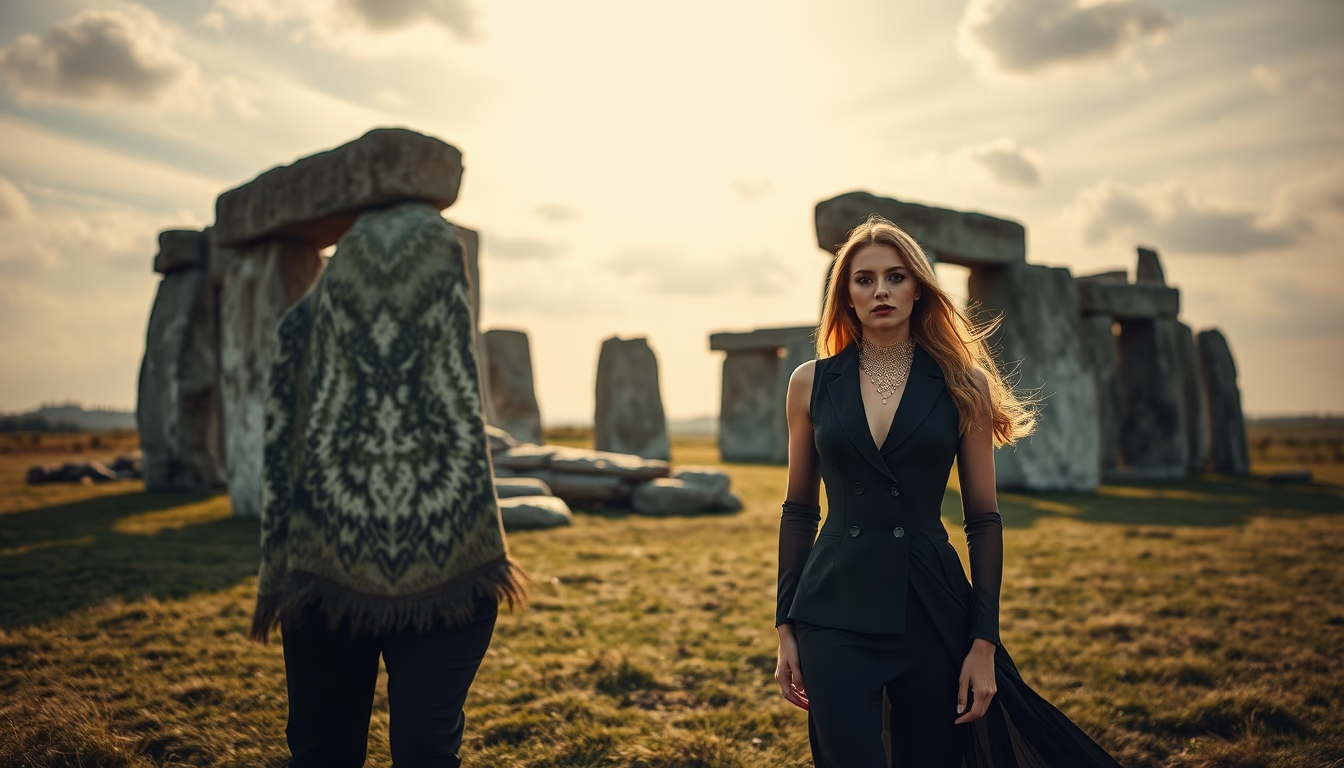
Stonehenge is one of the world's most iconic prehistoric monuments, located on the Salisbury Plain in southern England.
About this subject
Stonehenge is a megalithic monument located in Wiltshire, England, about 13 kilometers north of Salisbury. Its construction began around 3000 BC and occurred in several phases over more than a thousand years. The most famous stone circle was erected between 2500 and 2000 BC, using huge sandstone blocks known as sarsens, some up to 9 meters tall and weighing about 25 tons. The smaller stones, called bluestones, were transported from Wales over 200 kilometers away, demonstrating remarkable engineering and logistical skills.
The exact purpose of Stonehenge is still debated by archaeologists, but it is believed to have served as an astronomical observatory and ceremonial site. The alignment of the stones with the summer solstice suggests a connection with solar rituals and seasons. Excavations have revealed cremated human remains, indicating that the site was also used for burials. In 1986, Stonehenge was declared a UNESCO World Heritage Site, along with the nearby Avebury site.
The monument attracts over 1.5 million visitors each year and is a symbol of British culture. Although access to the stone circle is restricted for preservation, visitors can walk around the perimeter. Recent studies suggest that Stonehenge was part of a larger ritual complex, including the nearby wooden monument known as Durrington Walls. The origin of the stones and methods of transport continue to inspire research and speculation, with theories ranging from wooden sledges to the use of waterways.
Frequently Asked Questions
How old is Stonehenge?
Stonehenge began construction around 3000 BC, making it over 5,000 years old. The current stone circle was erected between 2500 and 2000 BC.
Who built Stonehenge?
Stonehenge is believed to have been built by Neolithic and Bronze Age peoples who inhabited the region. No written records exist, but archaeological evidence suggests a community effort over generations.
How were the stones at Stonehenge transported?
The large sandstone blocks (sarsens) likely came from Marlborough Downs about 30 km away, dragged on sledges. The smaller bluestones were transported from Wales, possibly by sea and land using boats and wooden rollers.
Direct URL
https://pub-c7d6a6ea828543ac903a74a341ccb2e1.r2.dev/imagens/stonehenge-england-high-fashion-editorial-p8.avifHow to credit
Include a visible link back to UtilizAí. Copy one of the snippets below:
<a href="https://xn--utiliza-eza.com/en/midia/imagens/stonehenge-england-high-fashion-editorial-p8">Stonehenge england</a> by <a href="https://xn--utiliza-eza.com">UtilizAí</a>, licensed under <a href="https://creativecommons.org/licenses/by/4.0/">CC BY 4.0</a>.
[Stonehenge england](https://xn--utiliza-eza.com/en/midia/imagens/stonehenge-england-high-fashion-editorial-p8) by [UtilizAí](https://xn--utiliza-eza.com), CC BY 4.0
License: CC-BY-4.0