Stem cells petri dish
1344×768 · AVIF · CC BY 4.0
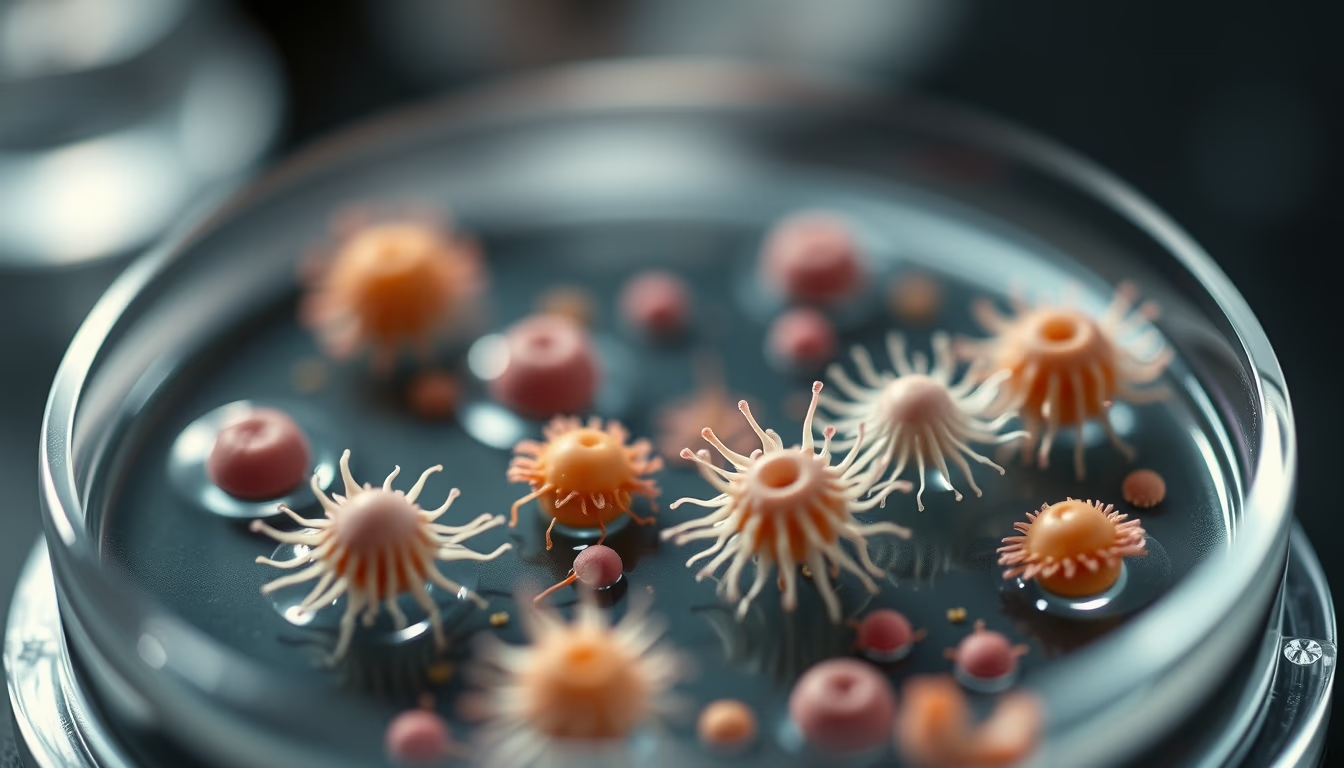
Stem cells cultured in a Petri dish are fundamental for research in regenerative medicine and cell therapy.
About this subject
Stem cells are undifferentiated cells capable of self-renewal and differentiation into various cell types. There are three main categories: embryonic, adult, and induced pluripotent stem cells (iPS). Embryonic stem cells, derived from the inner cell mass of blastocysts, are pluripotent and can generate any tissue of the body. Adult stem cells, found in tissues such as bone marrow and adipose tissue, are multipotent and contribute to local repair. iPS cells are reprogrammed from adult somatic cells, combining the plasticity of embryonic cells with reduced immune rejection.
Culturing in a Petri dish allows strict control of nutrients, pH, temperature, and growth factors, essential for maintaining pluripotency or directing differentiation. This technique enables the production of cell lines for drug testing, disease modeling, and future transplants. For example, iPS-derived cardiomyocytes are used to study arrhythmias and test cardiac drugs.
Despite advances, challenges remain: avoiding contamination, standardizing differentiation protocols, and ensuring safety before clinical applications. In Brazil, institutions like USP and the Blood Center of Ribeirão Preto conduct stem cell research for spinal cord injuries and degenerative diseases. Brazilian legislation permits the use of surplus embryonic cells from in vitro fertilization, with donor consent.
Special coatings on Petri dishes, such as Matrigel or collagen, improve cell adhesion and survival. The tilt-shift technique in the image, simulating a miniature environment, highlights the laboratory precision required to handle these microscopic structures. Each drop of culture medium may contain thousands of stem cells, ready to transform into tissues that could one day save lives.
Frequently Asked Questions
What are stem cells and why are they important?
Stem cells are cells capable of self-renewal and differentiation into various cell types. They are important for regenerative medicine because they can replace damaged tissues in diseases such as Parkinson's, diabetes, and spinal cord injuries.
How are stem cells cultured in the laboratory?
They are cultured in Petri dishes with specific culture media supplemented with growth factors, under controlled conditions of temperature, pH, and humidity. The sterile environment prevents contamination and allows controlled study of their behavior.
What are the main ethical challenges in using embryonic stem cells?
The main challenge is the derivation from human embryos, which raises questions about the beginning of life. Alternatives like iPS cells (induced pluripotent stem cells) circumvent this issue because they are generated from adult cells without requiring embryos.
Direct URL
https://pub-c7d6a6ea828543ac903a74a341ccb2e1.r2.dev/imagens/stem-cells-petri-dish-tilt-shift-miniature-p7.avifHow to credit
Include a visible link back to UtilizAí. Copy one of the snippets below:
<a href="https://xn--utiliza-eza.com/en/midia/imagens/stem-cells-petri-dish-tilt-shift-miniature-p7">Stem cells petri dish</a> by <a href="https://xn--utiliza-eza.com">UtilizAí</a>, licensed under <a href="https://creativecommons.org/licenses/by/4.0/">CC BY 4.0</a>.
[Stem cells petri dish](https://xn--utiliza-eza.com/en/midia/imagens/stem-cells-petri-dish-tilt-shift-miniature-p7) by [UtilizAí](https://xn--utiliza-eza.com), CC BY 4.0
License: CC-BY-4.0