Stem cells petri dish
1344×768 · AVIF · CC BY 4.0
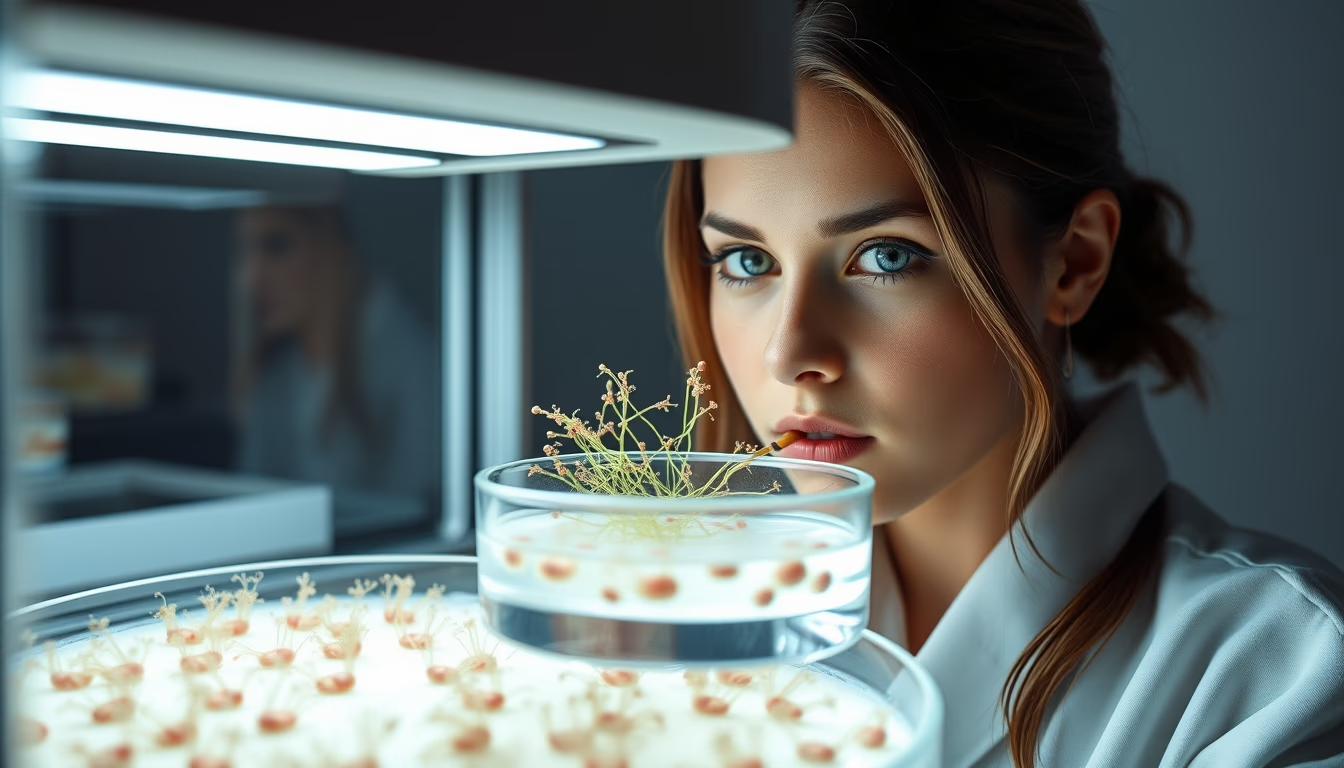
Stem cells in a petri dish are essential for research in regenerative medicine and developmental biology.
About this subject
Stem cells are undifferentiated cells capable of self-renewal and differentiation into various cell types. In laboratories, they are cultured in petri dishes, a controlled environment that allows the study of their behavior and therapeutic potential. There are three main types: embryonic, adult, and induced pluripotent stem cells (iPSCs). Embryonic stem cells, first isolated in 1998 by James Thomson, are pluripotent, meaning they can generate any tissue in the body. Adult stem cells, found in bone marrow and tissues, are multipotent and more limited. iPSCs, discovered by Shinya Yamanaka in 2006 (Nobel Prize 2012), are reprogrammed from adult cells, avoiding ethical issues associated with embryo use.
The petri dish is a basic tool in cell culture, providing an adherent surface and nutrient medium with growth factors. Maintaining stem cell lines requires strict sterility, temperature, and CO2 conditions. Techniques such as passaging and cryopreservation allow expansion and storage. These cultures are the foundation for directed differentiation experiments, where neurons, cardiomyocytes, or pancreatic cells are formed.
Applications are vast: drug testing, disease modeling in lab (e.g., Parkinson's, diabetes), and cell therapies for regenerating damaged tissues. For instance, hematopoietic stem cell transplants are already used to treat leukemias. However, challenges like controlling tumorigenesis and immune rejection remain. Research advances with organoids and 3D bioprinting, expanding the use of petri dishes to mimic miniature organs.
Frequently Asked Questions
What are stem cells?
Stem cells are undifferentiated cells that can self-renew and differentiate into various cell types. They are crucial for development and tissue repair in the body.
What are stem cells in petri dishes used for?
They are used to study cell behavior, test drugs, model diseases, and develop regenerative therapies, such as cell transplants to treat injuries or degenerative conditions.
What are the ethical controversies surrounding embryonic stem cells?
The main debate involves the destruction of human embryos to obtain these cells, raising religious and moral objections. Induced pluripotent stem cells (iPSCs) emerged as an ethical alternative since they are reprogrammed from adult cells.
Direct URL
https://pub-c7d6a6ea828543ac903a74a341ccb2e1.r2.dev/imagens/stem-cells-petri-dish-studio-editorial-portrait-p10.avifHow to credit
Include a visible link back to UtilizAí. Copy one of the snippets below:
<a href="https://xn--utiliza-eza.com/en/midia/imagens/stem-cells-petri-dish-studio-editorial-portrait-p10">Stem cells petri dish</a> by <a href="https://xn--utiliza-eza.com">UtilizAí</a>, licensed under <a href="https://creativecommons.org/licenses/by/4.0/">CC BY 4.0</a>.
[Stem cells petri dish](https://xn--utiliza-eza.com/en/midia/imagens/stem-cells-petri-dish-studio-editorial-portrait-p10) by [UtilizAí](https://xn--utiliza-eza.com), CC BY 4.0
License: CC-BY-4.0