Stem cells petri dish
1344×768 · AVIF · CC BY 4.0
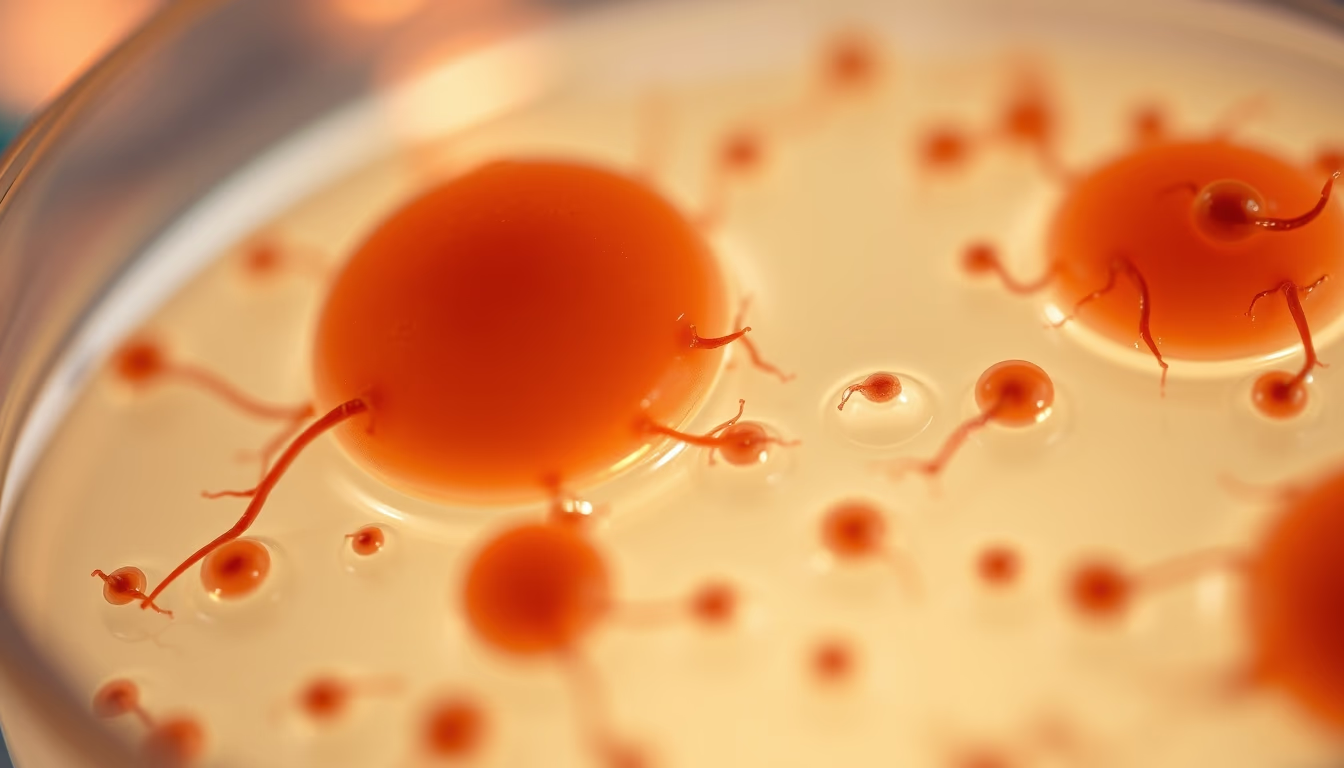
Stem cells in a petri dish are the foundation of regenerative medicine, capable of differentiating into various human tissues.
About this subject
Stem cells are undifferentiated cells capable of self-renewal and differentiation into multiple cell types. They are classified into three main categories: embryonic, adult, and induced pluripotent stem cells (iPS). Embryonic stem cells, derived from the blastocyst, are pluripotent and can generate any tissue in the body. Adult stem cells, found in tissues like bone marrow and fat, are multipotent and more restricted. iPS cells, created by Shinya Yamanaka in 2006 (Nobel Prize 2012), are adult cells genetically reprogrammed to an embryonic-like state, avoiding ethical controversies.
Culturing stem cells in a petri dish requires strict sterile conditions, specific culture media, and growth factors that maintain pluripotency. This controlled environment enables in vitro disease modeling, drug testing, and cell therapy development. For instance, scientists have successfully generated cardiac, neuronal, and hepatic cells from stem cells, paving the way for treatments of Parkinson's disease, diabetes, and spinal cord injuries.
Despite the potential, challenges remain: controlling differentiation, risk of tumor formation (teratomas), and immune rejection. Ongoing clinical trials evaluate the safety of transplants of iPS-derived cells, such as in age-related macular degeneration. In Brazil, the 2005 Biosafety Law permits research with embryonic stem cells but with restrictions. The use of iPS, which does not involve embryos, expands ethical and regulatory possibilities.
Globally, iPS cell banks are being created to facilitate genetic studies and personalized medicine. CRISPR gene editing is also combined with stem cells to correct mutations causing hereditary diseases. The future of regenerative medicine depends on the advancement of these technologies, bringing closer the promise of repairing damaged tissues or replacing organs.
Frequently Asked Questions
What are stem cells?
Stem cells are undifferentiated cells that can self-renew and differentiate into various specialized cell types, such as neurons, cardiomyocytes, and hepatocytes.
What are the main types of stem cells?
The main types are embryonic (pluripotent), adult (multipotent), and induced pluripotent stem cells (iPS), which are adult cells genetically reprogrammed.
What are the medical applications of stem cells?
They are used in regenerative medicine to treat diseases like Parkinson's, diabetes, and spinal cord injuries; in drug testing; and for studying diseases in vitro.
Direct URL
https://pub-c7d6a6ea828543ac903a74a341ccb2e1.r2.dev/imagens/stem-cells-petri-dish-macro-closeup-p12.avifHow to credit
Include a visible link back to UtilizAí. Copy one of the snippets below:
<a href="https://xn--utiliza-eza.com/en/midia/imagens/stem-cells-petri-dish-macro-closeup-p12">Stem cells petri dish</a> by <a href="https://xn--utiliza-eza.com">UtilizAí</a>, licensed under <a href="https://creativecommons.org/licenses/by/4.0/">CC BY 4.0</a>.
[Stem cells petri dish](https://xn--utiliza-eza.com/en/midia/imagens/stem-cells-petri-dish-macro-closeup-p12) by [UtilizAí](https://xn--utiliza-eza.com), CC BY 4.0
License: CC-BY-4.0