Stem cells petri dish
1344×768 · AVIF · CC BY 4.0
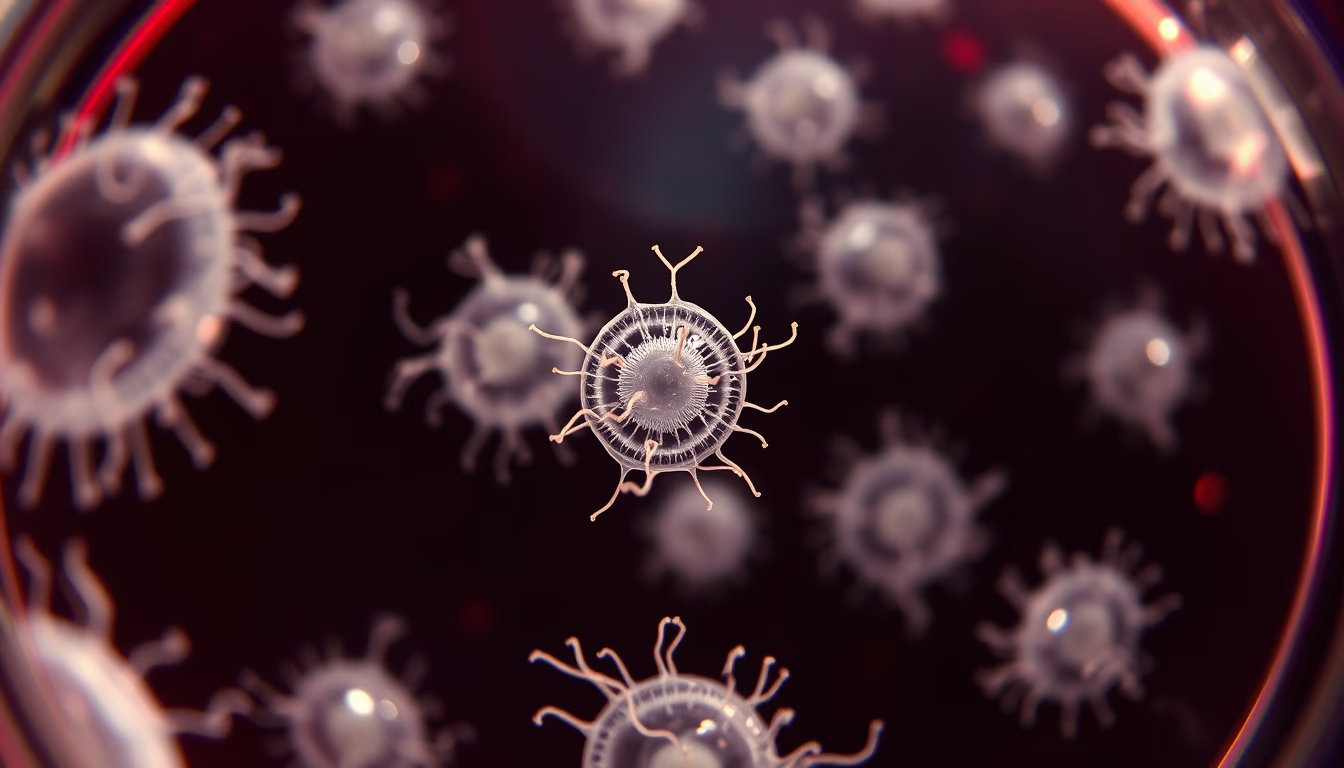
Stem cells are unspecialized cells capable of self-renewal and differentiation into various cell types, crucial for regenerative medicine and scientific research.
About this subject
Stem cells are defined by two key properties: self-renewal, the ability to generate identical copies of themselves, and differentiation, the capacity to develop into specialized cell types such as neurons, cardiomyocytes, or hepatocytes. They are primarily classified into three categories: embryonic stem cells, derived from the inner cell mass of the blastocyst and pluripotent; adult stem cells, found in tissues like bone marrow and adipose tissue, typically multipotent; and induced pluripotent stem cells (iPSCs), reprogrammed from adult somatic cells through the expression of specific transcription factors, such as the Yamanaka factors.
In biomedical research, stem cells are essential tools for disease modeling, drug screening, and developmental studies. For example, iPSCs derived from patients with genetic diseases can be differentiated into neurons to investigate disease mechanisms and test potential drugs. In therapy, hematopoietic stem cell transplantation is an established treatment for leukemias and lymphomas, while clinical trials are exploring the use of mesenchymal stem cells for cardiac repair and treatment of neurodegenerative diseases like Parkinson's and amyotrophic lateral sclerosis (ALS).
Ethical and technical challenges mark the field. The use of embryonic stem cells raises moral debates due to the destruction of embryos, leading to restrictions in many countries. Moreover, risks such as teratoma formation (tumors derived from pluripotent cells) and immune rejection limit clinical applications. iPSCs circumvent ethical issues but present genomic instability and tumorigenic potential. Rigorous regulations, such as the guidelines from the International Society for Stem Cell Research (ISSCR), guide research to ensure safety and transparency.
The future of stem cell research includes the development of organoids (miniature in vitro grown organs) for disease study and drug testing, advances in 3D bioprinting of tissues, and gene editing strategies to correct mutations prior to cell therapy. The combination with tissue engineering promises to generate personalized functional implants, paving the way for precision regenerative medicine.
Frequently Asked Questions
What are stem cells and why are they important?
Stem cells are unspecialized cells capable of self-renewal and differentiation into various cell types. They are important for studying development, disease modeling, drug testing, and regenerative medicine, as they have the potential to repair damaged tissues.
What are the main types of stem cells?
The main types are embryonic stem cells (pluripotent, derived from embryos), adult stem cells (multipotent, found in tissues like bone marrow), and induced pluripotent stem cells (iPSCs, reprogrammed from adult somatic cells).
What are the ethical and technical challenges in stem cell use?
Embryonic stem cell use raises ethical issues due to embryo destruction. Technically, risks include tumor formation (teratomas), immune rejection, and genomic instability, especially with iPSCs. Rigorous regulations aim to balance scientific progress and safety.
Direct URL
https://pub-c7d6a6ea828543ac903a74a341ccb2e1.r2.dev/imagens/stem-cells-petri-dish-fish-eye-wide-angle-p6.avifHow to credit
Include a visible link back to UtilizAí. Copy one of the snippets below:
<a href="https://xn--utiliza-eza.com/en/midia/imagens/stem-cells-petri-dish-fish-eye-wide-angle-p6">Stem cells petri dish</a> by <a href="https://xn--utiliza-eza.com">UtilizAí</a>, licensed under <a href="https://creativecommons.org/licenses/by/4.0/">CC BY 4.0</a>.
[Stem cells petri dish](https://xn--utiliza-eza.com/en/midia/imagens/stem-cells-petri-dish-fish-eye-wide-angle-p6) by [UtilizAí](https://xn--utiliza-eza.com), CC BY 4.0
License: CC-BY-4.0